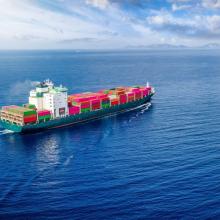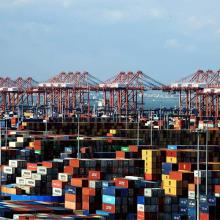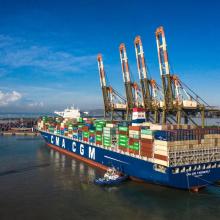
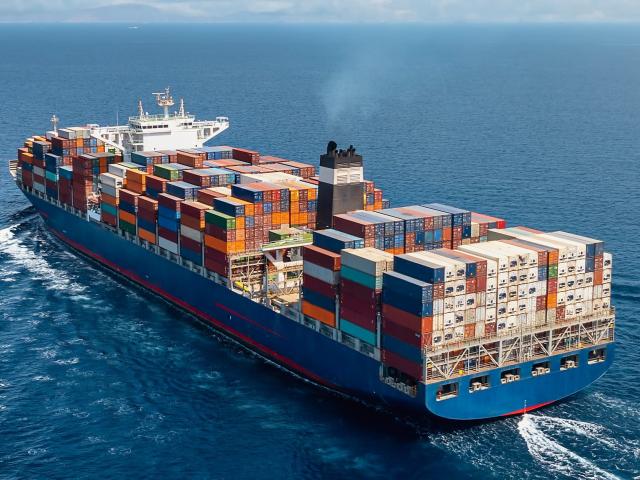
Customs clearance is one of the most critical — and most misunderstood — steps in international shipping from China. Based on Bofeng Logistics' daily handling of customs declarations across Shanghai, Ningbo, Shenzhen, and Guangzhou ports, this guide provides a practical walkthrough of the real clearance process. Whether you are exporting goods out of China or importing into the country, navigating China's customs procedures correctly can mean the difference between a smooth shipment and costly delays.
This guide explains the complete customs clearance process in China, the documents required, how inspections work, and practical tips to avoid common problems.
What Is Customs Clearance in China?
Customs clearance is the process of obtaining official permission from China Customs to import or export goods across China's borders. It involves submitting documentation, paying applicable duties and taxes, and undergoing inspections when required.
In China, the customs clearance process is managed by the General Administration of Customs of China (GACC), a centralized authority with regional offices at every port, airport, and border crossing.
> Note: "Customs clearance" is often used interchangeably with "customs declaration," but they are distinct steps. Declaration is the act of submitting documentation; clearance is the official approval that follows. See our [detailed comparison](/en/customs-declaration-vs-clearance) for more information.
The 5-Step Customs Clearance Process in China
Step 1: Document Preparation
Before filing any declaration, ensure all documents are complete and accurate. Missing or incorrect documentation is the #1 cause of customs delays.
Required documents for export clearance:
- Commercial Invoice (in English or Chinese)
- Packing List
- Bill of Lading / Air Waybill
- Export Customs Declaration Form
- Contract between buyer and seller
- Certificate of Origin (when required)
- Any applicable licenses or permits (for restricted goods)
Additional documents for import clearance:
- Import Customs Declaration Form
- Duty and Tax Payment Certificate
- Import License (for restricted goods)
- Inspection Certificate (for regulated products)
- Customs Valuation Declaration
Step 2: Electronic Declaration
China Customs operates a fully digital declaration system called the China International Trade Single Window (also known as the "Single Window" system). All declarations are submitted electronically.
The declaration includes 48 standardized data fields, the most critical of which are:
| Data Field | What It Defines | Common Error |
| HS Code (10-digit) | Product classification; determines duty rate and license requirements | Wrong 4th-6th digit (tariff heading) is the #1 error |
| Declared Value (CIF) | Tax base for duty calculation; must match invoice | Undervaluation triggers customs audit |
| Trade Terms (Incoterm) | Determines which costs are included in the declared value | FOB declared as CIF (omits freight cost) |
| Country of Origin | Determines tariff preference eligibility | Incorrect origin = lost FTA preference |
| Licence/Permit No. | Reference for any restricted goods permits | Missing licence = automatic rejection |
| Vessel/Voyage No. | Links declaration to specific shipment | Mismatch delays cargo release |
Submission workflow in the Single Window system:
- Broker logs into Single Window portal (digital certificate required)
- Completes the electronic declaration form (typically 15-30 minutes per declaration)
- Attaches scanned documents (invoice, packing list, licence if applicable)
- Submits → system assigns a declaration number (18 digits) immediately
- Automated risk assessment completes within 30 seconds
- System returns result: Green (released) / Yellow (document review) / Red (inspection required)
Who can file: Only licensed customs brokers can file declarations in China. Most freight forwarders either have their own brokerage license or partner with licensed brokers.
Step 3: Document Review
China Customs reviews the submitted declaration for completeness and accuracy. This automated review checks:
- Whether the HS code matches the commodity description
- Whether the declared value is within normal ranges for similar goods
- Whether all required permits and licenses are attached
- Whether the exporter or importer has any compliance flags
Typical review time: 1–4 hours for straightforward declarations.
Step 4: Customs Inspection (if selected)
Not all shipments are inspected. In our daily operations at Bofeng Logistics, we observe that approximately 3-5% of export declarations and 5-10% of import declarations are selected for inspection. China Customs uses a risk-based selection system — the Green/Yellow/Red channel system — to determine which cargo to inspect.
The risk assessment algorithm considers these factors (from actual customs compliance data):
- Exporter/importer compliance history: Past declarations with discrepancies increase risk score
- HS code complexity: Products classified under ambiguous HS chapters (e.g., 84-85 machinery, 73 iron/steel) have higher selection rates
- Declared value vs historical average: Deviation >30% from port-average unit price triggers review
- Country of origin: Certain origin countries trigger elevated scrutiny for specific product categories
- License/restriction flags: Any product requiring an export or import license has a higher probability of document review
- Random selection: Even low-risk shipments have a baseline 1-2% random inspection probability
Inspection types (based on actual clearance records at Bofeng Logistics):
| Inspection Type | Scope | Typical Duration | Approximate Cost | % of All Inspections |
| Document Review Only | Verification of documents without physical inspection | 1–4 hours | CNY 0-200 (admin fee) | ~60% |
| X-ray / Scanner | Non-intrusive scanning of container by H986 system | 1–2 days | CNY 500-1,000 | ~25% |
| Physical Inspection (partial) | Opening 10-30% of cargo for visual verification | 2–5 days | CNY 2,000-5,000 | ~10% |
| Full Inspection | Complete unpacking and inspection of all cargo | 5–10 days | CNY 5,000-15,000 | ~5% |
Typical physical inspection procedure:
- Customs issues "Inspection Notice" → cargo must be moved to inspection area
- Exporter's representative or broker must be present (or authorize remote inspection)
- Customs officer opens container and examines cargo against declaration
- Samples may be taken for laboratory testing (adds 7-15 days)
- Inspection report filed → if compliant, release order issued
- Cost of inspection (opening, repacking, storage) billed to the declarant
What triggers an inspection:
- Suspicious or incorrect HS code classification
- Declared value significantly above or below normal range
- Restricted or regulated commodities
- High-risk origin countries or products
- Random selection (routine compliance check)
Step 5: Duty Payment and Release
Once the declaration is approved (and any inspection is passed), Customs issues a release notice:
- For exports: The cargo is "released for loading" — it can now be loaded onto the vessel or aircraft
- For imports: Duties and taxes are assessed, payment is made, and cargo is "released for delivery"
Payment methods: Duties and taxes can be paid via bank transfer, online payment, or through a customs bond (for importers with frequent shipments).
How Long Does Customs Clearance in China Take?
| Scenario | Typical Timeframe |
| Export clearance, no inspection | 1–2 hours after submission |
| Export clearance, with scanning | 1–2 days |
| Import clearance, no inspection | 1–2 days |
| Import clearance, with physical inspection | 3–7 days |
| Complex or restricted goods clearance | 7–14 days |
Alternative Clearance Scenarios
The standard clearance process applies to most shipments, but not all. Understanding alternative scenarios helps you plan more effectively:
| Scenario | Clearance Approach | Key Difference from Standard |
| Bonded warehouse transfer | Goods enter bonded warehouse without formal clearance | Duties deferred; clearance happens when goods leave warehouse for domestic sale or re-export |
| Transshipment | Goods arrive and depart on same or connecting vessel | No formal clearance required if cargo stays within port bonded area |
| Temporary import/export | Goods brought into China for a limited period (exhibitions, testing) | Bond or deposit required; re-export within specified timeframe |
| Express/courier clearance | Clearance through express cargo channels (KJ1/KJ2/KJ3) | Simplified documentation; lower value threshold limits |
| Cross-border e-commerce (retail) | Clearance under 9610/9710 customs regimes | Simplified clearance for B2C shipments within duty-free allowance |
If your shipment falls into one of these categories, the standard 5-step process in this guide applies with modifications. Contact your customs broker to confirm the specific requirements.
Common Reasons for Customs Delays in China
| Issue | How to Avoid |
| Wrong HS code | Work with a broker who specializes in your product category |
| Undervalued declaration | Declare the actual transaction value; Customs has access to market price data |
| Incomplete documentation | Use a pre-shipment checklist; have all documents ready before filing |
| Missing permits | Check whether your product requires CCC, FDA-equivalent, or other China-specific certifications |
| Inconsistent documents | Ensure descriptions, quantities, and values match across all documents |
China Customs Clearance: Key Tips for Importers
- Work with a licensed broker: Only licensed customs brokers can clear goods through China Customs. Your freight forwarder should include brokerage or partner with one.
- Get the HS code right: Incorrect HS code classification is the single most common cause of customs delays. Ask your broker to verify your HS code before filing.
- Prepare for inspections: Even with perfect documentation, random inspections occur. Build 3–5 days of buffer into your shipping timeline.
- Use the Single Window system: China's digital customs platform has streamlined the process significantly. Electronic filing reduces processing time from days to hours.
- Consider bonded warehousing: For importers who are not ready to clear goods immediately, China's bonded warehouses allow duty-free storage for up to 2 years.
FAQ
Q: Do I need a customs broker to clear goods in China?
A: Yes. China requires all import and export declarations to be filed by a licensed customs broker. Most international freight forwarders offer this service.
Q: How much does customs clearance in China cost?
A: Brokerage fees typically range from CNY 800–2,000 per declaration, excluding duties and taxes. Additional fees apply for inspections, permits, or quarantine processing.
Q: What happens if my cargo is flagged for inspection?
A: Your broker will be notified with the inspection type and location. Cargo may need to be moved to an inspection facility. Plan for an additional 3–7 days.
Q: Can I clear customs in China without a physical presence?
A: Yes. Your customs broker can handle the entire process on your behalf through the Single Window digital system. You only need to provide accurate documentation.
Q: What is the China International Trade Single Window?
A: It is China's unified digital platform for customs declarations, used by all licensed brokers since 2021. It replaces the previous fragmented provincial systems.
Q: What is the difference between export and import clearance?
A: Export clearance is typically faster (1-4 hours) with simpler documentation and no duty payment. Import clearance takes longer (1-7 days) and involves duty/tax assessment, commodity inspection, and potentially quarantine.
Q: Can I appeal a customs decision if I disagree?
A: Yes. China Customs has an administrative review process. Appeals must be filed within 60 days of the decision. For duty disputes, you can request a re-inspection or submit additional valuation evidence.
Q: How does clearance differ for food products vs machinery?
A: Food products require additional health and quarantine inspection (CIQ registration). Machinery requires CCC certification for certain categories and may need age verification for used equipment. Check product-specific requirements before shipping.
Q: What are the time limits for filing a customs declaration?
A: Export declarations can be filed up to 15 days before loading (advance filing). Import declarations must be filed within 14 days of cargo arrival. Late filing incurs storage fees and potential demurrage charges.
Ensure your next shipment clears customs without delays. Bofeng Logistics provides end-to-end customs brokerage at Shanghai, Ningbo, Shenzhen, Guangzhou, and Qingdao ports. Contact our customs team for a clearance consultation tailored to your product and destination.
Related reading
- China Import Customs Clearance: Complete Guide for Foreign Buyers
- Export Declaration in China: Documents, Process & Compliance
- China Export Customs Clearance: Step-by-Step Guide
- China Customs Modes Compared: 9610, 9810, 0110 and 1039
- Customs Declaration and Inspection Services
- Container Shipping from China: The Complete Guide for Importers
Bofeng Logistics
Phone/WhatsApp: 13075678958
Email: info@zhbfwl.com
Contact us for a personalized shipping solution.
Related Logistics Services
Bofeng Logistics offers the following related services, feel free to inquire: