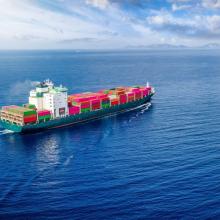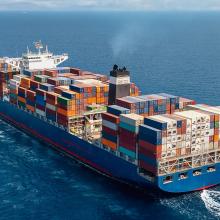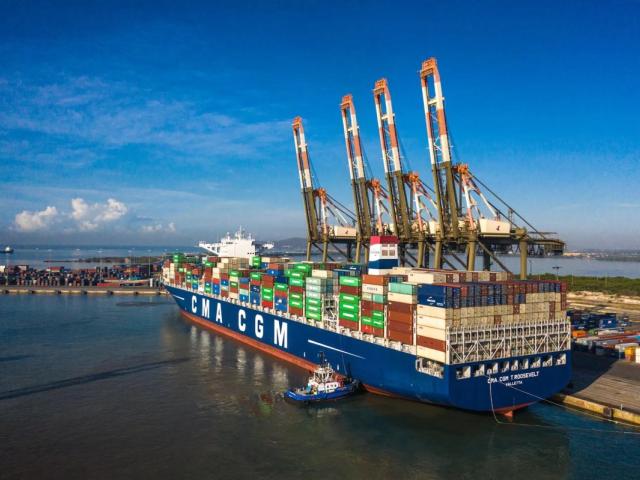
Importing goods into China has become significantly more streamlined since the launch of the China International Trade Single Window in 2021. However, based on our daily experience handling import clearances at Shanghai, Ningbo, and Shenzhen ports, the process still requires meticulous attention to documentation, tariff classification, and regulatory compliance — especially for foreign buyers unfamiliar with China's customs framework.
This guide covers everything a foreign buyer needs to know about import customs clearance in China — from document preparation to duty payment and cargo release.
Import vs Export Customs Clearance in China
Before diving into the import process, it is important to understand how import clearance differs from export clearance:
| Aspect | Export Clearance | Import Clearance |
| Filing party | Chinese exporter or their broker | Chinese importer or their broker (or foreign seller under DDP terms) |
| Duties | Zero (China does not charge export duties on most goods) | Applicable (tariff + VAT + possible consumption tax) |
| Inspections | Focused on document compliance | Can include safety, health, and quarantine inspections |
| Release | "Released for loading" onto vessel | "Released for delivery" to consignee |
> Note: Under DDP (Delivered Duty Paid) Incoterms, the seller assumes responsibility for import clearance. Foreign sellers shipping DDP into China should work with a licensed Chinese customs broker.
Required Documents for Import Clearance
Accurate documentation is the foundation of smooth import clearance. The following documents are required:
Essential documents:
- Commercial Invoice: Must include detailed description of goods, unit values, total value, currency, and Incoterm
- Packing List: Itemized list with quantities, weights, and package dimensions
- Bill of Lading or Air Waybill: Original or telex release
- Import Customs Declaration Form: Filed electronically by the broker
- Contract: Between buyer and seller
Conditionally required:
- Certificate of Origin: Required for preferential tariff treatment under FTAs
- Import License: Required for restricted goods (e.g., certain chemicals, medical devices, food products)
- Inspection Certificate: May be required for food, cosmetics, and industrial products
- CCC Certificate: Required for products within China's Compulsory Certification (CCC) scope
- Cargo Import Manifest: Filed by the carrier prior to vessel arrival
The Import Clearance Process: Step by Step
Step 1: Pre-arrival Document Submission
Before the vessel or aircraft arrives, your customs broker begins the pre-clearance process:
- Carrier files the Cargo Import Manifest (typically 24–48 hours before arrival)
- Customs broker receives arrival notice and begins document review
- Broker verifies HS code classification and estimates duties
Best practice: Forward all shipping documents to your broker 3–5 days before cargo arrival to allow time for HS code verification and license checks.
Step 2: Electronic Declaration
Your customs broker files the import declaration through the China International Trade Single Window. The declaration includes:
- HS code (10-digit China tariff code)
- Customs value (CIF value — cost, insurance, and freight)
- Origin of goods
- Quantity and weight
- Import license numbers (if applicable)
Timing: Import declarations can be filed up to 15 days before cargo arrival (advance filing) or within 14 days of arrival.
Step 3: Duty and Tax Assessment
China Customs assesses the applicable duties and taxes based on the declared CIF value. The total tax burden is a three-layer calculation:
| Charge | Rate Range | Calculation Base | Typical Goods |
| Customs Duty (关税) | 0%–50% (varies by HS code) | CIF value (goods + insurance + freight) | Average tariff rate: ~7.5% (2026) |
| VAT (增值税) | 13% (most goods) or 9% (essentials: food, books, utilities) | CIF value + customs duty | 13% applies to >80% of imported goods |
| Consumption Tax (消费税) | 0%–56% (luxury goods only) | CIF value + customs duty | Tobacco, alcohol, cosmetics, jewelry, automobiles |
The three-layer calculation formula:
Step 1: Customs Duty = CIF Value × Duty Rate
Step 2: Consumption Tax (if applicable) = (CIF Value + Customs Duty) × Consumption Tax Rate / (1 − Consumption Tax Rate)
Step 3: VAT = (CIF Value + Customs Duty + Consumption Tax) × VAT Rate
Total Tax Payable = Customs Duty + Consumption Tax + VAT
Example 1: Machinery parts (HS 8487.90, duty 8%, no consumption tax, VAT 13%)
| Line Item | Calculation | Amount |
| CIF Value | — | CNY 100,000 |
| Customs Duty | 100,000 × 8% | CNY 8,000 |
| VAT | (100,000 + 8,000) × 13% | CNY 14,040 |
| Total Tax | 8,000 + 14,040 | CNY 22,040 |
Example 2: Imported wine (HS 2204.21, duty 14%, consumption tax 10%, VAT 13%)
| Line Item | Calculation | Amount |
| CIF Value | — | CNY 50,000 |
| Customs Duty | 50,000 × 14% | CNY 7,000 |
| Consumption Tax | (50,000 + 7,000) × 10% / (1 − 10%) | CNY 6,333 |
| VAT | (50,000 + 7,000 + 6,333) × 13% | CNY 8,233 |
| Total Tax | 7,000 + 6,333 + 8,233 | CNY 21,566 |
Duty relief programs that reduce or eliminate these costs:
- Processing trade (进料加工): Raw materials imported duty-free when used for goods that are re-exported
- Temporary admission: Bond-based duty relief for goods entering China for ≤6 months (exhibitions, testing)
- FTZ entry: Goods entering a Free Trade Zone are not yet "imported" — duties deferred until goods leave FTZ for domestic sale
- RCEP preferential rates: Tariffs as low as 0% for goods originating from RCEP member countries with valid Certificate of Origin
Step 4: Customs Review and Inspection (if selected)
Customs reviews the declaration and determines whether to inspect the cargo. See our [Customs Inspection Guide](/en/customs-inspection-guide) for detailed information on inspection types and procedures.
Goods most likely to be inspected:
- Food products and agricultural goods
- Chemicals and hazardous materials
- Medical devices and pharmaceuticals
- Goods with unclear or disputed HS code classification
- High-value goods (potential undervaluation concern)
Step 5: Duty Payment
Once the assessment is confirmed, duties and taxes must be paid before cargo can be released. Payment can be made via:
- Bank transfer: Standard method, funds typically clear within 1 business day
- Online payment: Faster processing through the Single Window system
- Customs bond: Available for frequent importers; allows deferred payment (typically 15–30 days)
Step 6: Customs Release
After payment confirmation, Customs issues the Release Notice. The cargo can now be:
- Picked up from the port or airport and trucked to your warehouse
- Transferred to a bonded warehouse for storage
- Transshipped to another domestic destination
Special Import Requirements by Product Category
| Product Category | Special Requirements |
| Food products | Registration with GACC; health and quarantine inspection; Chinese label compliance |
| Cosmetics | Registration or filing with NMPA; ingredient compliance |
| Medical devices | NMPA registration; CCC certification (for applicable products) |
| Chemicals | MSDS submission; hazardous chemical registration |
| Machinery & equipment | CCC certification (if within scope); age restrictions for used machinery |
| Wood packaging | ISPM-15 fumigation certification |
Alternative Import Routes to Consider
Import clearance through the standard process is not always the best option. Depending on your business model and timeline, consider these alternatives:
| Route | How It Works | Best For | Typical Timeline |
| Direct import clearance | Standard process — full declaration + duty payment | Regular commercial imports, owned inventory | 3-7 days |
| Bonded warehouse → split clearance | Clear a portion of bonded goods as domestic sales occur | Distributors with unpredictable demand; reduces upfront duty cost | Continuous |
| Processing trade (进料加工) | Raw materials imported duty-free, re-exported as finished goods | Manufacturers in China processing goods for export | Per bonded period |
| Cross-border e-commerce (跨境电商) | Simplified clearance for B2C retail imports under 9610/9710 | Online retailers selling directly to Chinese consumers | 1-2 days |
| Temporary import with bond | Goods enter under a customs bond, re-export within term | Trade show exhibits, testing equipment, sampling | 6-12 months |
If your import volume is consistent, setting up a processing trade or bonded warehouse structure can reduce cash flow tied up in duties and simplify clearance for frequent shipments.
Common Import Clearance Challenges
| Challenge | Solution |
| HS code disputes | Request a binding tariff classification ruling from Customs |
| Undervaluation allegations | Maintain complete transaction documentation, including payment records |
| Missing licenses | Check CCC/certification requirements before shipping; allow 4–8 weeks for applications |
| Quarantine detention | Ensure all agricultural/food products meet GACC registration requirements |
| Delayed release | Build 3–5 day buffer into shipping schedules; use advance filing when possible |
FAQ
Q: Can a foreign company clear imports through Chinese customs directly?
A: No. Only Chinese-registered entities with a customs broker license can file import declarations. Foreign companies must work through a licensed broker or appoint a Chinese agent.
Q: How long does import clearance in China take?
A: For straightforward shipments without inspections: 1–3 days. With inspections: 5–10 days. Complex or regulated goods: 7–21 days.
Q: What is the China Compulsory Certification (CCC) system?
A: CCC is a mandatory safety certification for over 100 product categories. Products within scope cannot be imported, sold, or used in China without a CCC mark.
Q: Can I store goods in China without clearing customs?
A: Yes. Bonded warehouses allow duty-free storage for up to 730 days. Goods can be re-exported without paying duties, or cleared for domestic sale when ready.
Q: What are the three main import duty relief programs?
A: China offers: (1) Bonded warehouse — defer duties until goods enter domestic market; (2) Processing trade — duty-free import of raw materials for re-export after processing; (3) Temporary import — bond-based duty relief for imports that will be re-exported within 6–12 months.
Q: How do I handle import clearance for samples or low-value goods?
A: Commercial samples of low value (typically under CNY 500) may qualify for simplified clearance. Formal clearance is still required for regulated products regardless of value.
Q: What is cargo inspection (商检) and when is it required?
A: Cargo inspection is mandatory for products listed in China's "Statutory Inspection Catalog" — including certain food products, cosmetics, toys, and construction materials. Inspection is conducted by CIQ (China Inspection and Quarantine) and must be completed before customs clearance.
Q: Can I expedite import clearance for urgent shipments?
A: Yes — advance filing (up to 15 days before arrival) and express clearance channels can reduce processing time. However, inspections cannot be expedited. Plan 3-5 days of buffer for all import shipments.
Importing goods into China? Bofeng Logistics offers full import customs clearance services at Shanghai, Ningbo, Shenzhen, Guangzhou, and Qingdao ports. Contact us for a clearance consultation.
Related reading
- Customs Clearance in China: A Complete Step-by-Step Guide
- Export Declaration in China: Documents, Process & Compliance
- Incoterms 2020 Guide: 11 Trade Terms Explained
- How to Start Exporting from China: A Beginner’s Guide
- Customs Declaration and Inspection Services
- Container Shipping from China: The Complete Guide for Importers
Bofeng Logistics
Phone/WhatsApp: 13075678958
Email: info@zhbfwl.com
Contact us for a personalized shipping solution.
Related Logistics Services
Bofeng Logistics offers the following related services, feel free to inquire: