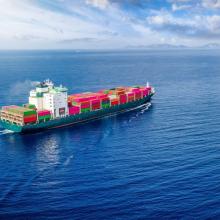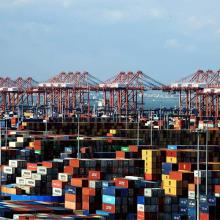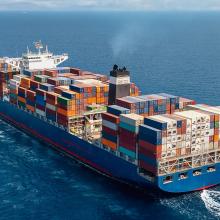
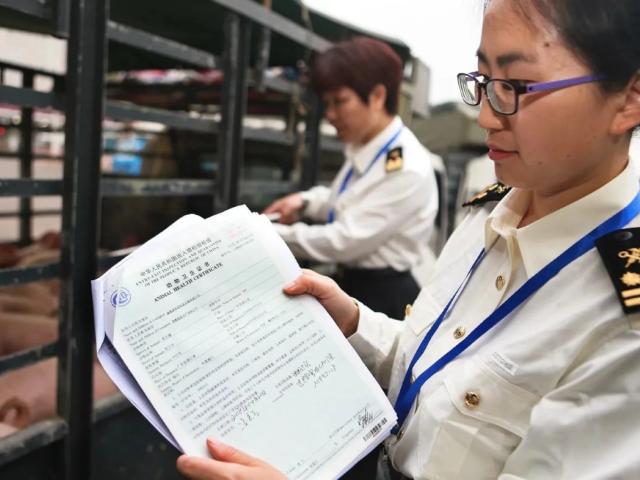
The export declaration is the first official step in shipping goods out of China. In our daily operations at Bofeng Logistics, we file hundreds of export declarations monthly across all major Chinese ports. This guide reflects what we have learned from real clearance scenarios — not just the regulatory theory.
This guide explains the export declaration process in China — what documents are required, how to file electronically, common compliance issues, and how to ensure your cargo is released without delay.
What Is an Export Declaration?
An export declaration is an electronic document submitted to China Customs that provides a detailed account of goods being shipped out of China. It serves three purposes:
- Regulatory compliance: Ensures exported goods comply with Chinese laws and international trade agreements
- Statistics: China tracks all exports for trade data and economic planning
- Control: Identifies restricted or prohibited goods and ensures proper licenses are obtained
Key principle: In China, the exporter of record is the entity that files the export declaration. This is typically the Chinese manufacturer or trading company, not the foreign buyer.
Required Documents for Export Declaration
Essential documents:
| Document | Purpose | Who Prepares |
| Commercial Invoice | Describes goods, value, and terms of sale | Exporter/supplier |
| Packing List | Itemizes quantities, weights, and package details | Exporter/supplier |
| Export Customs Declaration Form | Official declaration submitted to Customs | Licensed customs broker |
| Bill of Lading / Air Waybill | Evidence of carriage contract | Carrier or freight forwarder |
| Sales Contract | Underlying transaction agreement | Buyer and seller |
Conditionally required documents:
| Document | When Required |
| Certificate of Origin | When buyer requests preferential tariff treatment, or letter of credit requires it |
| Export License | For restricted goods (dual-use items, certain chemicals, cultural relics) |
| Inspection Certificate | For products subject to compulsory export inspection |
| Fumigation Certificate | When wood packaging material is used |
The Export Declaration Process
Step 1: HS Code Classification
Every product exported from China must be classified under the Harmonized System (HS) code — a 10-digit tariff code specific to China. This determines:
- Whether the product requires an export license
- Whether any export duties apply (rare for most goods)
- Statistical reporting category
Tip: Incorrect HS code classification is the most common cause of export declaration delays. Verify your HS code with a licensed broker before filing.
Step 2: Document Preparation
Gather and verify all required documents. Ensure consistency across documents:
- Product descriptions match on invoice, packing list, and declaration
- Quantities and weights are consistent
- Declared values reflect actual transaction prices
- Buyer and seller details are complete and accurate
Step 3: Electronic Filing
Your licensed customs broker files the export declaration through the China International Trade Single Window. The electronic submission requires 48 data fields organized into 6 sections:
| Section | Key Data Fields | Validation Rule |
| 1. Declarant Info | Broker license number, filing date, declaration type code | Broker license must be active |
| 2. Exporter/Consignee | Exporter name, customs registration (10-digit code), consignee name & address | Exporter's customs status must be "normal" |
| 3. Commodity Details | HS code (10-digit), product description, brand, model, quantity, unit (kg/pcs), gross/net weight | HS code must match product description; weight tolerances within ±3% |
| 4. Value & Terms | Declared value, currency code (USD/EUR/CNY), trade terms, payment method | Value must be consistent with invoice |
| 5. Transport | Port of loading, port of discharge, destination country, vessel name, voyage number, B/L number | Port codes must be in China Customs directory |
| 6. Licenses & Documents | Export license number (if required), contract number, invoice number, packing list reference | License number validated against MOFCOM database |
The "triple consistency" rule: China Customs' system automatically validates three-way consistency:
- HS code ↔ Product description: The declared product name must match the expected goods for that HS code
- Value ↔ Quantity: Unit price must be within the statistical range for that HS code
- Weight ↔ Volume: Declared weight must be reasonable for the stated product type
When the system detects inconsistency, the declaration is automatically flagged for document review (Yellow channel) — regardless of the exporter's compliance history.
Processing time: 1–4 hours for standard declarations. For Yellow-channel document review: 1-2 business days. For Red-channel inspections: 3-7 business days.
Step 4: Customs Review
China Customs reviews the electronic declaration. The system automatically checks:
- Whether the HS code matches the declared description
- Whether the declared value is within expected ranges
- Whether required licenses are attached
- Whether the exporter is in good standing
The system assigns a risk score, which determines the next step:
- Green channel (low risk): Declaration approved automatically, cargo released for loading
- Yellow channel (medium risk): Document review required, cargo held pending manual review
- Red channel (high risk): Physical inspection required
Step 5: Cargo Release
Once the declaration is approved:
- Customs marks the cargo as "released for loading" in the digital system
- The terminal operator receives the release notification
- Container is cleared for vessel loading
The entire process — from document submission to cargo release — takes 2–48 hours for straightforward shipments without inspections.
Compliance Requirements for Export Declaration
Exporter Registration
Any Chinese company exporting goods must be registered with China Customs and have a Customs Registration Number (also called the 10-digit customs code). This registration is also linked to the company's:
- Foreign Trade Operator Registration (商务部备案)
- Import and Export License (进出口经营权)
- Declaration Unit Registration (报关单位注册登记)
Restricted Goods
The following categories require special licenses or permits for export from China:
| Category | Required License | Issuing Authority |
| Dual-use chemicals and missiles | Dual-use Item Export License | MOFCOM |
| Certain pharmaceuticals | Pharmaceutical Export Certificate | NMPA |
| Endangered species | CITES Export Permit | Forestry Administration |
| Cultural relics | Cultural Relics Export Permit | Cultural Heritage Administration |
| Strategic materials | Strategic Materials Export License | MOFCOM |
Prohibited Goods
Certain items cannot be exported from China under any circumstances: weapons of mass destruction-related materials, certain hazardous wastes, goods infringing intellectual property rights, and items specified by national security regulations.
Common Export Declaration Errors
| Error | Consequence | Prevention |
| Incorrect HS code | Declaration rejected; cargo delayed | Verify with broker before filing |
| Value mismatch between invoice and declaration | Customs investigation; fines | Ensure all documents reflect the same value |
| Missing export license | Cargo held; possible penalties | Check license requirements 2 weeks before shipping |
| Inconsistent product description | Declaration flagged for review | Use identical descriptions across all documents |
| Exporter registration expired | Declaration cannot be filed | Verify registration status quarterly |
Digital Filing: The Single Window System
Since 2021, all export declarations in China must be filed through the China International Trade Single Window (国际贸易单一窗口). Key benefits:
- Unified platform: One login for customs, inspection, and quarantine filings
- Reduced processing time: Digital submissions processed in hours vs days
- Real-time tracking: Exporters can monitor declaration status online
- Paperless processing: Most declarations require no physical documents
Who can access: Only licensed customs brokers and registered exporters with digital certificates.
Export Declaration: Special Scenarios
Re-export of imported goods
Goods imported into China that are later re-exported (e.g., defective returns, unsold inventory) require a different declaration type. The re-export declaration references the original import declaration number, and any duties paid may be refunded if the re-export occurs within a specified timeframe.
Temporary export
Goods exported for a limited period (trade shows, testing, temporary use) can be declared as "temporary export" with a customs bond. They must be re-imported within 6 months (extendable). No duties apply if re-imported within the term.
Consolidation (multi-supplier, one container)
When multiple suppliers' goods are consolidated into one container, a single export declaration can cover the entire consolidation — but only if all goods share the same destination country and all suppliers have valid export licenses.
Export via express courier
Small shipments under express courier (DHL, FedEx, UPS) follow simplified export procedures. Formal export declarations are generally not required if the shipment value is under CNY 5,000 and the goods are not restricted.
FAQ
Q: Who is responsible for filing the export declaration?
A: The Chinese exporter (supplier) is legally responsible. In practice, most exporters authorize their freight forwarder or customs broker to file on their behalf.
Q: Can I file an export declaration myself?
A: Only if your company has a licensed customs broker on staff. Most exporters use third-party brokers.
Q: How much does an export declaration cost in China?
A: Broker fees typically range from CNY 300–800 per declaration, depending on complexity and the broker's service level.
Q: What happens after the export declaration is approved?
A: The cargo is "released for loading" — it can be loaded onto the vessel. The declaration data is also used for VAT rebate (export tax refund) processing.
Q: How does the export declaration relate to export tax rebates?
A: The approved export declaration is one of the primary documents required to claim VAT rebates from the Chinese tax authority.
Q: What's the difference between export declaration for FCL and LCL shipments?
A: The declaration process is identical. For LCL, the consolidator files one consolidated declaration covering all goods in the container. For FCL, the exporter files a single declaration per container.
Q: Can multiple products be covered under one export declaration?
A: Yes — as long as all products are shipped to the same destination and declared by the same exporter. Each product needs its own HS code line item within the declaration.
Q: What happens if there is an error in the export declaration after cargo has sailed?
A: Corrections or cancellations can be filed within 30 days of the declaration approval. Errors discovered later may require formal amendment procedures and could affect VAT rebate eligibility.
Need help with export declarations in China? Bofeng Logistics handles export documentation and customs clearance at all major Chinese ports. Contact us for support.
Related reading
- Customs Clearance in China: A Complete Step-by-Step Guide
- China Import Customs Clearance: Complete Guide for Foreign Buyers
- China Export Customs Clearance: Step-by-Step Guide
- China Customs Modes Compared: 9610, 9810, 0110 and 1039
- Container Shipping from China: The Complete Guide for Importers
Bofeng Logistics
Phone/WhatsApp: 13075678958
Email: info@zhbfwl.com
Contact us for a personalized shipping solution.
Related Logistics Services
Bofeng Logistics offers the following related services, feel free to inquire: