
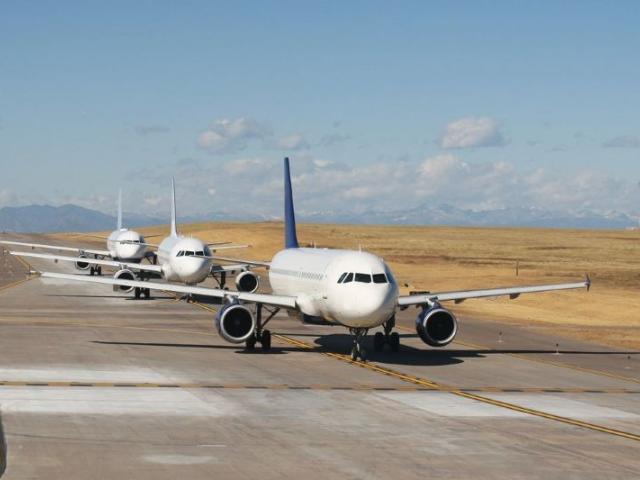
International air freight has four modes—passenger aircraft belly cargo (widest coverage, highest frequency, suitable for 100kg-3 tons), freighters (large capacity, suitable for bulk shipments, 3-80 tons), air charter (full aircraft leasing, billed per flight mission, suitable for bulk urgent or oversized cargo), and air express (door-to-door, full tracking, suitable for 50kg documents/samples/e-commerce parcels). Greater Bay Area capacity features: Shenzhen SZX has dense e-commerce parcels and SF Express freighters; Guangzhou CAN has ample intercontinental belly capacity for Europe and the Americas; Hong Kong HKG has the most extensive global destination network and the strongest international transshipment capability.
I. Comprehensive Overview of Four Air Freight Modes
International air freight is not limited to just "loading cargo onto an aircraft." Based on different capacity sources and operational approaches, air freight can be divided into four modes, each with distinct applicable scenarios, cost levels, and operational requirements.
| Transport Mode | Capacity Source | Transit Time (China → Europe/Americas) | Unit Cost | Suitable Volume | Suitable Cargo Types |
|---|---|---|---|---|---|
| Passenger Aircraft Belly Cargo | Cargo hold of passenger flights | 1-3 days | Medium | 100kg-3 tons | General cargo, time-sensitive goods |
| Freighter | Dedicated cargo aircraft | 1-3 days | Medium to high | 3-80 tons | Bulk shipments, various cargo types |
| Air Charter | Full aircraft lease | As agreed | High (but per-ton cost may be lower) | 20-100 tons | Bulk shipments, special goods, urgent transport |
| Air Express | Courier company fleet + network | 1-3 days | Highest | 0.5-100kg | Documents, samples, e-commerce parcels |
II. Passenger Aircraft Belly Cargo
2.1 What is Belly Cargo?
Belly cargo refers to using the cargo hold space of passenger flights to transport goods. The aircraft's belly hold is typically located beneath the passenger cabin and can accommodate Unit Load Devices (ULD) or loose cargo.
This is the most basic form of capacity in international air freight and the mode with the widest coverage and highest flight frequency.
2.2 Typical Aircraft Belly Capacity
| Aircraft Type | Belly Capacity | Maximum Payload | Typical Routes |
|---|---|---|---|
| Boeing 777-300ER | 6-8 AKE positions | ~12-20 tons | Long-haul international (China-US, China-Europe) |
| Airbus A350-900 | 5-7 AKE positions | ~10-15 tons | Long-haul international |
| Boeing 787-9 | 4-6 AKE positions | ~8-12 tons | Medium/long-haul routes |
| Airbus A330-300 | 5-7 AKE positions | ~10-15 tons | Medium/long-haul routes |
| Boeing 737-800 | Bulk cargo compartment | ~2-3 tons | Domestic/regional routes |
2.3 Advantages and Limitations of Belly Cargo
Advantages:
- High frequency — Dense passenger flight schedules offer greater shipping flexibility
- Wide coverage — Passenger route network reaches 600+ cities globally
- Stable transit time — Operates on fixed flight schedules, providing predictability
- Moderate cost — Belly cargo rates are typically lower than freighter rates
Limitations:
- Limited capacity — Subject to passenger baggage and mail priority; capacity tight during peak seasons
- Cargo restrictions — Dangerous goods, lithium batteries, etc., are strictly limited (IATA DGR rules)
- Low priority — Cargo may be offloaded if passenger baggage exceeds weight limits
- Size constraints — Cargo door dimensions and shape limit oversized items
2.4 Belly Cargo Characteristics in the Greater Bay Area
Taking the Greater Bay Area as an example:
- Guangzhou Baiyun (CAN): China Southern Airlines hub; dense China-Europe/China-US routes with ample belly capacity; the largest belly cargo base in South China
- Shenzhen Baoan (SZX): International passenger routes growing steadily (especially Southeast Asia and intercontinental); belly capacity increasing rapidly
- Hong Kong (HKG): One of the densest intercontinental passenger networks globally, with belly capacity reaching 200+ destinations worldwide; however, some cross-border cargo needs to be transported from Shenzhen via land ports to Hong Kong
III. Freighter
3.1 What is a Freighter?
A freighter is an aircraft designed specifically for cargo transport. Unlike passenger aircraft, freighters have no passenger seats; the entire fuselage is used for cargo loading, equipped with large cargo doors and roller systems.
3.2 Mainstream Freighter Aircraft Types
| Aircraft Type | Maximum Payload | Range (Full Load) | Typical Use |
|---|---|---|---|
| Boeing 747-8F | ~134 tons | ~4,100 km | Intercontinental trunk routes, main long-haul freighter |
| Boeing 777F | ~103 tons | ~9,000 km | Direct intercontinental routes, currently most popular long-haul freighter |
| Boeing 767-300F | ~52 tons | ~6,000 km | Regional/transoceanic routes |
| Airbus A330-200F | ~60 tons | ~7,400 km | Medium/long-haul routes |
| Airbus A350F | ~109 tons | ~8,700 km | Next-generation large freighter (delivery 2026) |
| Boeing 737-800BCF | ~23 tons | ~3,700 km | Domestic/regional cargo, passenger-to-freighter conversion |
| SF Airlines 757F | ~28 tons | ~4,500 km | Domestic express cargo |
3.3 Advantages of Freighter Transport
- Sufficient capacity: Can load tens to hundreds of tons per trip, suitable for bulk shipments
- Cargo-friendly: Not affected by passenger baggage; low probability of cargo being offloaded
- Size flexibility: Large cargo doors accommodate oversized items and heavy equipment
- Dangerous goods permitted: Can transport dangerous goods prohibited on passenger aircraft (subject to relevant regulations)
- Independent schedule: Freighters can be scheduled based on cargo demand, not restricted by passenger flight timings
3.4 Major Global Freighter Operators
| Category | Representative | Features |
|---|---|---|
| Integrated airlines | China Southern Cargo, Air China Cargo, China Cargo Airlines | Leverage passenger networks with global coverage |
| Express integrators | FedEx, UPS, DHL, SF Express | Own freighter fleets, network-based operations |
| All-cargo airlines | Cargolux, Atlas Air, Kalitta Air | Pure cargo model, offering charter and ACMI services |
| E-commerce logistics | Yuntu, Yanwen, Zongteng | Operate via charters and fixed capacity allocations |
3.5 Freighter Bases in the Greater Bay Area
- Shenzhen (SZX): SF Airlines' main base (China's largest cargo airline), operates 80+ freighters; also home to FedEx's South China operating center
- Guangzhou (CAN): China Southern Cargo's main base, operates large freighters such as 747F and 777F; dense routes to Europe and the Americas
- Hong Kong (HKG): Cathay Cargo's main base, operates 20+ 747F/777F; one of the densest global cargo airline networks
IV. Air Charter
4.1 What is an Air Charter?
An air charter refers to a shipper or freight forwarder leasing an entire aircraft for cargo transport, billed per flight mission (not per cargo weight). Charters can be one-way or round-trip, and can also be short-term or long-term ACMI agreements (Aircraft, Crew, Maintenance, Insurance).
4.2 When is Air Charter Needed?
| Scenario | Description | Example |
|---|---|---|
| Large urgent volume | Cargo volume exceeds regular flight capacity | 20+ tons of electronics urgently needed for peak season warehousing |
| Oversized cargo | Cannot fit into standard ULD | Large machinery, aircraft engines |
| Destinations without scheduled routes | Route network cannot cover | Inland African countries, battlefield supplies |
| Seasonal capacity shortage | Capacity shortage during peak season | E-commerce peak season before Christmas |
| Dangerous goods / special cargo | Not accepted in passenger belly | Large-capacity lithium batteries, fireworks |
4.3 Cost Structure for Air Charter
Charter costs typically include:
| Cost Item | Description |
|---|---|
| Flight hour fee | Billed per actual flight hour; the largest cost component |
| Landing fee | Fee charged by airports for flight landing services |
| Parking fee | Fee for aircraft parking at the airport |
| Ground handling fee | Ground services such as loading/unloading, palletizing, security checks |
| Fuel surcharge | Calculated based on actual fuel consumption |
| Customs clearance fee | Customs clearance services at origin and destination |
| Ferry fee | Empty flight leg from the aircraft base to the loading location |
While charters appear expensive (single trip can cost hundreds of thousands of USD), per-ton cost may be lower than regular air freight for large volumes, especially when ocean freight transit times cannot meet demand.
4.4 Air Charter Operation Process
- Needs assessment: Determine cargo volume, time window, origin/destination
- Request for quote: Send RFQ to charter brokers or airlines (including cargo description, weight, dimensions, time requirements)
- Capacity confirmation: Confirm available aircraft type and departure time
- Contract signing: Sign charter contract (including space guarantee clauses)
- Ground operations: Palletizing/packing, customs declaration, security screening
- Execution: Cargo loading, departure, arrival
- Destination operations: Unloading, customs clearance, cargo pickup
V. Air Express
5.1 What is Air Express?
Air express refers to courier companies using their own freighter fleets and integrated passenger belly capacity networks to provide door-to-door rapid delivery services. Unlike traditional general air cargo, the core features of express are door-to-door, time-definite, and full tracking.
5.2 Three Major International Express Giants
| Company | Own Freighters | Global Hub | Main Advantage Region | Key China Operation Ports |
|---|---|---|---|---|
| FedEx | 600+ | Memphis (MEM), Guangzhou (CAN) | Americas | Shanghai Pudong, Guangzhou, Shenzhen |
| UPS | 500+ | Louisville (SDF), Cologne (CGN) | Americas, Europe | Shanghai Pudong, Shenzhen |
| DHL | 300+ | Brussels (BRU), Leipzig (LEJ), Hong Kong (HKG) | Europe, Asia Pacific | Hong Kong, Shenzhen, Shanghai |
5.3 Air Express vs. General Air Freight
| Comparison Dimension | Air Express | General Air Freight |
|---|---|---|
| Service scope | Door-to-door one-stop | Airport to airport (delivery can be added) |
| Transit time | 2-5 business days | 5-10 business days |
| Billing method | Dimensional weight (divided by 5000) | Dimensional weight (divided by 6000) |
| Document complexity | Low (handled by courier company) | High (must be prepared by shipper) |
| Suitable weight | 50kg | >50kg |
| Tracking information | ✅ Detailed tracking throughout | ⚠️ Limited information |
| Customs clearance | Included in express service | Requires separate customs broker arrangement |
| Suitable cargo | Documents, samples, e-commerce parcels | General cargo, bulk shipments |
For a more detailed comparison between express and general air freight, see Handbook Article 20: "Air Express vs. General Air Freight: DHL/UPS/FedEx vs. Traditional Air Freight."
VI. Mode Selection Decision
Selection Process
Which air freight mode suits your cargo?
│
├─ Single shipment  50kg → Air Express (DHL/UPS/FedEx)
│
├─ Single shipment 50kg - 3 tons → Passenger Aircraft Belly Cargo
│   └─ Urgent/Dangerous goods/Special → Freighter
│
├─ Single shipment 3 - 20 tons → Freighter
│
├─ Single shipment > 20 tons
│   ├─ Scheduled freighter available → Freighter space booking
│   └─ No scheduled flights / time-sensitive special → Air Charter
│
└─ Any volume, door-to-door priority → Air Express
Greater Bay Area Scenario Examples
| Scenario | Recommended Mode | Reason |
|---|---|---|
| Shenzhen → FBA warehouse in the US, 5 tons of electronics | Freighter (SZX direct to LAX) | Large volume, stable transit time required |
| Dongguan → Germany, 200kg auto parts | Passenger aircraft belly cargo (CAN→FRA) | China Southern CZ daily direct flight, stable belly capacity |
| Guangzhou → Africa, 50 tons of project supplies | Air Charter | Few routes to destination, large volume |
| Shenzhen → Global, 2kg e-commerce parcel | Air Express | Door-to-door, guaranteed transit time, complete tracking |
📞 Hotline: 130-7567-8958 | ✉️ Email: info@zhbfwl.com
Further Reading:
Related Logistics Services
Bofeng Logistics offers the following related services, feel free to inquire: