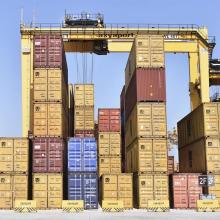
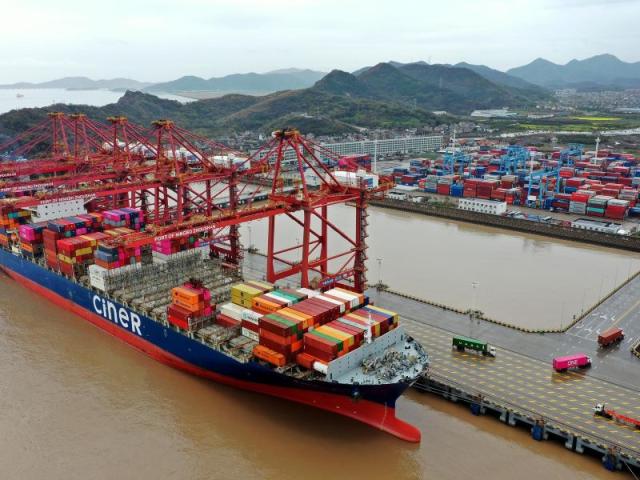
First Understand the Basics: What is LCL and FCL?
FCL: Ocean "Chartered Carriage" – An Exclusive Container for You
FCL means "one container is used for only one shipper's goods." A 20-foot container (20GP) can hold about 28 cubic meters, and a 40-foot container (40GP) about 58 cubic meters. It's more suitable when cargo volume is ≥15 cubic meters. The International Maritime Shipping Association (IMSA) defines it as "the shipper has exclusive use of the container." For example, a garment factory in Guangzhou shipping 30 cubic meters of clothes to New York can charter a 40GP full container, sealed with exclusive labels for safety and peace of mind.
LCL: Ocean "Car Share" – Multiple Cargoes Sharing One Container
LCL means consolidating small shipments from multiple shippers into one container, with a minimum volume of 1 cubic meter. It's suitable for small cargo volumes or sample shipments. However, cargo compatibility needs attention; for instance, damp fabric and moisture-sensitive electronic components cannot be shipped together. For example, a cross-border e-commerce seller in Shenzhen shipping 8 cubic meters of toys to London via LCL can halve the cost compared to FCL; confirming compatibility in advance can avoid issues.
Key Differences: A Five-Dimension Comparison – Which Suits You Better?
1. Cost: Billed by "Cubic Meter" vs. by "Container" – Calculate Clearly to Save Money
LCL Cost: Like a "Buffet"
LCL costs are typically "charged by volume" (CBM). Besides ocean freight, it also includes:
- CFS Charge: Consolidation and deconsolidation fees at the warehouse.
- Documentation fees, customs clearance fees, etc.
Characteristics: Unit prices seem low, but there are many miscellaneous charges. Also,destination port may incur deconsolidation and handling fees, so be sure to ask in advance!
FCL Cost: Like a "Set Meal"
FCL costs are typically a "lump sum" quoted per container. Main components include:
- Ocean Freight: The "set meal" base price.
- ORC/THC: Terminal handling charges.
- Documentation fees, customs clearance fees, etc.
Characteristics: The total cost is higher, but it's usually a "fixed price," withmore transparent fees at the destination port.
2. Transit Time: LCL "Awaits Consolidation," FCL "Ships Directly"
Cargo for FCL is loaded directly onto the vessel, and customs clearance only handles a single set of documents, making it faster; LCL must wait for a full container load, and customs clearance must consolidate documents from multiple parties.
3. Customs Clearance: LCL "Teams Up," FCL "Goes Solo"
FCL requires standard documents: `Packing List, Invoice, Bill of Lading` – customs clearance can be completed in 1-2 days; LCL requires an additional `LCL House Bill of Lading` and depends on all shippers' documents being ready. The General Administration of Customs' "Regulations on the Management of Import and Export Goods Declaration" states: "LCL customs declaration requires all compliant documentation," so make sure to check document requirements in advance when using LCL.
4. Security & Safety: FCL "Exclusive Protection," LCL "Shared Custody"
FCL uses exclusive security seals, is handled only once, minimizing issues like crushing or moisture; LCL involves mixed cargo, which can easily lead to damage – glassware via LCL might shatter. Suggest using FCL for fragile or high-value goods. If using LCL, improve packaging and purchase Cargo Transportation Insurance (refer to the "ICC Cargo Clauses").
5. Flexibility: LCL "Low Barrier to Entry," FCL "With Requirements"
LCL has a minimum volume of 1 CBM, suitable for small batches; for FCL, a 20GP container is best for ≥15 CBM, a 40GP for ≥25 CBM, making FCL uneconomical for very small loads. For instance, a Yiwu small commodity seller shipping 5-8 CBM of ornaments to Southeast Asia can use LCL for lower costs and greater shipping flexibility.
Having trouble deciding? This guide helps you make a choice in seconds!
Choose LCL if you:
- Have small cargo volume (typically 15 cubic meters).
- Are not strict on transit time, not in a hurry for delivery.
- Have a limited budget, seeking maximum cost-effectiveness.
Choose FCL if you:
- Have large cargo volume (close to or exceeding the FCL threshold).
- Your goods are delicate or high-value, needing absolute security (e.g., premium furniture, electronics).
- You prioritize speed and efficiency, wanting faster delivery for sale.
- You want adoor-to-door service, hassle-free.
Ultimate Decision Flowchart
- Measure volume! How many CBM is your cargo?
- Less than 15? → PrioritizeLCL.
- More than 15? → PrioritizeFCL.
- Around 15? → CompareLCL andFCL costs separately. Comparison will tell you!
FAQ Corner
Q1: Is LCL safe? Will my freight be damaged by someone else's?
A: We use scientific stowage and secure shipments with wrapping film and air bags. However, LCL inevitably involves more handling and transshipment points, meaning the risk is relatively higher. We recommend you purchase insurance for high-value cargo.
Q2: Is FCL always faster than LCL?
A: In the vast majority of cases, yes! Because LCL requires waiting for other goods, loading, and deconsolidation at the destination terminal, all adding time. FCL has a simpler process, offering greater directness and efficiency.
All in all, There is no absolute "good" or "bad" between FCL and LCL. It's just like the difference between a chauffeured "private limousine" and a "rideshare van" – each approach comes with suitable applications for particular circumstances.
Bofeng Logistics provides one-stop logistics services including domestic container sea freight, international sea freight (FCL/LCL), dedicated transportation lines to Hong Kong and Macau, offering haulage, customs clearance, and warehousing. Contact number (landline / mobile): 130-7567-8958.
Related Logistics Services
Bofeng Logistics offers the following related services, feel free to inquire: