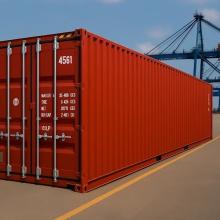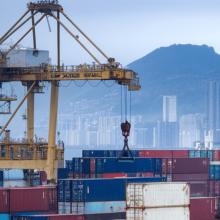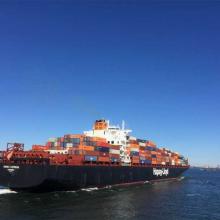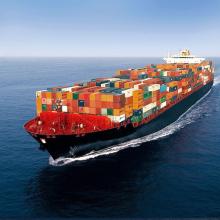
Containers, also known as cargo containers, refer to large cargo vessels designed for repeated use, featuring specific strength, rigidity, and dimensions. Containers have many classifications and different uses. Today, I will introduce some little-known details that you might not be familiar with.
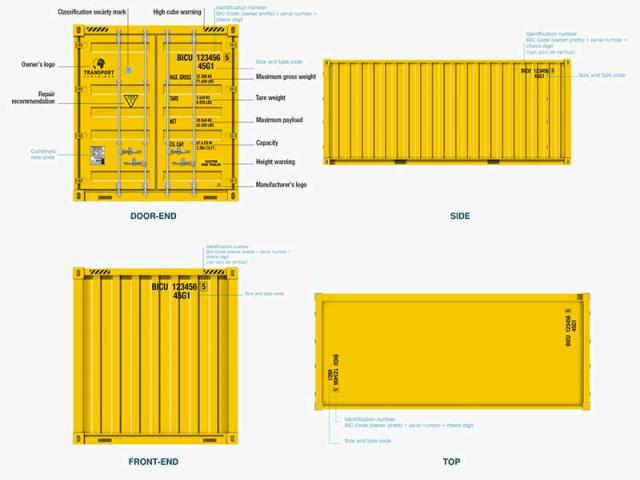
Each container has a code, known as the container number (the container number for export cargo). The standard container number consists of 11 digits, including three parts:
The first part consists of 4 English letters. The first three letters primarily indicate the container owner or operator, and the fourth letter indicates the container type.
The second part consists of 6 digits. This is the container registration code, serving as the unique identifier for the container body.
The third part is the check digit, derived from the first 4 letters and 6 digits through verification rules, used to identify errors during verification. This is the 11th digit.
What are the common container dimensions and types?
20GP, 40GP, and 40HQ are the three most commonly used containers. Their specifications are as follows:
20GP, maximum weight 25 tons, dimensions: 5.89m*2.35m*2.39m, normally holds 28 cubic meters
40GP, maximum weight 25 tons, dimensions: 12.02m*2.35m*2.39m, normally holds 56 cubic meters
40HQ, maximum weight 25 tons, dimensions: 12.02m*2.35m*2.69m, normally holds 68 cubic meters
Common container types: 8 common container types and their codes (using 20-foot as an example):
1) Dry container: Type code GP; 95 code 22G1
2) Dry high cube container: Type code GH (HC/HQ); 95 code 25G1
3) Garment container: Type code HT; 95 code 22V1
4) Open top container: Type code OT; 95 code 22U1
5) Reefer container: Type code RF; 95 code 22R1
6) Reefer high cube container: Type code RH; 95 code 25R1
7) Tank container: Type code TK; 95 code 22T1
8) Flat rack container: Type code FR; 95 code 22P1
Take a closer look—do you see the "pattern"?
1) Type codes starting with "G" are general-purpose containers (as opposed to special containers like garment, reefer, or flat rack), because G stands for General.
2) Type codes with the second letter "H" are high cube containers, because H stands for High.
3) 95 codes starting with the digit 2 are 20-foot; starting with 4 are 40-foot; starting with L are 45-foot.
4) 95 codes with the second digit 2 are non-high cube containers (8.5 feet high); with 5 are high cube (9.5 feet high)—this is important to note: 5 does not represent 45 feet, e.g., the 95 code for 40HQ is 45G1, which can easily be mistaken for a 45HQ container, but 45G1 actually refers to a 40HQ.
With so many containers in ports, container numbers are obviously essential to identify the location and information of each box.
For domestic container FCL door-to-door services, welcome to call for quotes and booking: 13075678958 Manager Huang
Bofeng Logistics offers one-stop logistics services including domestic container shipping, international shipping (FCL/LCL), Hong Kong and Macau logistics routes, as well as trucking, customs declaration, and warehousing. Contact us at 130-7567-8958 (Manager Huang) — call now for a personalized quote!
Related Logistics Services
Bofeng Logistics offers the following related services, feel free to inquire: