1. Comparison of Four Transport Modes
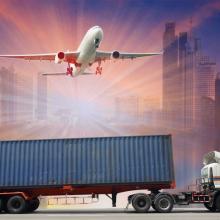
China-Hong Kong logistics has four basic transport modes: LCL, FTL, express, and cold chain. LCL shares costs based on cargo volume, arrives in Hong Kong in 1-2 days, and is suitable for small batches of daily shipments, making it the most frequently used mode. FTL occupies an entire truck and arrives in Hong Kong the same day, suitable for large volumes or urgent goods. Express takes 4-8 hours for urgent shipments, suitable for samples and documents. Cold chain maintains temperature control throughout, suitable for food and pharmaceuticals.
LCL charges based on the greater of weight (RMB/kg) or volume (RMB/CBM), FTL charges a flat rate per vehicle type, and express charges per shipment including customs clearance and delivery fees. The choice of mode depends on three factors: cargo volume, delivery time, and cargo value. See details in LCL vs FTL Selection Guide and China-Hong Kong Vehicle Encyclopedia.
2. LCL Transport
LCL transport consolidates goods from multiple customers onto one China-Hong Kong truck, with costs shared based on actual cargo volume. Scheduled departures run daily: pick-up in Pearl River Delta cities in the morning, consolidation and loading at the Shenzhen warehouse in the afternoon, customs clearance at Shenzhen Bay or Huanggang Port in the evening, and Hong Kong delivery the next morning. LCL charges based on the greater of weight (RMB/kg) or volume (RMB/CBM), consistent with LCL sea freight billing logic—light bulky goods are charged by volume, heavy goods by weight.
Since LCL goods travel with other customers' cargo, packaging must be sturdy enough to prevent crushing. Cardboard boxes should be sealed with packaging tape in an I-shape, and pallets need at least three layers of stretch wrap. Fragile items should be marked with fragile labels and upward arrows on the outer box for special handling during loading. LCL is suitable for regular goods such as electronic components, hardware accessories, garments and textiles, daily necessities, and samples. Customers from other cities can ship goods to the Zhuhai warehouse first and then arrange LCL to Hong Kong. Customers from other cities can ship goods to the Bofeng Zhuhai warehouse first and then arrange LCL to Hong Kong.
3. FTL Transport
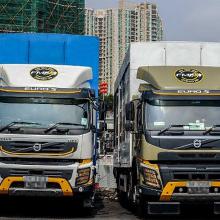
FTL means one China-Hong Kong truck carries goods from only one customer, directly from the factory to Hong Kong without transshipment. It charges a flat rate per vehicle type, with options ranging from 3-ton to 40-container trucks, arriving in Hong Kong the same day. Suitable for cargo volumes exceeding 5 CBM, high-value goods, and machinery requiring lashing. The FTL import direction also applies, with sealed transport from Hong Kong back to the mainland.
Furniture companies in Dalingshan and Houjie, Dongguan, heavily use FTL—due to the large and irregular size of furniture, FTL is more cost-effective than LCL. Machinery and chemical companies in Huangpu, Guangzhou, also primarily use FTL.
4. Express and Cold Chain Transport
Express is suitable for documents, samples, and urgent small items. Shenzhen to Hong Kong takes 4-8 hours, Guangzhou 8-12 hours, charged per shipment for simple operation. Main use cases for express include export samples for order confirmation, customs document transfer, and e-commerce urgent restocking; though costs are higher, time efficiency is a clear advantage. Cold chain goods use refrigerated trucks with adjustable refrigeration or freezing modes and full temperature control. China-Hong Kong cold chain transport mainly involves frozen food factories in the Pearl River Delta supplying Hong Kong supermarkets, pharmaceuticals transshipped through Hong Kong, and flowers exported via Hong Kong airport. The key to cold chain transport is pre-cooling—both goods and refrigerated trucks must be pre-cooled to transport temperature. Temperature control during queuing for customs clearance at the port in hot summer weather is the biggest challenge; it is recommended to choose Shenzhen Bay Port or avoid peak hours for departure. Customs inspection of cold chain goods is relatively strict; it is advisable to prepare quarantine certificates and temperature control records in advance.
5. Shipping Guide by City
Shenzhen. Shenzhen to Hong Kong LCL takes 1-2 days, FTL same day, express 4-8 hours. Nanshan and Bao'an to Shenzhen Bay Port takes 20-30 minutes, Longgang and Longhua to Huanggang takes 30-40 minutes, Xili and Futian offer flexible options. Door-to-door pick-up is available throughout Shenzhen. Shenzhen is also the core hub for transshipping goods from other cities via its warehouse to Hong Kong.
Dongguan. LCL takes 1-2 days throughout Dongguan, FTL same day. Travel time from various Dongguan towns to Shenzhen ports ranges from 30-60 minutes: Chang'an and Humen to Shenzhen Bay about 30 minutes, Changping to Huanggang about 50 minutes. The electronics industry in Changping and Chang'an mainly uses small and medium items, with LCL being the most economical. Garments in Humen are bulky and light, suitable for LCL by volume. Furniture in Dalingshan and Houjie is bulky, suggesting FTL direct delivery. Travel time from various Dongguan towns to Shenzhen ports ranges from 30-60 minutes.
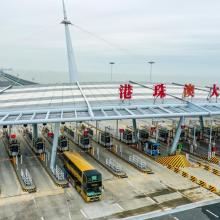
Guangzhou. LCL takes 1-2 days in Guangzhou, FTL same day to next day. Distance from Guangzhou to Shenzhen ports is about 80-150 km; Panyu to Shenzhen Bay is closest at about 80 km/1 hour, Baiyun about 130 km/1.5 hours. Guangzhou can also use the Zhuhai route to Hong Kong: Guangzhou to Zhuhai via Guangzhou-Zhuhai West Expressway about 1.5 hours, then across the Hong Kong-Zhuhai-Macao Bridge to Hong Kong about 1 hour. This dual-route option is a unique advantage for Guangzhou compared to Shenzhen and Dongguan.
Zhongshan and Foshan. Zhongshan to the Zhuhai warehouse is only 40 km, Foshan about 70 km, then across the Hong Kong-Zhuhai-Macao Bridge to Hong Kong about 1 hour; total transit time is similar to the Shenzhen route. Zhongshan mainly uses small appliances and lighting, suitable for LCL; furniture and building materials from Foshan are recommended for FTL.
Other Pearl River Delta Cities. Zhuhai can go directly to Hong Kong via the Hong Kong-Zhuhai-Macao Bridge in about 1 hour. Huizhou is about 70 km to Shenzhen, transshipped via Shenzhen. Jiangmen and Zhaoqing are transshipped via the Zhuhai warehouse. Bofeng Logistics can arrange door-to-door pick-up in all cities within Guangdong Province; goods from other provinces can be transshipped via the Zhuhai warehouse to Hong Kong and Macao. Customers in Guangdong Province can have goods picked up in the morning and cleared through customs in the afternoon; customers from other provinces can ship goods to the Zhuhai warehouse one day in advance to connect with the Hong Kong and Macao dedicated lines. Bofeng Logistics operates a fleet with Yue Z and FV dual-plate vehicles, ensuring stable daily departure schedules. Delivery from Shenzhen to Hong Kong can be completed within 24 hours, from Guangzhou within about 36 hours.
6. Bofeng Logistics China-Hong Kong Dedicated Line Services
Door-to-door pick-up is available in Shenzhen, Dongguan, Guangzhou, Foshan, Zhongshan, Zhuhai, and other locations within Guangdong Province. Goods from other areas can be shipped to the Zhuhai warehouse for transshipment. Customs clearance is through Shenzhen Bay or Huanggang Port for Hong Kong, and through the Hong Kong-Zhuhai-Macao Bridge for Macao. Import and export in both directions are operable, with transparent all-inclusive mode fees. Companies needing China-Hong Kong logistics services can flexibly choose modes based on their own cargo volume, time requirements, and cargo type, or contact us for professional selection recommendations.
Related Logistics Services
Bofeng Logistics offers the following related services, feel free to inquire: