
Shenzhen Shi
Guangdong Sheng
China
Shenzhen Port
1. Port Overview
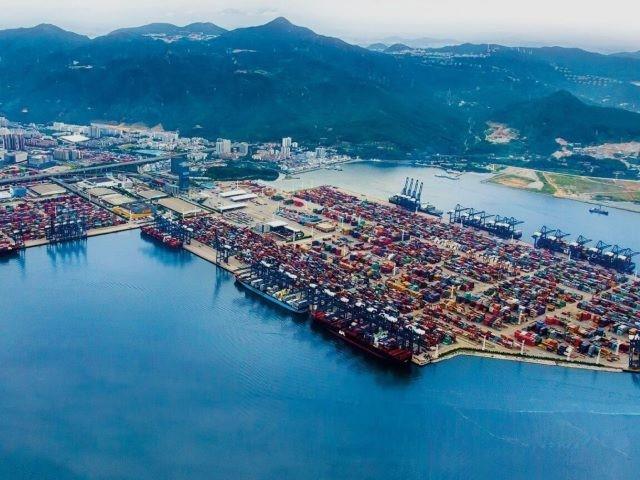
The Port of Shenzhen is located on the east bank of the Pearl River estuary in Guangdong Province, in the core area of the Guangdong-Hong Kong-Macao Greater Bay Area. It is the largest container port in South China and one of the world's important international shipping hubs. The Port of Shenzhen consists of the eastern Yantian port area and western port areas such as Shekou, Chiwan, Mawan, and Dachanwan, forming a dual-wing layout of "deep water in the east, near-sea in the west." Public statistics show that in 2024, the Port of Shenzhen's container throughput reached 33.38 million TEU, up 11.7% year-on-year, ranking fourth in the world; its foreign trade container throughput exceeded 30 million TEU for the first time.
The Port of Shenzhen's locational advantage lies in its proximity to the Pearl River Delta hinterland, the world's most concentrated manufacturing region. Industrial belts such as electronic information, home appliances, furniture, and electromechanical equipment are distributed across Shenzhen, Dongguan, Huizhou, Zhongshan, and other places, giving cargo short overland distances from factories to terminals and high port-gathering efficiency. At the same time, the Port of Shenzhen is adjacent to Hong Kong and, together with Hong Kong's Kwai Tsing port area, forms the dual core of international shipping in the Greater Bay Area; goods from the Pearl River Delta can connect to global routes via Shenzhen or Hong Kong.
Bofeng Logistics is headquartered in the Pearl River Delta, and the Port of Shenzhen is one of our most core ports of departure. We have years of operational experience in both major port areas, Yantian and Shekou, and have stable weekly resources for domestic coastal routes, Hong Kong-Macao routes, and international trunk-line sailings, enabling us to provide customers in the Pearl River Delta with full-chain services from factory pickup, customs declaration, and vessel loading to customs clearance and delivery at the destination port.
2. Port Scale and Facilities
The functions of the various port areas of the Port of Shenzhen are clearly divided, and the main facilities include:
- Yantian Port Area: The Port of Shenzhen’s main deep-water port area and a core port of call for international ocean-going trunk routes. It is equipped with large deep-water container berths and can accommodate today’s mainstream ultra-large container ships. The vast majority of ocean-going routes to Europe and America call here.
- Shekou Port Area: Located on the east bank of the Pearl River Estuary, it mainly serves short-sea routes, domestic-trade containers, and Hong Kong–Macao routes, while also handling passenger transport. It is an important node in domestic coastal shipping and the Pearl River Delta barge network.
- Chiwan Port Area: Mainly handles containers and bulk/general cargo, and is an important component of the western Shenzhen port cluster.
- Mawan Port Area: Mainly handles bulk cargo, breakbulk cargo, and energy-related cargo, and also has container-handling capabilities.
- Dachan Bay Port Area: An emerging container port area in western Shenzhen that handles some mainline transshipment and domestic-trade container volumes.
The Port of Shenzhen is directly connected to the Pearl River Delta manufacturing bases through the expressway and high-grade road network, including the Guangzhou–Shenzhen Yanjiang Expressway, Beijing–Hong Kong–Macao Expressway, and Jihe Expressway. It also connects to the national railway network via the Pingnan Railway and Pingyan Railway, giving it sea-rail intermodal transport capabilities. A large number of container yards, bonded warehouses, and export supervised warehouses are clustered around the port, providing supporting facilities for consolidation, transshipment, and value-added services.
The number of berths, water depth, and designed throughput capacity of each port area may be adjusted with expansion projects; the current data published by the terminal operators shall prevail.
3. Main Routes
3.1 Domestic Coastal Routes
Shenzhen Port is a core hub for domestic trade container transport in South China, with frequent sailings to major domestic coastal ports:
| Destination Port | Reference Transit Time | Route Type |
|---|---|---|
| Shanghai Port | 3-4 days | Coastal route |
| Ningbo Port | 3-4 days | Coastal route |
| Xiamen Port | 1-2 days | Coastal route |
| Qingdao Port | 4-5 days | Coastal route |
| Tianjin Port | 5-6 days | Coastal route |
| Hong Kong Port | Approx. 1 day | Pearl River Delta route |
3.2 Main International Routes
Shenzhen Port's international routes cover major trade lanes including Southeast Asia, Australia, North America, and Europe:
| Destination port | Reference transit time | Common shipping lines |
|---|---|---|
| Port of Singapore | 4-6 days | COSCO, MSC, MAERSK |
| Port of Sydney | 10-13 days | COSCO, CMA CGM |
| Port of Los Angeles | 12-14 days | EVERGREEN, ONE |
| Port of Hamburg | 26-30 days | CMA CGM, MSC |
The reference transit time is the sailing time from departure at the port of origin to arrival at the destination port. It does not include customs declaration at origin, customs clearance at destination, or container pickup time, nor does it include transshipment waiting. Actual transit times are affected by factors such as carrier route arrangements, weather, and port congestion. Please confirm the specific sailing schedule with us before shipping.
4. Hinterland and Cargo Mix
The cargo source structure of Shenzhen Port closely reflects the industrial structure of the Pearl River Delta, with exports consisting mainly of manufactured goods:
- Exports from Shenzhen Port: consumer electronics and communications equipment, home appliances, computers and accessories, electromechanical equipment, furniture and household goods, daily consumer goods, cross-border e-commerce parcels and consolidated cargo
- Imports via Shenzhen Port: electromechanical equipment and production lines, electronic components, bulk raw materials, chemical raw materials, high-end consumer goods
Cargo suitable for transport via Shenzhen Port: Electronic products and precision equipment have high requirements for transport timeliness and the in-container environment, so full container load (FCL) transport with complete moisture-proof packaging is usually chosen; bulky cargo such as furniture and home appliances is suitable for 40HQ high-cube containers; cross-border e-commerce and small-to-medium batch orders are better suited to less-than-container load (LCL) consolidation.
Bofeng Logistics experience sharing: Shenzhen Port's advantage lies in South China's densest route network and most fully competitive market. For the same destination port, multiple shipping companies are often available, and peak-season space is relatively guaranteed. The Yantian Port area handles ocean-going mainline services, and almost all large vessels call there; the Shekou Port area focuses on near-sea and domestic trade, with domestic sea freight cargo usually departing from Shekou or Mawan. The voyage from Shenzhen Port to Hong Kong takes about 1 day, making it an important channel for cargo from the Pearl River Delta to connect with international routes via Hong Kong. For shipments from Guangdong, it is recommended to first determine the port area according to the direction of the destination port, then choose a plan by comprehensively considering sailing schedules, free storage period, and drayage costs.
5. Operational Notes
Shenzhen Port has relatively high operational efficiency year-round, but during the peak season (around July–October), shipping space and drayage resources become tight. It is advisable to book space in advance and arrange container pickup as early as possible. The Yantian and Shekou port areas are about 40 kilometers apart, and drayage costs and container gate-in times differ significantly. When booking, be sure to confirm the specific terminal to avoid extra costs caused by going to the wrong port area. The free container usage period at Shenzhen Port is usually 3–5 days, subject to the shipping line and terminal regulations; exceeding it will incur container detention fees.
Dangerous goods, reefer containers, and out-of-gauge cargo must be declared in advance when booking, and an acceptable terminal must be confirmed. Shenzhen’s port areas do not have entirely consistent regulations for dangerous goods operations; failure to declare before arrival at port may result in refusal to discharge.
FAQ
Q: What is the difference between Yantian and Shekou at the Port of Shenzhen?
Answer: Yantian is a deep-water outer port, mainly berthing large vessels on international ocean-going trunk routes; Shekou is located at the Pearl River Estuary and mainly serves near-sea routes, domestic trade transportation, and Hong Kong–Macao routes. Goods exported to Europe and the United States are mostly shipped from Yantian, while domestic coastal and Hong Kong–Macao-bound shipments usually depart from Shekou or Mawan.
Q: When exporting from Shenzhen, how far in advance do I need to book space during peak season?
Answer: July to October is the traditional peak export season. It is recommended to confirm shipping space at least one week in advance, and goods requiring specific sailing schedules or designated container types should be arranged even earlier. During peak season, trailer and yard resources are also tight, so extra time should be allowed for container pickup.
Q: Can goods be transshipped from Shenzhen Port via Hong Kong?
Answer: Yes. The voyage from Shenzhen Port to Hong Kong takes about 1 day, and goods from the Pearl River Delta can connect via Hong Kong to Hong Kong’s ocean-going route network. Whether to transship via Hong Kong usually depends on direct shipping coverage to the destination port and the overall cost; we will compare this together when designing the solution.
6. Bofeng Logistics Services
Bofeng Logistics provides the following services at Shenzhen Port:
- Full Container Load (FCL): Standard container types such as 20GP, 40GP, and 40HQ; both port-to-port and door-to-door are available
- Less than Container Load (LCL): Consolidation and shipping for cross-border e-commerce and small-to-medium batch orders
- Customs Declaration Services: Coordination of export customs declaration, commodity inspection, certificate of origin, and other documents
- Trucking and Warehousing: Factory pickup in the Pearl River Delta, container trucking to port, export supervised warehouse, and bonded warehousing
- Value-added Services: Cargo insurance, labeling and sorting, destination port customs clearance, and delivery coordination
Service Features: Long-term cooperation with multiple shipping lines, with relatively stable space during peak season; dedicated staff follow cargo status, providing full tracking from factory pickup to signed receipt at the destination port.
📍 Welcome to contact us for real-time freight rates.
Further Reading
- International Ocean Shipping Export Services: FCL, LCL, and door-to-door export ocean shipping solutions
- Guide to Major Chinese Ports: Comparison of the positioning and route characteristics of major domestic container ports
- Major Ports in Guangdong Province: Distribution and division of roles among Guangdong ports such as Shenzhen, Guangzhou, Zhuhai, and Dongguan
Related ports: Guangzhou Port (Nansha) | Port of Hong Kong | Shekou Port
Prepared by the Bofeng Logistics team; content reviewed in September 2026. Port throughput and facility data are based on official releases from port authorities and terminal operators, and figures may differ between sources. Schedules and documentation requirements are subject to booking confirmation.