Client Background
Macau's economy is driven by gaming and tourism, with an active local dining and consumption market. Hotel catering facilities and street-side chain restaurants coexist, creating large and stable demand for food ingredients. The protagonist of this case is a chain restaurant group operating multiple outlets on the Macau Peninsula and in Cotai, spanning diverse formats such as Chinese and Western cuisine, tea restaurants, and bakeries. It uses a wide range of ingredients—frozen meat, seafood, poultry, vegetables, pastry items, seasonings, and more—with differing specifications and storage conditions.
The restaurant group operates multiple stores, each preparing small quantities, with high daily ordering frequency. Its outlets are spread across the commercial areas of the Macau Peninsula and the hotel district in Cotai, with scattered delivery windows: some stores only accept goods in the early morning before opening, while others require delivery before the lunch rush. In the past, the group separately coordinated with multiple food suppliers in Zhuhai and Zhongshan. Each supplier arranged its own delivery trucks, with one vehicle serving only one store, resulting in high vehicle frequency, low loading rates, and soaring transport costs. Worse, cold-chain standards varied among suppliers—some used ordinary trucks with insulated boxes, and during hot summer periods the temperature of ingredients upon arrival could not be controlled, leading to continuous losses and complaints.
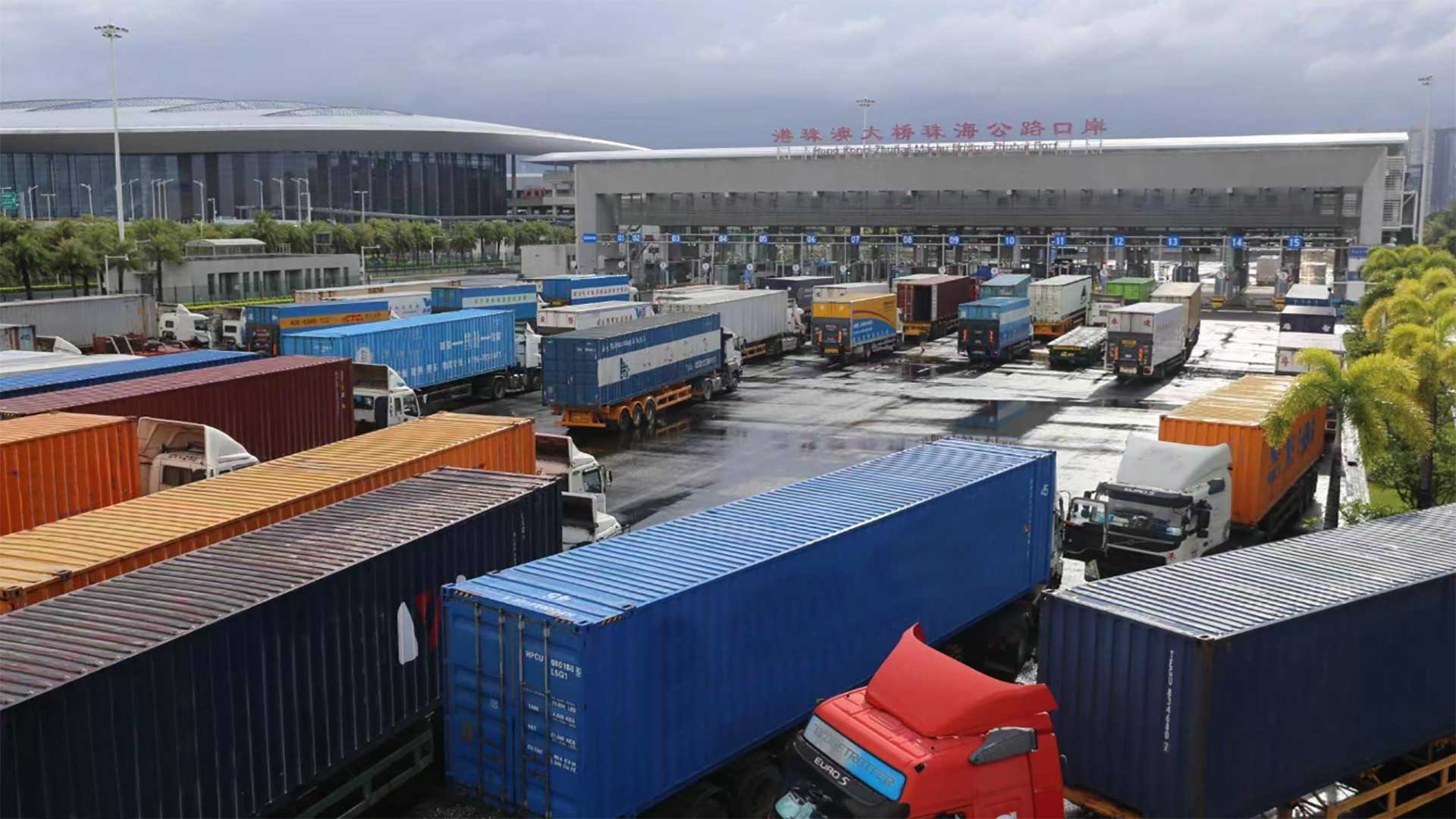
The route for ingredients entering Macau is also changing. Since the Hong Kong-Zhuhai-Macao Bridge opened, refrigerated vehicles can clear customs directly through the bridge port. From a warehouse in Zhuhai to Macau takes about 30 minutes in total, with customs clearance taking 15–25 minutes, and delivery across Macau can be completed in 2–4 hours—a level of timeliness previously unattainable when detouring through other ports. But cold-chain food has its own constraints: temperature must be controlled throughout, batches must be traceable, and temperature control documentation must be provided for Macau customs inspection. What the group needs is not just a truck to move goods, but a supply chain that links “multi-supplier consolidation → central kitchen handover → cold-chain batch → store-level sorting → 2–4 hour delivery.”
Warehouse space in Macau is limited and costs are high, so the group prefers to keep the central kitchen and consolidation operations on the Zhuhai and Zhongshan side, with Macau stores replenishing and receiving goods the same day. This also reflects common practice in Macau’s logistics market—many Macau food and beverage traders use Zhuhai warehouses as transit hubs, where goods are temporarily stored, then released in batches against store orders and delivered via the Hong Kong-Zhuhai-Macao Bridge. What the group needs to do is extend this “Zhuhai warehouse + direct bridge delivery” model from general cargo to cold-chain ingredients.
A key difference between cold-chain food and ordinary freight is that “temperature equals quality.” Frozen products must be pre-cooled in cold storage before loading, maintain the set temperature throughout transit, and be loaded and unloaded quickly to minimize cold-bridge effects. Fresh vegetables need to be stored on separate racks with good ventilation to avoid crushing and heat buildup. Some batches also require temperature control reports to accompany the goods, serving as evidence for Macau customs inspection and food safety traceability. The group’s cold-chain requirements boil down to four specific actions: controllable temperature, traceable batches, on-time arrival, and signed proof of delivery. This means the carrier must have refrigerated vehicle types, temperature recording equipment, and the capability to sort by store—not just a truck that can carry goods. Macau’s Inner Harbor piers mainly handle bulk cargo and small containers, and every extra handling step adds to the risk of cargo damage. Express delivery is charged by parcel and cannot accommodate bulk ingredients. Road cold-chain transport via direct delivery across the Hong Kong-Zhuhai-Macao Bridge has therefore become the option that balances timeliness and quality for ingredients arriving in Macau.
For chain restaurants, logistics stability directly determines store output quality and food safety risk: one batch of frozen products breaking the cold chain may mean discarding the entire batch; ingredients arriving late may force the lunch menu to be temporarily shortened. This is exactly why the group ultimately handed its entire cold-chain distribution to Bofeng—they needed a supply chain partner accountable for temperature and timeliness, not a transporter that subcontracts across multiple stages.
Key Challenges
Before integrating distribution, the group tried having each supplier deliver on their own and also tried using ordinary freight carriers. The problems centered on four points:
- Incomplete cold chain: Some suppliers used ordinary trucks with insulated boxes to deliver to Macau. During summer border crossing queues, temperatures inside the boxes got out of control, causing frozen products to thaw and fresh products to spoil in high-temperature months. In peak months, the ingredient loss rate was once quite high;
- Difficulties coordinating deliveries to multiple stores: Stores are scattered across the peninsula and Cotai, with different receiving hours. In the past, each store had its own vehicle and each supplier delivered separately, resulting in many vehicles, high frequency, low loading rates, and fragmented transportation costs that were hard to manage;
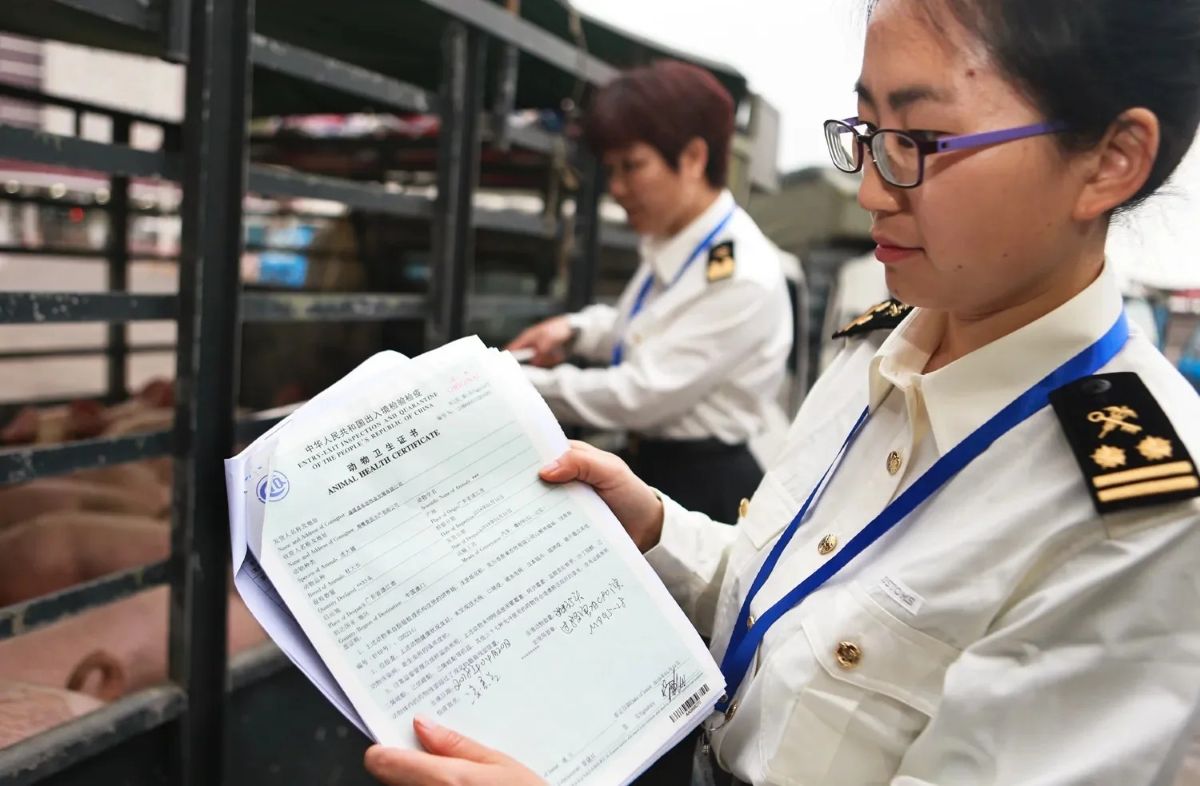
- Lack of temperature control records: When ingredients enter Macau and are subject to customs inspection, temperature control proof is required. Previously, cold chain records were incomplete and paper documents were scattered, so complete documentation could not be produced during inspections, easily delaying clearance;
- Difficulty in batch traceability: Multiple suppliers delivered separately with inconsistent batch labeling. Once a quality issue arose in a certain batch, it was difficult to identify which supplier, which batch, or which transport segment caused the problem, making accountability and recalls time-consuming and labor-intensive.
The cost of these challenges was not just freight and losses, but also the food safety risks and product consistency that the restaurant group cared most about. For chain restaurants, the reliability of the ingredient supply chain is, in a sense, more important than foot traffic at a single store.
Transport Requirements
- Route: Zhongshan/Zhuhai central kitchen and consolidation warehouse → via Hong Kong-Zhuhai-Macao Bridge → stores in Macau Peninsula/Cotai, door-to-door;
- Cargo volume: Fixed daily schedules, 3–8 cubic meters per batch, including frozen meat/aquatic products/poultry/vegetables/pastry, etc., requiring sorting and stacking by category;
- Timeliness: Centralized dispatch every morning, delivery to all stores across Macau within 2–4 hours of arrival, arriving before lunchtime;
- Special requirements: Full cold chain (set temperature + real-time recording), sorting and loading by store, traceable batch numbers, temperature control report attached; refrigerated vehicles pass directly through customs at the Hong Kong-Zhuhai-Macao Bridge port;
- Billing method: ALL-IN flat rate (transport + customs clearance + delivery);
- Insurance: Ingredients insured according to cargo value, with claims available for abnormalities such as cold chain failure.
Solution
Bofeng has customized a "central kitchen cold chain + multi-store sorting" delivery solution for the Group, integrating supplier consolidation, central kitchen connection, cold chain batches, and branch store delivery into one controllable chain:
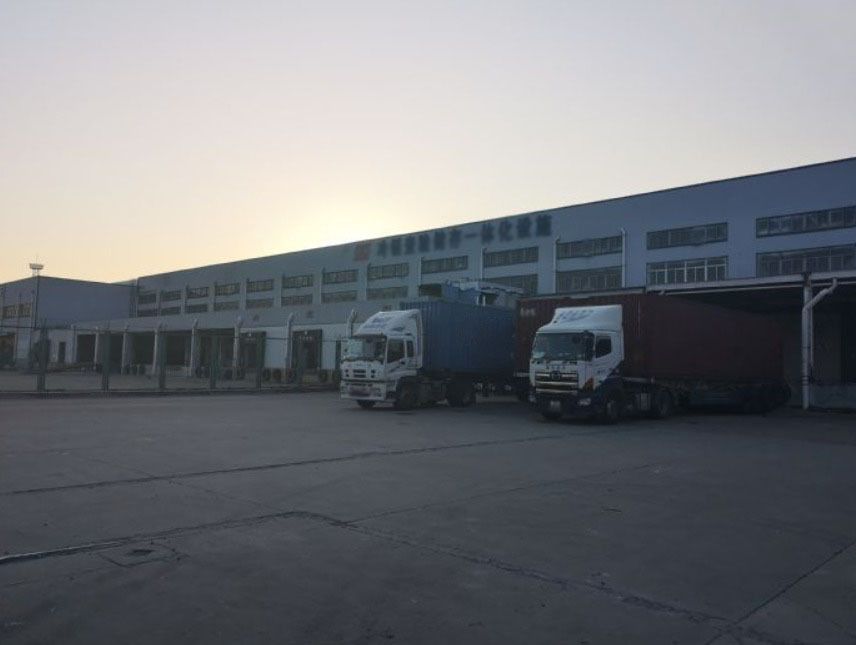
- Multi-supplier consolidation to the Zhuhai warehouse: Ingredient suppliers from Zhongshan and Zhuhai deliver goods to the Zhuhai consolidation warehouse according to the Group's orders before the daily order cutoff. The warehouse receives on their behalf, registers and checks categories and quantities. Vegetables, frozen products, and aquatic products are stored in separate zones to avoid mixing and odor transfer. The Group no longer needs to coordinate delivery arrangements with each supplier individually—one chain manages everything;
- Central kitchen connection and store order aggregation: The warehouse aggregates goods by the Group's daily store orders and breaks down sorting by "store × item"—stores on the Peninsula and stores in Cotai each have their own loading zone. Frozen items and vegetables are stacked in order, heavy items at the bottom and light items on top. Loading is arranged in reverse order of the store delivery sequence, so unloading is done store by store;
- Cold chain trucks direct via the Hong Kong-Zhuhai-Macau Bridge: 3-ton/5-ton refrigerated trucks are used. The refrigeration units are pre-cooled to the set temperature beforehand; after loading, temperature is controlled throughout and recorded in real time. Frozen goods are loaded in a -18°C zone, chilled goods at 0-4°C, and fresh produce at 8-10°C. Loading and unloading are fast to reduce cold bridge effects, the refrigeration units run continuously, and temperature data is transmitted back in real time. If the temperature deviates from the set range, the system alerts immediately, and the driver handles it right away or coordinates a nearby vehicle transfer. A fixed morning shift leaves the Zhuhai warehouse every day. Cold chain trucks can go through the Hong Kong-Zhuhai-Macau Bridge port directly for customs clearance—about 30 minutes total, with 15-25 minutes for clearance. The bridge port is a land route open to cold chain trucks, saving time compared with detouring through other ports. Temperature control data is digitized, and a temperature control report accompanies the goods, providing complete evidence instantly when Macau customs inspects;
- Cold chain batch management: Each batch of ingredients is numbered by "date + store + category", fully traceable from loading, customs clearance, to signature receipt by stores. If quality issues arise, the batch and link can be quickly located, supporting recall or replenishment;
- Branch store sorting and 2-4 hour delivery: After arriving in Macau, a local delivery team distributes by Peninsula/Cotai routes, completing signature receipt at all stores within 2-4 hours. Before delivery, the receiving time window is confirmed with each store. Stores that open in the early morning receive priority delivery; lunchtime stores are delivered before 11 a.m. The delivery order is reverse-sequenced by store business hours;
- Exception coordination: In case of uncontrollable factors such as port inspections or bad weather, the Group and all stores are notified at once, and rescheduling or adjustment of receiving windows is coordinated to minimize impact on lunch service output. Ingredients are insured throughout the journey; exceptions such as temperature loss or spoilage are compensated as agreed.
Take a typical summer workday as an example: before 5 a.m., suppliers consolidate goods at the Zhuhai warehouse; the warehouse sorts and loads by store orders; at 7 a.m. a cold chain truck departs and passes customs via the Hong Kong-Zhuhai-Macau Bridge; it arrives in Macau around 8:30 a.m.; the delivery team distributes on Peninsula and Cotai routes; all stores complete signature receipt before 11 a.m.—from warehouse dispatch in Zhuhai to arrival at each store, the entire process is controlled within 4 hours, seamlessly connecting lunchtime ingredients.
Results
The table below shows the Group's cold chain delivery data for 12 consecutive months (comparing the same periods before and after cooperation). This data table is the core of this case study:
| Metric | Before cooperation (scattered delivery trucks) | After cooperation (central kitchen cold chain delivery) | Improvement |
|---|---|---|---|
| Food ingredient loss rate (peak month) | Approx. 5% | Below 1% | Significant decrease |
| Full journey transit time (Zhuhai/Zhongshan → Macau stores) | Mainly next-day delivery | Same-day delivery (2-4 hours) | Significantly shortened |
| Delivery trips | Scattered, multiple vehicles for multiple stores | Fixed schedule, one vehicle serving multiple stores | Reduced by approx. 40% |
| Temperature control records | Incomplete, scattered paper records | Full electronic temperature control reports | Compliant and auditable |
| Store delivery accuracy rate | Occasional wrong or missed deliveries | Above 99% | Clearly improved |
Looking at the full-year data, the most direct change is that the peak-month food ingredient loss rate has dropped from "concentrated outbreaks during the hot season" to "rare throughout the year." With cold chain trucks traveling directly across the Hong Kong-Zhuhai-Macau Bridge, summer temperature-deviation problems have basically disappeared. Delivery trips have been reduced by approximately 40%, and transport costs improved as vehicle frequency declined. Stores now receive on-time deliveries with verifiable temperature control, and lunchtime food production is no longer held back by logistics. Looking at the monthly curves during the cooperation period, July and August used to be the seasonal loss peak, but after the cooperation, losses in the same period remained stable in a low range, temperature control alarms declined quarter by quarter, monthly delivery accuracy at each store remained above 99%, and temporary cancellations of lunchtime replenishment decreased noticeably. After the Group consolidated its original multi-supplier scattered delivery into Bofeng's unified cold chain route, it also implemented food safety internal control requirements in the transportation stage—temperature control reports for each batch of ingredients are archived and can be retrieved on demand during inspections.
Data disclaimer: The above is the data for this case (as of July 2026), reflecting this customer's individual performance during the cooperation period and does not constitute a service commitment.
The two parties' cooperation has entered its second year. The above data are individual case records of cold chain delivery from the Zhongshan/Zhuhai central kitchen to various Macau stores over the past 12 months.
Client Testimonial
"In the past, summer was the worst for frozen goods thawing. Now cold-chain trucks go directly across the Hong Kong-Zhuhai-Macau Bridge, and the temperature at store delivery is stable. Sorting by store, one trip per day, ingredients arrive on time for lunch service — it saves us so much hassle."
— Feedback from a Bofeng Logistics Macau route client (published with authorization and anonymized)
Need a similar logistics solution? Contact us — a plan within 30 minutes.
Phone:13075678958 | WhatsApp:+86 13075678958 | Email:info@zhbfwl.com
Get a Quote