Client Background
A consumer electronics exhibitor from Shenzhen regularly attends the annual industry trade show held at the Hong Kong Convention and Exhibition Centre (HKCEC). The HKCEC is a major professional exhibition venue in Hong Kong, with fixed exhibition schedules. The organizers set strict time windows for each stage of setup, the exhibition itself, and teardown. Missing the move-in window means waiting for the next round, directly affecting the setup progress. The client's exhibition materials include demo units, presentation counters, display racks, backdrop panels, and promotional materials, which need to be transported from their office and warehouse in Shenzhen to their booth at the HKCEC, and then returned to the mainland after the show according to the organizer's schedule.
Exhibition logistics is fundamentally different from everyday freight. Everyday freight is about "just get it delivered," while exhibition logistics is about "when it must arrive, in what condition, and in what order to dismantle"—every step must align with the organizer's on-site coordination. For the client's consumer electronics industry, trade shows are both a brand exposure opportunity and a window for taking orders on site. A half-day delay in setup could mean missing half the exhibition period's reception arrangements. Over the past two years, the client had been arranging vehicles and coordinating at the last minute, scrambling before the show every year: entry times not matching up, incomplete customs declaration documents, and exhibition materials stranded in Hong Kong after teardown—the same problems kept recurring.
Among the exhibition materials are many categories that "cannot afford any mishap": demo units need to be powered on and demonstrated on site, with screens and camera modules that cannot withstand drops or pressure; the display racks are custom-made, and if damaged, there is no replacement available on site; promotional materials must be placed in position before the show opens. In addition, the HKCEC is located in Wan Chai, where surrounding traffic is heavy. Truck parking spaces and unloading lanes must be booked in advance, leaving little flexibility for last-minute arrangements. This time, the client approached Bo Feng two months early, hoping to entrust the entire chain—cross-border transport of exhibits between Shenzhen and Hong Kong, temporary import/export customs declaration, time-limited move-in, and post-show return flow—to a logistics service provider that can execute according to the rhythm of the show. For the client, only when logistics is stable can the exhibition period be stable.
Key Challenges
The challenge of exhibition logistics is rooted in the fact that the "time window is non-negotiable":
- Tight setup schedule: The organizer sets a limited entry window, usually only a few days. Materials must arrive within the specified time; if late, you miss that day's entry and have to wait for the next batch. The cost of an empty booth and last-minute on-site remedies is high.
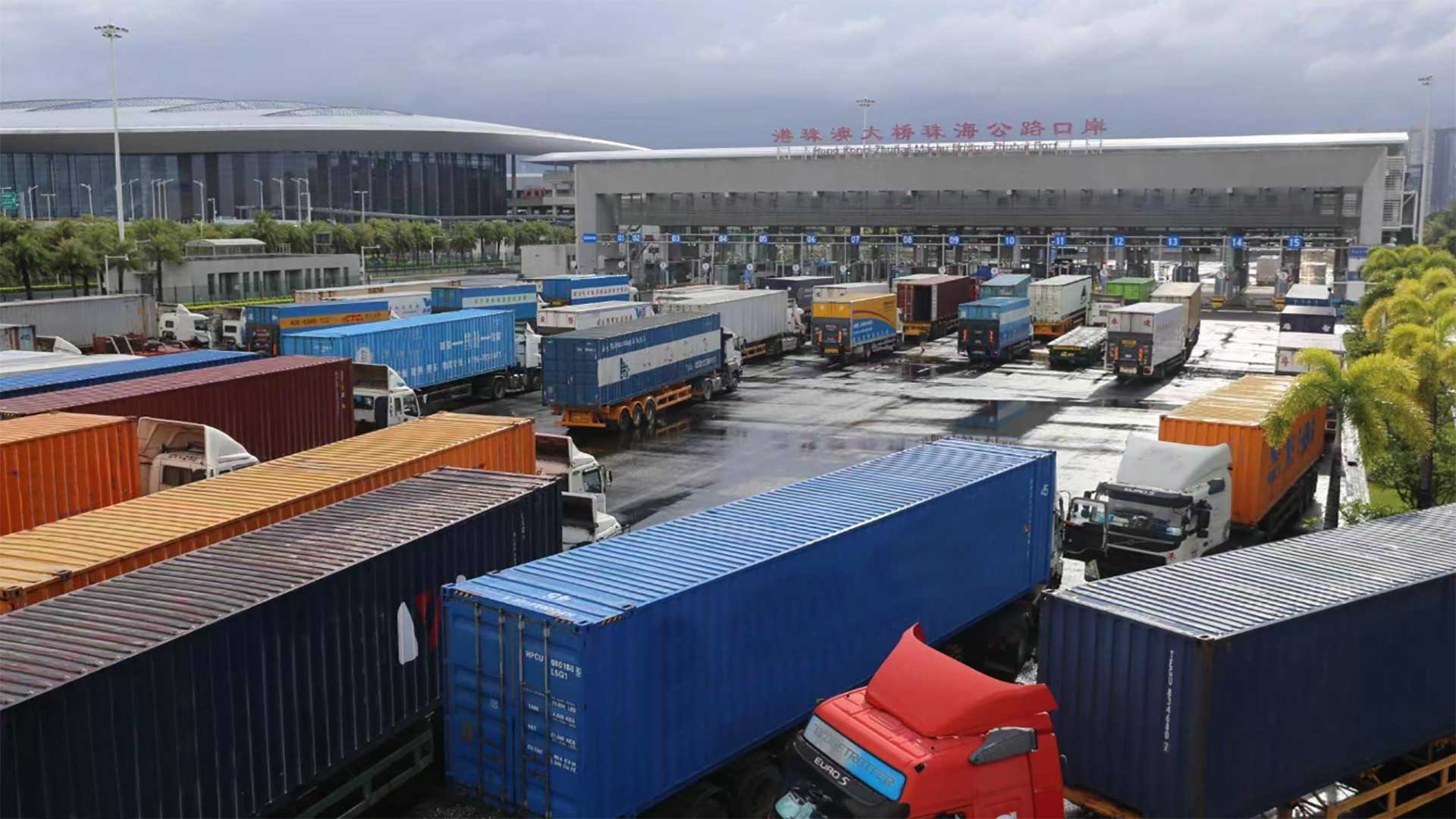
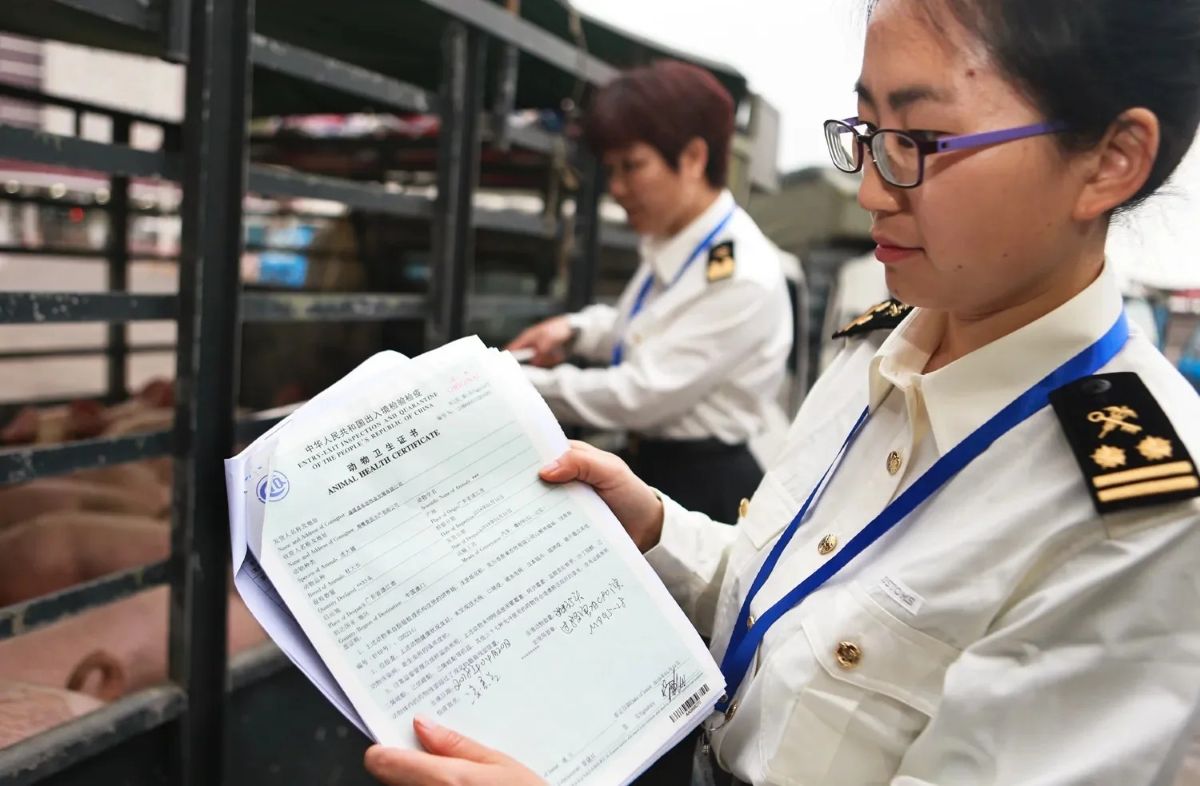
- Cross-border transport and customs clearance for exhibits: Moving exhibits from Shenzhen to the Hong Kong Convention and Exhibition Centre involves cross-border transport and port clearance. Prototypes, demonstration equipment, etc. are declared as temporary import/export goods, requiring many declaration items. If anything is incomplete, the port may inspect the goods, delaying the entry process.
- On-site coordination for timed entry: The logistics lanes, elevators, and berths at the convention center are scheduled. Truck arrival times, unloading lanes, and berth numbers must be reported in advance; temporary changes are hard to slot in.
- Return shipment to the mainland after the exhibition: After the event, materials must be shipped back to the mainland, and the reverse transport also requires border crossing and customs declaration. Previously, a customer was held up at the port on the return trip because the dismantled exhibit list did not match the customs declaration documents, stranding them in Hong Kong for several days and incurring storage fees — under the old temporary arrangements, discrepancies in documents caused port holds. After Bofeng took over, standardization of documents and item-by-item verification of lists against physical goods were solidified into processes, and similar problems have not occurred since.
- Protection of fragile equipment: Demo prototypes, screens, glass display stands, etc. are fragile items. Improper loading/unloading or in-transit movement can easily damage them, and it is hard to find replacement equipment at the exhibition site.
- Multiple points of on-site contact: In the past, setup involved many parties such as freight forwarders, customs brokers, exhibition logistics offices, and booth builders. When problems arose, one had to call each one, with unclear lines of responsibility and time-consuming disputes.
The cost of these challenges is surface-level freight and possible storage fees, but in essence it is exhibition-time opportunity: entering one day late or damaging one piece of equipment can affect on-site reception and order conversion, and this hidden loss is far higher than shipping costs. The client views exhibition logistics as a "centralized delivery" of the brand; any loss of control in any link will be amplified at the booth.
Transport Requirements
- Route: Shenzhen Nanshan / Bao'an → Hong Kong Convention and Exhibition Centre, exhibition setup entry + post-exhibition return to mainland;
- Cargo volume: approximately 2-3 truckloads, including sample machines, demo tables, display stands, and promotional materials;
- Timeliness: arrive in Hong Kong before the exhibition setup entry window; arrange return on the same day after dismantling according to the organizer's schedule;
- Special requirements: temporary import/export customs declaration (export customs declaration + import customs declaration for exhibition dismantling); enter the venue according to the organizer's schedule, with berths and elevators reported in advance; unload and position goods; collect packaging materials after dismantling;
- Billing method: itemized transportation fee per trip plus customs declaration service fee, with transparent billing by stage for verification;
- Documentation requirements: complete set of exhibit list, exhibition certificate, and temporary import/export customs declaration documents; check dismantled materials item by item against the list.
Solution
Bofeng customizes an integrated exhibition logistics solution for clients: "Pre-exhibition planning + temporary import/export customs declaration + timed entry + post-exhibition return flow":
- Reverse pre-exhibition schedule: Based on the entry schedule announced by the organizer, work backward to set completion milestones for pickup, customs clearance, and venue entry; report truck information, berth numbers, and unloading lanes in advance, and coordinate with the organizer's on-site dispatch in advance. The plan specifies the latest completion time for each milestone, and any delay is monitored with backup options;
- Temporary import/export customs declaration: Exhibits are handled as temporary import/export goods, with export customs declaration (Shenzhen → Hong Kong) and post-exhibition import customs declaration (Hong Kong → Shenzhen) handled separately; prepare exhibit lists, exhibition certificates, and other documents in advance, and complete all declaration elements at once to reduce the probability of port inspection. This step originated from the lesson of that "customs hold-up at booth dismantling" — after standardizing documents, inspections and delays were significantly reduced;
- Professional loading and protection: Fragile items such as prototypes, screens, and glass display stands are secured with bubble wrap, corner guards, and professional straps. Heavy goods are placed toward the front of the truck, light goods on top, and the straps and buckles are fastened during transit to prevent displacement from sudden braking and turns. Loading and unloading are planned as "first on, last off", and each item is checked against the list when arriving at the booth;
- Timed entry execution: Arrive at the exhibition center logistics area according to the organizer's schedule, coordinate berth and elevator dispatch, unload into position, count and sign for each item one by one, and the booth construction team enters immediately for setup. Display racks and prototypes are pre-packed according to the booth layout plan, and assembled directly at the booth to save on-site time. The plan confirms truck entry time slots and unloading lanes with the organizer's logistics office in advance, avoiding peak exhibition hours. On entry day, execution is carried out on schedule according to the reserved time slot, reducing on-site waiting in line;
- Closed-loop post-exhibition return flow: On the day the exhibition ends, recover booth materials, check the list, then handle import customs declaration, and arrange transportation back to the Shenzhen warehouse the same day or the next day, avoiding additional warehousing costs from materials being held in Hong Kong. Packaging materials are collected and uniformly packed, and can be reused for the next exhibition. The dismantling phase also follows the organizer's schedule to reserve exit channels, symmetrical to the entry process, preventing "smooth entry but stuck exit";
- Dedicated on-site liaison: A single on-site coordinator is assigned to directly communicate with the organizer's logistics office and customs broker for any issues during entry, unloading, counting, or dismantling, so the client does not need to relay messages among multiple roles, and the division of responsibilities is clear.
The core of the plan is to shift from the reactive mode of "finding a truck at the last minute and remedying on-site" to a proactive mode of "reverse scheduling, documents prepared in advance, and execution on time." The client only needs to confirm the booth layout and the arrival list; pickup, customs clearance, entry, and dismantling all follow the process, and any on-site issues have a clear point of contact. For the client, pre-exhibition preparation changes from "watching logistics" to "preparing content," and energy returns to booth design and on-site reception.
Results
| Indicator | Fragmented Arrangement (Before Cooperation) | Integrated Solution (After Cooperation) | Improvement |
|---|---|---|---|
| On-time arrival rate | Fluctuating | Arrival within the time window | Improved punctuality |
| Exhibit damage rate | Occasional occurrence | Reduced to below 1% | Professional protection |
| Tear-down return cycle | Multi-day delays | Same-day arrangement | Significantly shortened |
| Customs declaration | Ad hoc handling | Standardized documentation | Fewer inspections |
| On-site coordination | Multiple points of contact | Single window | Reduced coordination costs |
Data statement: The above is case-specific data for this project (as of July 2026), reflecting the performance of this client during the cooperation period and does not constitute a service commitment.
After the cooperation, the client's booth setup and venue entry at each annual exhibition have been completed on time according to the organizer's schedule, with the exhibit damage rate reduced to below 1%. Temporary import/export customs declaration documents are completed in one go, significantly reducing port inspections. The return cycle for tear-down materials has been shortened from multi-day delays to same-day arrangements, eliminating warehousing costs for delayed goods. The client said the biggest change is "no longer having to worry about logistics before exhibitions" — previously, the whole week before setup was spent tracking vehicles and documents; now, the plan and timetable are set in advance, and on-site execution simply follows the schedule. For companies with similar needs to exhibit in Hong Kong, this case offers several reusable insights: first, the planning starting point for exhibition logistics is the organizer's schedule, with all processes planned backward around the setup and tear-down milestones, rather than finding vehicles first and then aligning times; second, temporary import/export customs declaration documents should be fully prepared in advance — complete declaration details save more effort than "speed," as getting everything done at once avoids rework; third, consolidate multiple points of contact into a single window, so that when on-site issues arise, a designated contact person follows through to resolution with clear accountability, which is more reliable than fragmented coordination. Exhibition schedules cannot be redone; only by turning logistics into a deterministic process that "follows the schedule" can the exhibition experience and on-site conversion be ensured. This case also confirms that the value of exhibition logistics lies not in "speed" but in "precision" — when every milestone is executed according to the schedule, logistics will not become a variable during the exhibition period.
The two parties' cooperation has entered its second year, and the above is a case record of the setup and tear-down transportation for each exhibition during the cooperation period.
Client Testimonial
“In the past, before each exhibition, what I dreaded most was arranging vehicles, coordinating schedules, and running around for documents. The entry times never lined up, and once we even got stuck at customs during dismantling. Now we finalize the plan in advance, and both setup and dismantling follow the timeline. The exhibits have basically never been damaged, and there’s a dedicated on-site coordinator to help us arrange berths and unloading. We just need to focus on preparing the booth content.”
— Customer feedback for Bofeng Logistics · Hong Kong Logistics Dedicated Line (published with authorization and desensitized)
Need a similar logistics solution? Contact us — a plan within 30 minutes.
Phone:13075678958 | WhatsApp:+86 13075678958 | Email:info@zhbfwl.com
Get a Quote