Client Background
An Amazon cross-border e-commerce seller in Shenzhen, mainly dealing in home storage, small kitchen items, and other categories, sells on multiple Amazon marketplaces. FBA (Fulfillment by Amazon) is the mainstream shipping method for such sellers: goods are first sent to Amazon warehouses, and the platform handles storage, sorting, and delivery. However, FBA replenishment has an unavoidable pain point—first-leg transit time is uncontrollable. During peak seasons, head-haul space on US and European routes is tight and transit times fluctuate greatly. From domestic factories to FBA warehousing, it often drags on for weeks. Once a hot-selling item goes out of stock, the listing ranking drops, advertising weight is damaged, and it takes several times more effort to recover.
In the Amazon ecosystem, the cost of stockouts is multi-dimensional: listings lose traffic support, ad rankings fall, and competitors seize market share; restoring rankings often requires reinvesting in ad budgets and enduring a period of low sales. The operations team estimated that the hidden losses from a single peak-season stockout are often far higher than the cost of advance stocking and warehousing. For this reason, customers have a higher willingness to pay for "replenishment stability" than they are sensitive to individual freight costs—what they are really buying is the outcome of "never being out of stock."
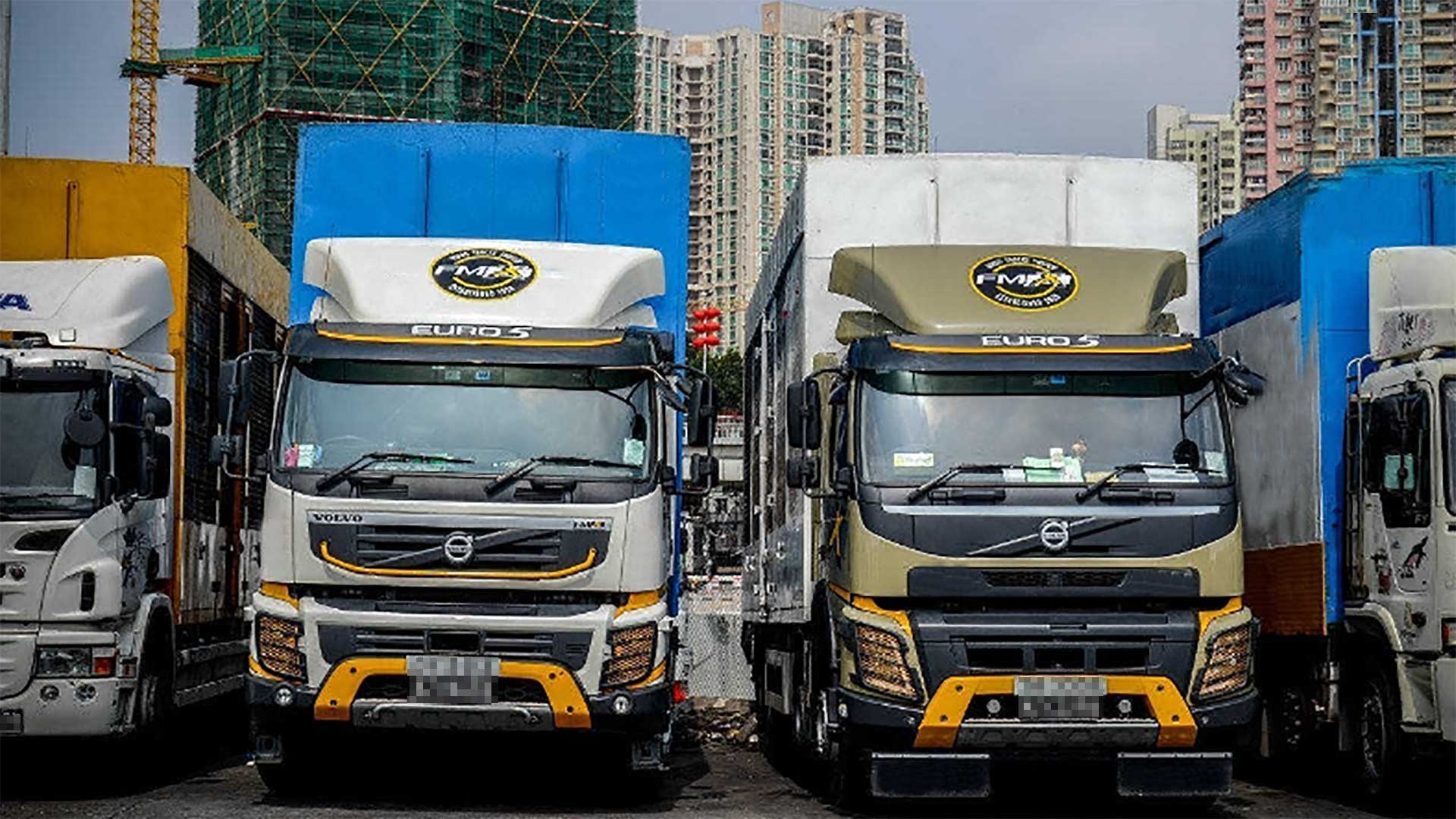
The seller's solution is to use the Hong Kong warehouse as a transit hub: goods are first shipped from Shenzhen to the Hong Kong warehouse, where value-added operations such as labeling, relabeling, and quality inspection are completed, and then shipped to FBA in batches according to sales rhythm. The value of the Hong Kong warehouse transit lies in its "flexibility": compared with shipping directly to FBA from mainland factories, the Hong Kong warehouse allows more precise control over replenishment rhythm, and during peak seasons, it can also leverage Hong Kong's air freight, express ships, and other head-haul resources for quick replenishment. The Shenzhen-Hong Kong leg of the head haul is overland transport, measured in days, and is the most controllable part of the entire chain.
The customer's previous pain points were precisely concentrated in this head-haul leg: shipments from Shenzhen to the Hong Kong warehouse relied on temporary vehicle sourcing, with scattered orders and irregular departure times; at the previous third-party old warehouse, labeling and relabeling quality was inconsistent, and mislabeled tags once caused a whole FBA batch to be rejected; replenishment rhythm was decided manually by gut feeling, and hot-selling items experienced prolonged stockouts during peak season. The customer hopes to connect the two segments—Shenzhen to Hong Kong warehouse and Hong Kong warehouse to FBA—into a predictable end-to-end chain.
For Shenzhen sellers, the China-Hong Kong head haul is the shortest and most easily standardized link in the entire supply chain, and therefore the starting point for improving replenishment experience. The overland transport from Shenzhen to the Hong Kong warehouse is measured in days; as long as departure times are stable and customs clearance goes smoothly, warehousing lead time can be kept under control. Once this link goes wrong, no matter how fast the subsequent FBA leg is, it cannot make up for lost time. The customer chose the head haul and Hong Kong warehouse as the breakthrough point precisely because of their "visible and manageable" nature.
Key Challenges
- Unstable first-leg shipping schedule: In the old model, different China-Hong Kong trucks were arranged daily, departure times fluctuated with each truck's schedule, and when replenishment demands were concentrated, capacity was insufficient; small batch cargo often got pushed to the next run, making first-leg transit times unreliable.
- Inconsistent labeling and relabeling quality: FBA inbound has strict labeling requirements (SKU labels, box marks, shipment IDs). Incorrect labels or substandard packaging can lead to the entire batch being rejected. Previously, a batch of mislabeled goods at the old warehouse was held for days before being resolved, unnecessarily delaying the replenishment window.
- Hidden risks from lack of quality inspection: There is no inbound quality inspection before goods leave the factory. Some products arrived at FBA with wrong models or damage, only to be discovered later. The cost of handling returns and negative reviews is high, and it also affects account performance.
- Replenishment rhythm relies on experience: When and how much to replenish best-selling items is mainly determined manually by operations staff. During peak seasons, stockouts occurred due to insufficient inventory, and recovering listing rankings afterward costs far more than preparing inventory in advance.
- Weak awareness of compliance declarations: Cross-border e-commerce involves declaration standards, brand and IP compliance. Clients are unfamiliar with declaration elements, and declaration issues once led to inspection at the port, delaying the entire replenishment batch.
Combined, these challenges lead most directly to "stockouts" — and the damage stockouts inflict on FBA sellers is the direct loss of ranking and sales visible in the data.
FBA inbound has a very low tolerance for labeling and packaging errors: every carton needs a corresponding shipping label, every item needs an SKU label, and the shipment ID must match the backend plan. Any labeling error can result in the rejection of an entire carton or even the whole shipment, and returns or rescheduling consume time. For sellers, a "small thing" like a label error has a heavy price: delay of the entire replenishment — and this is exactly the core value of the value-added services at the Hong Kong warehouse.
Transport Requirements
- Route: Shenzhen factory/warehouse → Hong Kong warehouse (first leg, China-HK LTL or FTL) → Amazon FBA warehouse (second leg, air freight or express ocean);
- Volume: First leg 2-3 batches per week, more frequent in peak season; most batches are small to medium, seasonal bulk shipments use FTL;
- Lead time: First leg arrives at Hong Kong warehouse in 1-2 days; value-added operations at Hong Kong warehouse take 1-2 days; the FBA leg is scheduled backward based on the platform's required inbound lead time;
- Value-added services: Labeling, relabeling, quality inspection, carton replacement, and carton consolidation by FBA shipment ID;
- Compliance requirements: Complete declaration elements, brand and intellectual property compliance, and accurate FBA inbound documents (packing list, invoice, shipment ID);
- Data requirements: Timestamps for each node in the first leg, warehouse, and second leg must be queryable, and restocking status must be trackable.
The customer's core need is to "make replenishment a planned task": stable first-leg delivery to the warehouse, one-time completion of warehouse operations, and FBA shipments dispatched on schedule, keeping stockout risk under control.
Solution
Bofeng works with customers to build a full-chain solution of "first-leg China-Hong Kong transport + Hong Kong warehouse value-added services + FBA rhythm management," standardizing every segment from the Shenzhen factory to FBA inbound:
- First-leg LTL / FTL selection by volume: For daily small-to-medium batches, use China-Hong Kong LTL with fixed schedules and same-day dispatch; batch transport spreads costs. During peak season or for large shipments, switch to FTL for stronger capacity assurance and more stable space and transit times. Before departure, complete receiving, counting, and simple labeling in Shenzhen; then process FBA labels uniformly at the Hong Kong warehouse to avoid repeated labeling;
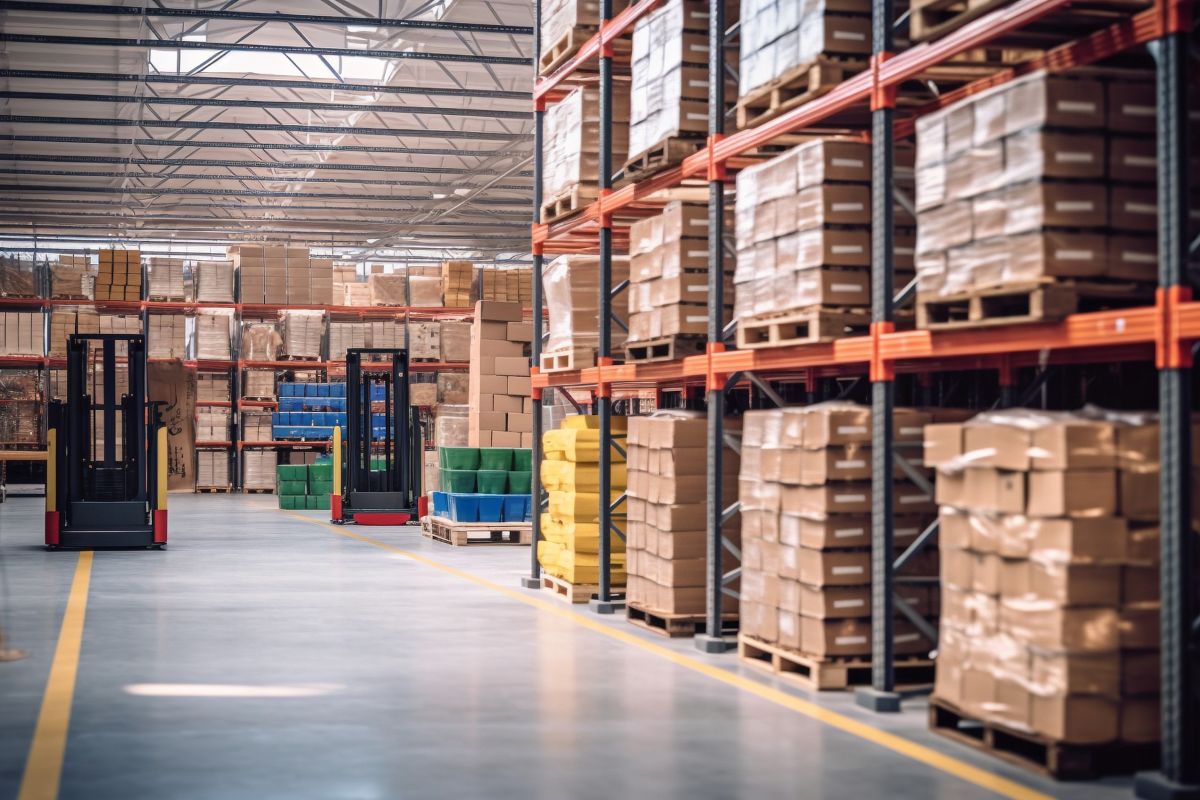
- Integrated Hong Kong warehouse labeling / relabeling / quality inspection: After goods enter the Hong Kong warehouse, complete labeling and relabeling according to FBA shipment IDs; during inspection, check style, quantity, and damage item by item against the packing list, and sample-check whether packaging is intact and barcodes are scannable. If wrong-style or damaged goods are found, isolate them on the spot, take photos, and notify the customer; the customer decides whether to repair, resend, or discard, preventing problematic goods from entering FBA and causing returns/exchanges and negative reviews. Relabeling needs (e.g., merging listings, changing SKUs) are completed directly in the warehouse, saving round trips. Small batches from multiple suppliers are consolidated into standard cartons in the warehouse by FBA shipment ID; cushioning material is added inside, and outer cartons are uniformly labeled, which both meets Amazon inbound requirements and reduces loss and cost for individual small cartons;
- FBA inbound deadline backward scheduling: Work backward from the platform-required inbound time to schedule each node—reserve enough days for second-leg transport and in-warehouse operations, and determine the cutoff time for first-leg dispatch. Operations submits replenishment plans weekly; Bofeng arranges warehouse space and vehicles according to the plan, and reserves safety stock in the warehouse for hot-selling items;
- Peak-season capacity contingency plan: Lock in first-leg space and Hong Kong warehouse capacity before peak season; for the second leg, choose air freight or fast shipping resources based on the destination, and establish a priority replenishment channel for hot-selling items to avoid rush replenishment after stockouts;
- Pre-positioned compliance declaration: Verify all declaration elements and documents before shipment, and screen for brand and intellectual property compliance issues in advance to avoid port inspections affecting the entire shipment's lead time. If inspection occurs, customer service synchronizes in real time and assists in handling, keeping delays within a small scope.
This solution links three things together: fast first-leg, accurate warehouse operations, and stable second-leg. For customers, the biggest change is "replenishment with rhythm": what to ship each week, how much to ship, and when to enter FBA are all planned, and peak season no longer relies on last-minute firefighting.
Results
| Metric | Before Cooperation | After Cooperation | Improvement |
|---|---|---|---|
| First-leg inbound lead time | 2-4 days | 1-2 days | Shortened by 50% |
| Stockout rate for best-selling products | Relatively high | Down 65% | Cadence management |
| FBA rejected batch rate | Relatively high | Significantly decreased | Labeling quality control |
| Relabeling turnaround time | 3-5 days | 1 day | Completed in warehouse |
| Replenishment plan coverage rate | Manual estimation | Weekly scheduling | End-to-end planning |
Data Statement: The above is data for this case (as of July 2026), reflecting the client's performance during the cooperation period, and does not constitute a service commitment.
After cooperation, the client's first-leg inbound lead time was reduced from 2-4 days to 1-2 days, labeling and relabeling were completed in the warehouse on the same day, and FBA rejection batches decreased significantly. During peak season, the stockout rate for best-selling products dropped by 65%, and listing rankings and ad weight no longer fluctuated repeatedly due to untimely replenishment. For the operations team, the biggest change is that their energy has been freed from "hunting for trucks everywhere and watching replenishment" — they just need to plan on a weekly schedule. The client has already made the Hong Kong warehouse a transit hub for all sites, and the newly launched European sites also follow this model.
From a cost logic perspective, although Hong Kong warehouse transshipment adds an extra segment of warehousing and handling costs, it brings stability in first-leg lead time and control over replenishment cadence: during peak season there is no need to pay high prices to grab container space, and best-selling products no longer lose rankings due to stockouts. After the client amortized the Hong Kong warehouse transshipment cost into the logistics cost per unit, they found that the per-unit logistics cost remained broadly stable, while the losses caused by stockouts narrowed significantly — after doing the math, the overall benefit of the transshipment model is positive.
For similar FBA sellers, the lesson from this case is that the value of the Hong Kong warehouse lies not in "having one more warehouse," but in "turning uncontrollable first-leg shipping into a controllable cadence." The combination of China-Hong Kong first-leg shipping + Hong Kong warehouse value-added services + second-leg planning is essentially proactive management of "stockout risk" — and this layer of management is often more worth investing in than an occasional low freight rate.
The two parties have entered the second year of cooperation, and the above data are case records of weekly scheduled replenishment during the cooperation period.
Client Testimonial
"Previously, during peak season, I was always afraid of stockouts. Once a listing dropped, it was very difficult to recover it. Now, shipments from Shenzhen to the Hong Kong warehouse arrive the same day, labeling and relabeling are done in the warehouse within one day, and restocking is all planned out. During peak season, I feel much more at ease."
—— Customer feedback for Bofeng Logistics · Hong Kong logistics dedicated line (published with authorization and desensitized)
Need a similar logistics solution? Contact us — a plan within 30 minutes.
Phone:13075678958 | WhatsApp:+86 13075678958 | Email:info@zhbfwl.com
Get a Quote