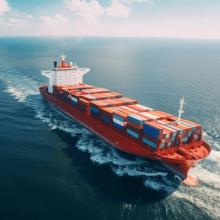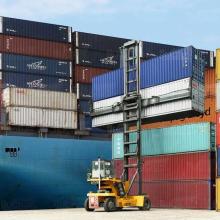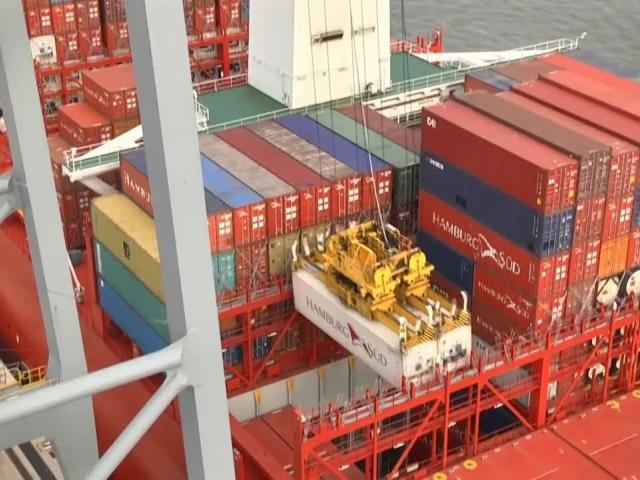
The Cargo Stowage and Securing Code (CSS Code, Code of Safe Practice for Cargo Stowage and Securing) was developed by the International Maritime Organization (IMO) and is a technical standard for securing cargo in transport units such as containers. If cargo is not properly secured inside a container, inertial forces caused by jolts, braking, and turning during transport can shift it and even damage the container walls. This article explains the core requirements of the CSS Code, the acceleration forces during transport, and commonly used lashing materials and standards. Securing cargo inside containers also works in conjunction with the loading of dangerous goods for container sea transport; for quick calculations of container packing quantity and stowage, you can use the stowage factor quick calculator.
1. Core Requirements of the CSS Code
| Requirement | Description |
| Cargo must be secured | All cargo inside containers must be secured, and no shifting is allowed during transport |
| Securing strength | The securing method must be able to withstand accelerations generated in all directions during transport |
| Securing plan | It is recommended to prepare a written stowage and securing plan |
Regardless of whether airbags, steel straps, plastic-steel straps, or fiber ropes are used, the strength of the securing plan should cover the most unfavorable conditions likely to be encountered throughout transport, especially considering the transverse and longitudinal inertial forces caused by ship rolling and pitching at sea.
II. Acceleration Forces During Transport
During shipping, trucking, and lifting operations, containers are subjected to acceleration in different directions. Taking 1 ton of cargo as an example, the lateral (left-right) acceleration is approximately ±0.4~0.8G, resulting in a force of approximately 400~800 kg on the cargo; the longitudinal (front-back) acceleration is approximately ±0.3~0.5G, resulting in a force of approximately 300~500 kg; the vertical (up-down) acceleration is approximately ±0.2~0.5G, resulting in a force of approximately 200~500 kg. The greater the acceleration, the higher the breaking strength required for the securing material.
| Direction | Lateral (left-right) | Longitudinal (front-back) | Vertical (up-down) |
| Acceleration | ±0.4-0.8G | ±0.3-0.5G | ±0.2-0.5G |
| Force on cargo (1 ton) | 400-800kg | 300-500kg | 200-500kg |
III. Common Lashing Material Standards
Common securing materials must match the cargo weight and transportation conditions. The table below provides reference values for the breaking strength, applicable scenarios, and number of uses of common materials.
| Material | Breaking strength | Applicable scenario | Number of uses |
| Steel strapping | 1,000-3,000kg | Heavy cargo securing | Single use |
| PET strapping | 500-1,500kg | Medium cargo securing | Single use |
| Fiber rope | 200-500kg | Light cargo securing | 2-3 times |
| Inflatable dunnage bag | 1,000-5,000kg | Void filling + lateral securing | Single use |
Data notes: Lashing standards refer to the IMO Code of Safe Practice for Cargo Stowage and Securing (CSS Code). Acceleration and breaking strength are typical reference values; actual values may vary under different cargo forms, container types, and route conditions. Data as of July 2026.
Cargo Stowage and Securing Frequently Asked Questions (FAQ)
Q: Why must cargo inside a container be secured? Can it be stabilized by stacking alone?
A: No. Accelerations during transport can shift cargo, and stacking alone cannot counteract the inertial forces generated by jolting and turning. The CSS Code requires all cargo in containers to be secured, and the securing method must be strong enough to withstand accelerations in all directions, preventing cargo movement from damaging container walls or doors or affecting transport safety due to a shifted center of gravity.
Q: How should I choose between airbags and steel strapping?
A: Judge based on cargo type and forces. Steel strapping has high breaking strength and is suitable for heavy, regular cargo; airbags have high breaking strength but are mainly used to fill gaps inside containers and work with transverse securing, suitable for preventing forward/backward or left/right cargo movement; plastic steel strapping and fiber rope are used for medium and light cargo. Whichever is chosen, you should calculate the required quantity and the total breaking strength of the securing method to cover the forces encountered during transport.
📖 Further Reading: Loading of Dangerous Goods for Container Shipping——Dangerous goods loading and securing; Container Loading Calculation Tools: Loading Quantity Calculation, Stowage Factor and Container Loading Simulation——Quick calculations for loading and stowage; Cargo Packaging Guide: Selection and Specifications for Sea Freight Packaging——Basics of in-container packaging.
Need a professional in-container reinforcement or loading plan? Bofeng Logistics can provide loading, reinforcement, and stowage advice, and arrange a safe and stable loading plan based on container type and cargo form. Submit an inquiry online, or call 13075678958 for consultation.
Contact: 13075678958 | info@zhbfwl.com
Disclaimer: This article was compiled and written by the Bofeng Logistics team, with content verified in 2026-09. Acceleration and lashing strength are reference values; specific stowage and securing plans are subject to actual cargo form, container type, and route conditions.
Related Logistics Services
Bofeng Logistics offers the following related services, feel free to inquire: