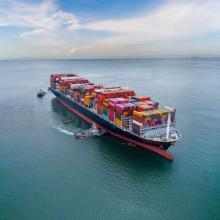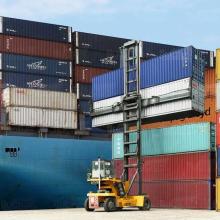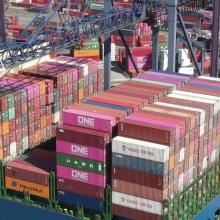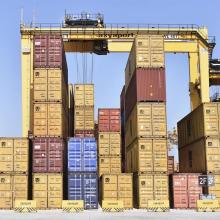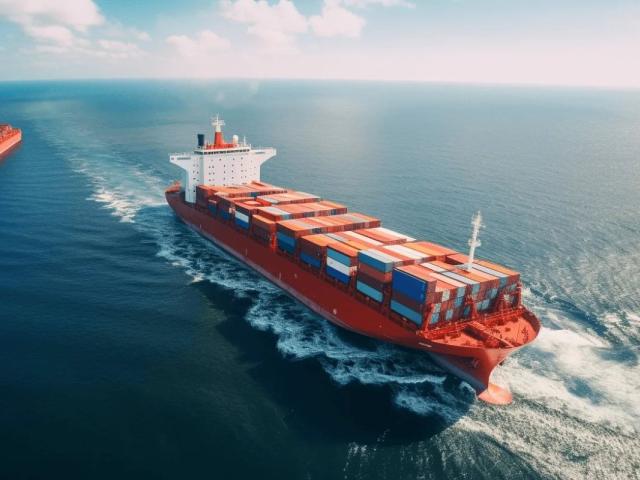
Domestic container shipping (also known as domestic trade shipping) refers to the transportation of goods between Chinese coastal ports by container vessels. It is an important part of the domestic logistics system — for large-volume, heavy, and non-urgent goods, domestic shipping is a more economical choice than road and rail.
This article provides a detailed explanation of the definition, core characteristics of domestic shipping, and a comprehensive comparison with foreign trade shipping.
1. What is Domestic Container Shipping
Domestic container shipping, simply put, is using container ships to transport cargo between China's coastal ports.
Its core characteristics:
- Customs territory: Goods move within China, no customs involvement
- Documents: Uses a domestic waybill (not a bill of lading), which is not a document of title
- Pricing: All-in RMB flat rate, including taxes and terminal charges
- Operations: No customs declaration, no customs clearance, no bill of lading transfer
- Transit time: 3-12 days on coastal routes
For domestic traders and factory shippers, domestic shipping is a high-volume transport solution that is "cheaper than trucking and more flexible than rail."
2. Domestic Sea Freight vs. Foreign Trade Sea Freight — 7-Dimension Comparison
| Dimension | Domestic Sea Freight (Coastal Trade) | Foreign Trade Sea Freight (International) |
|---|---|---|
| Customs Territory | Within China, no customs declaration required | Crosses customs territories, requires export/import customs declaration |
| Documents | Domestic waybill (not a document of title; cargo released upon ID verification) | Bill of Lading B/L (document of title) |
| Quotation | All-in RMB price, tax and terminal charges included | USD quote, excluding tax, THC listed separately |
| Operational Steps | 6 steps (booking → trucking → container loading → vessel loading → arrival → pickup) | 9 steps (additional customs declaration/clearance/B/L procedures) |
| Transit Time | 3-12 days (coastal routes) | 15-35 days (ocean routes) |
| Suitable For | Bulk/heavy/non-urgent cargo | Import/export trade / cross-border e-commerce |
| Applicable Law | Rules for Domestic Waterway Cargo Transport | Maritime Law / international conventions |
Key Differences Explained
1. Different Documents — Domestic Waybill vs. Bill of Lading
In foreign trade sea freight, the bill of lading (B/L) is a document of title — whoever holds the original B/L owns the goods. Bank negotiation and letter of credit settlement both rely on the B/L.
Domestic sea freight uses a domestic waybill (also called a waterway waybill), which is not a document of title. The consignee can pick up the goods with identity proof (ID card or business license) without presenting any "document." This means:
- Simpler operations — no B/L circulation step
- Flexible settlement — no complex international settlement methods such as letters of credit
- Easier to change the consignee — just provide a letter of indemnity stamped with the official seal
2. Different Cost Structures — All-In One Price vs. Itemized Quotation
Foreign trade sea freight quotes typically list a long series of charges: ocean freight, THC, DOC, SEAL, ISPS, VGM...
Domestic sea freight is much simpler — an all-in RMB one-price quote, including ocean freight and terminal charges, tax included. The quoted price is final; there is no need to check item by item.
3. Different Operational Flows — 6 Steps vs. 9 Steps
Domestic sea freight has 3 fewer steps than foreign trade sea freight: customs declaration, B/L circulation, and customs clearance. This means:
- Transit time is reduced by 3-5 days
- Operational complexity is greatly reduced
- No need for third-party services such as customs brokers or clearance agents
3. Applicable Scenarios for Domestic Sea Freight
Domestic sea freight is most suitable for the following scenarios:
- Large-volume cargo: single shipment > 5 tons
- Long-distance transport: > 500 km
- Low time sensitivity: delivery within 3-12 days is acceptable
- Heavy/bulk goods: steel, building materials, machinery and equipment, fast-moving consumer goods
Scenarios where it is less suitable:
- Express parcels, samples, small-volume cargo
- Fresh, refrigerated, and other highly time-sensitive goods
- Transportation between inland cities (requires barge + trailer connection)
4. Market Position of Domestic Shipping
Domestic coastal transport is an indispensable part of China's logistics system. According to statistics from the Ministry of Transport, the volume of domestic coastal cargo has maintained steady growth, and the proportion of domestic trade containers in the container throughput of coastal ports has remained stable, forming a complementary pattern with foreign trade shipping — after goods arrive at coastal ports via domestic shipping, they can be conveniently connected to international maritime exports.
📌 Data Note: Specific throughput data fluctuates by quarter and is subject to the latest release on the official website of the Ministry of Transport.
Summary
Domestic container shipping (domestic trade shipping) and foreign trade shipping are both called "shipping," but they differ fundamentally in customs territory, documentation, costs, and operational processes. For large-volume cargo in domestic trade, it is a more economical option than road transport and more flexible than rail transport.
The following articles will delve into practical details such as domestic shipping operational procedures, cost calculations, route lead times, and more.
Further reading: Domestic Shipping Booking Operation Guide details the booking process; Complete Guide to Domestic Trade Shipping Containers covers container types and specifications; Which Goods Can Be Shipped in Containers helps determine cargo suitability.
Domestic Ocean Shipping FAQ
Q: What is the biggest difference between domestic ocean shipping and international ocean shipping?
A: The core lies in customs territory and documentation — domestic ocean shipping circulates within China, requires no customs declaration, and uses a domestic waybill (not a document of title; cargo is picked up with an ID); international ocean shipping crosses customs territories, requires import/export customs declaration, and uses an ocean bill of lading (a document of title).
Q: What cargo is suitable for domestic ocean shipping?
A: Bulk heavy cargo with large shipment volumes, relatively long transport distances (generally over 500 km), and low time-sensitivity requirements, such as steel, building materials, machinery and equipment, and FMCG products; urgent items, small-batch samples, and fresh or cold-chain cargo with high time-sensitivity are not very suitable.
Bofeng Logistics provides professional one-stop logistics services including domestic container shipping, international shipping (FCL/LCL), Hong Kong and Macau logistics special lines, as well as trailer, customs declaration, and warehousing. Contact: 130-7567-8958 (Manager Huang). Call now for a customized quote!
Disclaimer: This article was compiled by the Bofeng Logistics team and verified as of August 2026. Domestic sea freight routes, schedules, container availability and pricing policies may change with market conditions and carrier requirements; always refer to the current terms published by the carrier or logistics provider for your booking.
Related Logistics Services
Bofeng Logistics offers the following related services, feel free to inquire: