1. What is a domestic ocean shipping container?
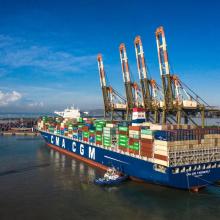
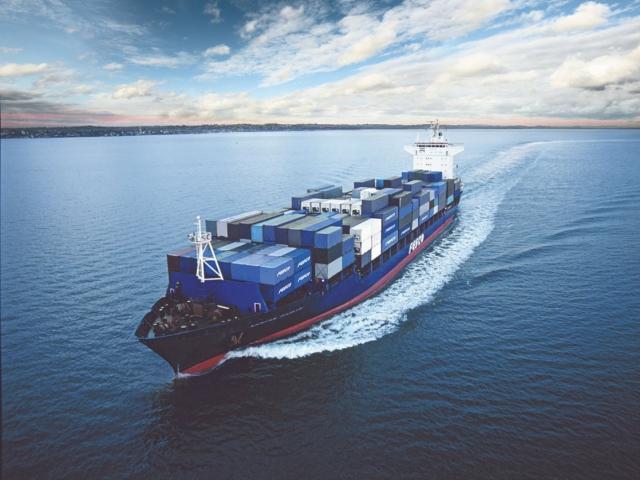
A domestic ocean shipping container refers to a container used when goods are transported between domestic coastal ports, relying on the container as a standardized loading unit to complete the transportation. A container is a large cargo-loading container with fixed strength, rigidity, and specifications, specially used for circulating use.
The core value of container transportation lies in standardization: no matter which container the goods are loaded into, or on which ship or truck, the dimensions and specifications of containers are unified. Therefore, goods can be directly loaded into containers at the shipper's warehouse, and when changing vehicles or ships along the way, there is no need to unload and reload the goods, achieving true "door-to-door" seamless connection, greatly reducing manual loading/unloading costs and the risk of cargo damage.
In the domestic market, containers have been widely used in coastal transportation, forming a dense route network covering major ports from north to south, including Dalian, Qingdao, Shanghai, Ningbo, Xiamen, Shenzhen, and Guangzhou.
2. Comparison of Common Domestic Container Specifications
The container types commonly used in domestic sea freight are 20GP, 40GP, and 40HQ, with occasional 45HQ and special containers. The key parameters of the three standard containers are as follows:
| Container Type | External Dimensions (L×W×H) | Approx. Internal Dimensions (L×W×H) | Approx. Volume | Approx. Payload | Suitable For |
|---|---|---|---|---|---|
| 20GP | 6.06×2.44×2.59 m | 5.9×2.35×2.39 m | 28 m³ | 21 tons | Small batches, heavy cargo |
| 40GP | 12.19×2.44×2.59 m | 12.0×2.35×2.39 m | 67 m³ | 26 tons | Large batches of general cargo |
| 40HQ | 12.19×2.44×2.90 m | 12.0×2.35×2.69 m | 76 m³ | 26 tons | Large-volume light cargo |
Selection rule of thumb: For heavy cargo, look at payload; for light cargo, look at volume.
Note: The container dimensions, volume, and payload in the table are industry standard reference specifications. Actual loading is subject to the container condition provided by the shipowner or container operator.
- 20GP: Smallest volume but lowest cost per container, suitable for heavy cargo (e.g., hardware, building materials, and chemicals) — when heavy cargo is billed by weight, the smaller container is more cost-effective;
- 40GP: The cost-effective choice, suitable for large batches of general cargo;
- 40HQ: About 30 cm higher than a standard container, with about 9 m³ more volume, especially suitable for cargo that is “large in volume but light in weight,” such as tires, boxed home appliances, and plastic products.
In addition, cargo requiring temperature control can use refrigerated containers (40RH); oversized, overweight, or cargo that cannot fit through a standard container door (such as large machinery and steel coils) can use special container types such as open-top containers and flat-rack containers.
3. What types of cargo are suitable for domestic container shipping?
Domestic sea freight offers large shipment volumes per trip and low unit costs, making it most suitable for the following types of cargo:
- Bulk raw materials: steel, aluminum ingots, grain, ore, chemical raw materials;
- Building materials and home furnishings: ceramic tiles, cement, furniture, paper products, glass;
- Fast-moving consumer goods: beverages, food, daily necessities;
- Industrial products: mechanical and electrical equipment, auto parts, plastic products;
- Light industrial products that are not easily damaged or are well-packaged.
Compared with road transport, domestic sea freight has a clear cost advantage for long-distance shipments over 500 km; compared with rail, water transport offers greater capacity and is suitable for oversized and overweight cargo. Goods with low time sensitivity are especially well-suited for "switching from road to water."
4. Domestic Container Shipping Operation Process
The domestic container transport process is simpler than foreign trade sea freight. The overall process is roughly as follows:
- Booking: Confirm the sailing schedule and freight rate, and book space with the shipping company or freight forwarder;
- Empty container pickup: Present the booking confirmation to pick up an empty container at the designated container yard;
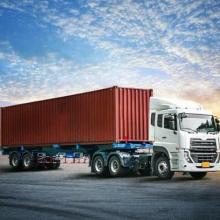
- Loading: Complete the stuffing at the factory or warehouse (door-to-door stuffing or container haulage to the factory can be arranged);
- Loaded container entry into port: Deliver the loaded container to the terminal yard and complete the entry procedures;
- Vessel loading: The terminal lifts the container onto the ship;
- Sea transport: The vessel sails to the destination port according to the schedule;
- Discharge at destination: Discharge and tallying at the destination port;
- Pickup and delivery: The consignee takes delivery of the container with the delivery order, and arranges door delivery or destuffing at the container yard;
- Empty container return: Return the empty container to the designated container yard after unloading.
Key Notes: Domestic sea freight does not require export customs declaration, making the process much faster than foreign trade; however, some ports still require domestic cargo pickup procedures, and the container condition should be checked and the container usage period (free detention period) noted to avoid incurring overtime charges.
5. Differences Between Domestic Shipping and Foreign Trade Shipping
| Comparison Item | Domestic Shipping | Foreign Trade Shipping |
|---|---|---|
| Scope of Transport | Between domestic coastal ports | China ↔ overseas ports |
| Customs Procedures | No export customs declaration required | Export customs declaration, exchange settlement, tax refund, etc. required |
| Documents | Domestic bill of lading / cargo receipt | Export bill of lading, customs declaration, certificate of origin, etc. |
| Container Supply | Domestic containers flow flexibly with ample supply | Foreign trade containers are allocated by shipping route |
| Currency and Settlement | Mainly settled in RMB | Mostly settled in USD |
| Transit Time Volatility | Relatively stable schedules | Greatly affected by international situations and port congestion |
Domestic shipping has "simple processes and transparent costs," making it an economical and efficient choice for circulating domestic goods within the domestic market; foreign trade shipping is one part of a complete international trade performance system. The two are not mutually exclusive, and many enterprises use a combination of "domestic trade via waterway, foreign trade via sea route."
6. Composition of Domestic Shipping Costs
Domestic shipping costs typically include the following items (subject to the carrier's quotation):
- Sea freight: a fixed price per container type (e.g., a fixed price for 40HQ on a given route);
- Loading/unloading charges: terminal handling and storage fees;
- Port charges: miscellaneous port operation fees;
- Trucking fees: charges for container pickup, delivery, or door-to-door trucking (if arranged);
- Detention charges: container detention fees incurred after the free time period expires.
As with foreign trade shipping, it is recommended to obtain a complete quotation before booking, and confirm item by item what fees are included and how long the quotation is valid, to avoid unexpected costs after arrival.
7. Frequently Asked Questions
Q1: Do domestic sea freight containers need customs declaration? A: No export customs declaration is required. Domestic transport runs between domestic ports and only requires domestic procedures such as port pickup, making the process simple and fast.
Q2: How to choose between 20GP and 40HQ? A: Follow the principle of "heavy cargo depends on load capacity, light cargo depends on volume": choose 20GP for heavy cargo (close to 21 tons or above); choose 40HQ for cargo that is large in volume but light in weight; choose 40GP for general cargo in large quantities.
Q3: What distances is domestic sea freight suitable for? A: Generally, the cost advantage of domestic sea freight is fully reflected in long-distance transport over 500 km; for short distances, road transport is more flexible.
Q4: Can it be door-to-door? A: Yes. Domestic sea freight can provide one-stop door-to-door service of "factory loading—sea transport—delivery to consignee."
Q5: What are the main routes for domestic sea freight? A: Dense routes have been formed along China's coast, including the Bohai Rim (Dalian–Tianjin–Qingdao), the Yangtze River Delta (Shanghai–Ningbo–Zhoushan), and the Southeast Coast (Xiamen–Shenzhen–Guangzhou). The north-south main trunk routes have stable schedules; for specifics, refer to the shipping company's current schedule.
Further Reading
- How to choose domestic shipping container types?
- China's major inland waterway transport resources
- Domestic sea freight dedicated line products
Further reading: Comparison of domestic and foreign trade sea freight to clarify the differences between the two types; Guide to domestic sea freight booking to understand the entire booking process; Which goods can be shipped by container to determine cargo suitability.
Bofeng Logistics specializes in one-stop logistics services including domestic container sea freight, international sea freight (FCL/LCL), Hong Kong and Macau logistics dedicated lines, as well as trailer transportation, customs declaration, and warehousing. Contact number: 130-7567-8958 (Manager Huang), call now to get an exclusive quote!
Disclaimer: This article was compiled by the Bofeng Logistics team and verified as of August 2026. Domestic sea freight routes, schedules, container availability and pricing policies may change with market conditions and carrier requirements; always refer to the current terms published by the carrier or logistics provider for your booking.
Related Logistics Services
Bofeng Logistics offers the following related services, feel free to inquire: