
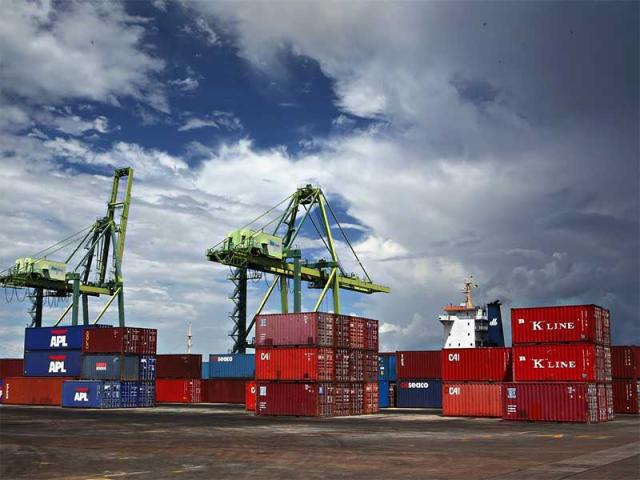
A loaded container refers to a container that has already been loaded with cargo and sealed, as opposed to an empty container waiting at the yard to be loaded (commonly called a “lucky box” in South China). The phrase often used in the export process, “pick up an empty and return a loaded one,” refers to the sequence of picking up an empty container, loading it, and then returning the loaded container to the depot. This article outlines the definition of a loaded container, its place in the export process, and the pitfalls regarding weight and container usage deadlines.
What Is a Loaded Container: Several Easily Confused Terms
Containers are divided into two categories according to whether goods are loaded inside. The industry still uses some customary names, which appear on booking forms, packing lists, and trailer documents.
| Term | English/Abbreviation | Meaning | Common Stage |
|---|---|---|---|
| Loaded container | Loaded container | A container that has been loaded with goods and sealed | Pick up loaded, return loaded, loading onto vessel |
| Empty container / Ji container | Empty container | A container that has not yet been loaded with goods; “Ji container” is a customary term in Cantonese-speaking areas | Pick up empty, yard pickup |
| Pick up empty, return loaded | Pick up empty, return loaded | Pick up an empty container from the yard, and after loading, return the loaded container to the designated depot/terminal | Export trailer stage |
| Gate in loaded | Gate in loaded | A loaded container enters through the gate and is placed in the yard | Terminal gate |
The Position of Loaded Containers in the Export Process
- Empty container pickup (pick up empty container): According to the booking confirmation, pick up the empty container from the designated container yard, verify the container number, and check whether the container body, doors, and door seals are intact; if damage is found, replace the container promptly.
- Stuffing and loaded container drop-off: Complete stuffing, securing, and seal application at the factory or warehouse; the container then becomes a loaded container. For securing methods, refer to dunnage materials and other securing equipment.
- Loaded container drop-off (gate-in): The loaded container enters through the gate; after the booking order, dock receipt, packing list, and other documents are checked, it is placed in the container yard.
- Customs declaration and release: Complete the declaration and obtain release information before the cut-off; the terminal then arranges vessel loading.
- Vessel loading and shipment: The quay crane loads the loaded container onto the vessel; after arrival at the destination port, it is unpacked, customs-cleared, and delivered to the consignee, while empty containers are returned as arranged by the shipping line.
Weight of a Laden Container: Three Weight Limits Stack Up
Whether a laden container can smoothly enter the terminal and be loaded onto the vessel depends on satisfying three weight limits at the same time: the container structural weight limit (the maximum load marked on the CSC Safety Approval Plate), national road weight limits (for the trailer road transport segment), and vessel stowage and route weight limits. Before loading, the allowable cargo weight should be determined according to the lowest of the three, not just by looking at the container nameplate. For reference data, see weight limit regulations of various countries and shipping lines.
Container Usage Time Limit and Container Usage Fee
Empty containers are subject to a free period from the time they are picked up from the container yard until the full container is returned to the yard; exceeding the free period will incur a container detention fee (container usage fee). The number of free days is set by the shipping company and varies by route, container type, and agreement terms; it is generally specified in the booking confirmation or container control notice. When arranging the loading plan, check this deadline first to avoid extra charges caused by failing to meet the return time. For specific definitions, refer to Explanation of Free Container Rental and Free Storage Period.
Data note: The weight limit tiers and container usage time limits described in this article are generalizations of common industry practice. Specific amounts and days are subject to the carrier's booking confirmation, terminal, and current customs regulations.
Further Reading
- Complete Container Flow Process: The full lifecycle from picking up an empty container to returning an empty container
- Container Handover Methods: Allocation of responsibilities for FCL/FCL, FCL/LCL, LCL/LCL, and LCL/FCL
- Composition of Ocean Freight Under Different Handover Methods
- What Are the Types of Container Cargo?
- Container Knowledge Center: Dimensions and specifications, container type selection, container loading standards, and transportation costs
Frequently Asked Questions
Is a loaded container the same as a "full container"?
They are not the same concept. A loaded container emphasizes that cargo has been loaded inside and a seal has been applied; how much has been loaded does not affect whether it is a loaded container. A "full container" usually means the loading rate has reached a relatively high level, so it is a concept of degree of loading. Customs declarations and documents use the classification of loaded container/empty container.
After an empty container is picked up and delivered to the factory, how long can it stay there?
It is subject to the free period; exceeding it will incur a container usage fee. The number of free days is stipulated by the shipping line according to the route and container type, and is written in the booking confirmation or container management notice. When yards are tight during peak season, some ports have additional requirements for the return time after container pickup. Before loading, you should confirm with the freight forwarder first to avoid charges due to an overdue return.
To check container availability, sailing schedules and loading options for a specific route, submit an enquiry online and the Bofeng Logistics team will assess it against your actual cargo.
This article was prepared by the Bofeng Logistics team and reviewed in October 2026. Industry practices and data change over time; refer to carrier booking confirmations and current authority regulations for specifics.
Related Logistics Services
Bofeng Logistics offers the following related services, feel free to inquire: