
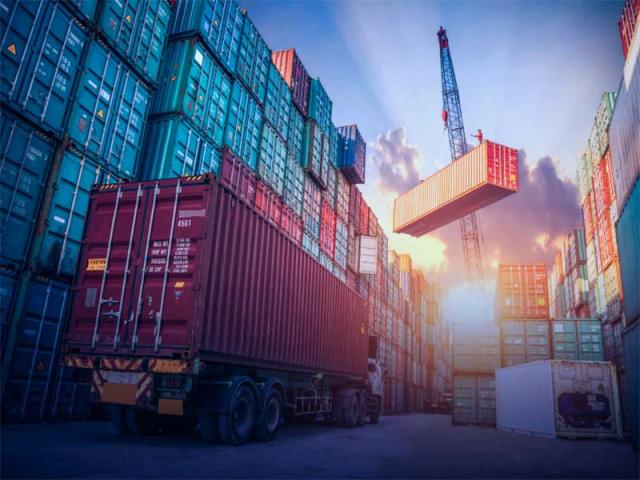
A container goes through a complete cycle from being picked up and loaded to being emptied and returned to the container yard. In this cycle, some stages are handled by the terminal and the shipping line, while others must be completed by the shipper and consignee themselves; any delay at any step will translate into time and costs. This article breaks down the flow stages in both export and import directions and summarizes several key time points that determine costs.
Full-Chain Flow Diagram
Export and import are two directions of the same cycle; viewing them linked with the same numbering makes it clearer.
Export direction (shipper → shipping company)
        ① Pick up empty container         ③ Return loaded container         ⑤ Load on board
Container yard ────────→ Factory ────────→ Terminal yard ────────→ On board
        ② Load cargo           ④ Customs declaration and release        ⑥ Ocean transport

Import direction (shipping company → consignee)
        ⑥ Ocean transport       ⑧ Discharge vessel           ⑩ Pick up container and exit gate
On board ────────→ Terminal ────────→ Terminal yard ────────→ Consignee's factory
                  ⑦ Arrival notice        ⑨ Customs clearance and release       ⑪ Unpack and return empty container
Export Flow: From Empty Container Pickup to Loading on Board
| Step | Operation | Responsible Party | Approximate Duration | Key Points |
|---|---|---|---|---|
| ① Empty container pickup | Pick up the empty container from the designated yard with the booking confirmation | Trucking company | Half a day | When picking up the container, check the container number and condition; if there is damage, raise it on the spot and keep evidence |
| ② Loading | Stuffing and securing at the factory | Shipper | Several hours | Center-of-gravity control and lashing; count the cargo inside the container and take photos for records |
| ③ Return of loaded container | Transport the loaded container back to the terminal yard | Trucking company | Half a day | Must be completed before the loaded-container cutoff time |
| ④ Customs declaration and release | Declare the export to customs and obtain release | Customs broker | 1-3 days | Will be extended if inspected; allow buffer time |
| ⑤ Loading on board | The terminal loads it onto the vessel according to the stowage plan | Terminal | Several hours | Must already be released; no loading without release |
Among these five steps, ①, ③, and ⑤ are completed by the terminal and trucking company, ② by the shipper, and ④ by the customs broker. The shipper can truly control the pace of step ②, and once ② is delayed, ③, ④, and ⑤ will be delayed in a chain reaction. Therefore, the stuffing date should be scheduled by back-calculating from the loaded-container cutoff time.
Import Flow: From Vessel Discharge to Empty Container Return
| Step | Operation | Responsible Party | Approximate Duration | Key Points |
|---|---|---|---|---|
| ⑦ Arrival Notice | The shipping line or freight forwarder notifies the consignee that the cargo has arrived at the port | Shipping line/freight forwarder | Before/after arrival | Upon receipt, immediately start bill exchange and customs clearance preparation |
| ⑧ Vessel Discharge | Lift from the vessel to the terminal yard | Terminal | Several hours | The storage period starts from vessel discharge |
| ⑨ Customs Clearance and Release | Bill exchange, import declaration, tax payment, inspection | Customs broker | 2–7 days | Complete within the free storage period if possible |
| ⑩ Container Pickup and Gate-Out | Use the release order to pick up the container at the terminal and transport it out | Trucking company | Half a day | Book the container pickup time with the terminal in advance |
| ⑪ Unstuffing and Empty Container Return | After the factory unstuffs the container, return the empty container to the designated yard | Consignee | 1–2 days | Exceeding the free container use period will incur detention charges |
The most error-prone part on the import side is the segment from ⑨ to ⑪: customs clearance delays will eat into the free storage period, and unstuffing delays will eat into the free container use period; both will directly turn into costs. For preparation of import documents, refer to Complete Import Customs Clearance Process: Arrival and Bill Exchange → Customs Declaration and Tax Payment → Inspection and Release → Cargo Pickup Guide.
Timeline of a Complete Cycle
Below, taking full container load (FCL) cargo exported from China to Europe as an example, each stage is placed on a timeline. The number of days is only indicative; actual times vary by route and shipping schedule.
Before departure
  T-7 days   Booking, obtain booking confirmation
  T-5 days   Pick up empty container
  T-4 days   Factory stuffing
  T-3 days   Return laden container to terminal yard
  T-2 days   Export customs declaration, obtain release
  T-0 days   Loaded on vessel and departure

After departure
  T+25 days  Vessel arrives at destination port
  T+26 days  Discharge from vessel
  T+30 days  Import customs clearance completed (including duty payment)
  T+31 days  Pick up container and exit gate
  T+33 days  Devanning and return empty container to the yard
Four Time Points That Determine Costs
| Time Point | Meaning | Consequences of Exceeding the Time Limit |
|---|---|---|
| Laden Container Cut-off (CY Closing) | The latest time to return a laden container to the terminal yard, usually several days before departure | You will miss this voyage and need to be rebooked on a later sailing |
| Customs Cut-off | The latest time for customs release, generally earlier than or equal to the laden container cut-off | The container cannot be loaded onto the vessel and must be rebooked |
| Free Time / Free Detention | The number of days from container pickup during which the container may be used free of charge | After the time limit, detention charges are billed per day |
| Free Storage | The period during which the terminal provides free storage for containers | After the time limit, storage charges are billed per day |
The specific number of days for these four time points is published separately by the shipping line and the terminal; different shipping lines on the same route may differ, and they may be temporarily adjusted during peak season. For explanations of the number of days and billing methods, please refer to Container Usage and Overdue Fees: Free Time and Detention Charges Explained.
Who Should Monitor Which Stage
- Shipper monitors: container loading progress, laden container return time, and the completeness and accuracy of customs declaration documents.
- Drayage company monitors: the appointment and arrival times for the three transport nodes—empty container pickup, laden container return, and container pickup and gate-out.
- Freight forwarder monitors: booking confirmation, schedule changes, arrival notice, and coordination of operations at both ends.
- Consignee monitors: document exchange and customs clearance progress, devanning, and empty container return time.
By breaking down these four areas of responsibility, you can pinpoint whose hands the delay occurred in. For internal terminal operations during the flow process, refer to Terminal Operation Process: The Complete Process of Port Entry, Storage, Loading, Discharge, and Container Pickup.
Data note: The flow stages and time control refer to general industry operating standards. Specific days, fees, and operational requirements are subject to the current regulations of the shipping line, terminal, and competent authorities.
Further Reading
- Container handover methods: Detailed explanation of FCL/FCL, FCL/LCL, LCL/LCL, and LCL/FCL
- Container freight cost composition: Breakdown of cost items under different handover methods
- Terminal operation process: The full process of port entry, storage, loading, unloading, and container pickup
- Container usage fees and overdue fees: Detailed explanation of free container use period and demurrage
- Complete import customs clearance process: Arrival and document exchange → customs declaration and tax payment → inspection and release → cargo pickup full guide
FAQ
What charges are incurred if an empty container is returned to the depot late?
After the free container use period expires, the shipping line charges Detention based on the number of overdue days. The billing method is usually tiered by container type and number of days, and the specific standards are announced at the time of booking. To avoid this charge, the key is to make sure devanning and container return fall within the free container use period, and to start import customs clearance as early as possible.
Are the free storage period and the free container use period the same thing?
No. The free storage period is provided by the terminal and applies to the period during which the container can be stored free of charge in the terminal yard; after it expires, storage fees are charged. The free container use period is provided by the shipping line and applies to the period during which the container can be used free of charge after being picked up from the yard; after it expires, Detention is charged. The two have different starting points and different charging entities, so they need to be checked separately.
To confirm the handover mode, the trucking arrangement at either end or the weight limit for a specific route, submit an enquiry online and the Bofeng Logistics team will assess it against your actual cargo and trade lane.
This article was prepared by the Bofeng Logistics team and reviewed in October 2026. Handover modes, free time, weight limits and terminal practice change with carrier and terminal policy; refer to the booking confirmation, bill of lading terms and current terminal rules for specifics.
Related Logistics Services
Bofeng Logistics offers the following related services, feel free to inquire: