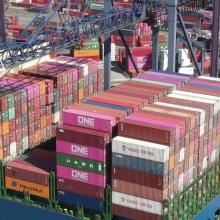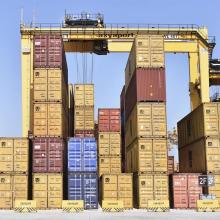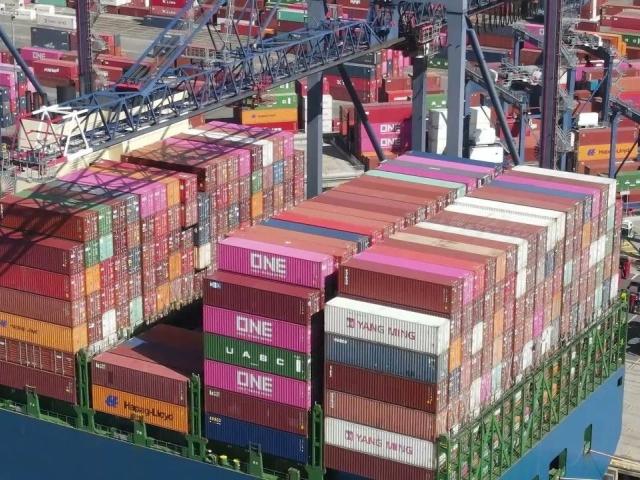
Containers undergo enormous environmental changes during transportation — internal temperatures can reach 65°C during the day, drop to 0°C at night, and humidity can surge from 20% to 95%. These drastic changes are the primary cause of cargo moisture damage, mold, and rust.
Container Loading Topic Series: For pre-loading inspection, see Preparation Before Loading and Container Inspection; for loading sequence and securing and lashing, see Container Loading Operation Specifications; for overdue container usage fees, see Container Usage Fee and Overdue Fee.
I. Patterns of Temperature and Humidity Changes Inside Containers
1.1 Temperature Changes
| Scenario | Internal Temperature Range | Difference from Outside Temp | Duration |
| Daytime (equatorial route, under sunlight) | 50°C - 65°C | +15-25°C | 8-12 hours |
| Nighttime (at sea) | 5°C - 15°C | ±0-5°C | 10-14 hours |
| Temperate routes (e.g., China-Europe) | -5°C - 35°C | ±5-10°C | Entire journey |
| Reefer transport | -30°C to +30°C (settable) | Constant | Entire journey |
Key Data: During a voyage from China to Europe (approximately 25 days), the temperature and humidity cycle inside a standard dry container can reach 25-30 cycles. Each temperature change may cause condensation to form.
1.2 "Container Rain" Phenomenon — Condensation Formation Principle
Clear daytime → Internal air heats up to 50°C+ → Moisture evaporates ↑
                              ↓
Night cooling → Internal air cools to 10°C → Moisture saturation
                              ↓
                  ┌───────────┴───────────┐
                  ▼                       ▼
      Roof condensation (dripping)   Wall condensation (running down)
                  │                       │
                  └───────────┬───────────┘
                              ▼
                  Cargo surface moisture damage
                  ("Container Rain" phenomenon)
| Condition | Condensation Probability | Severity |
| China → Europe (via tropical zone) | 90%+ | 🔴 High |
| China → Japan/Korea | 30-50% | 🟡 Medium |
| Europe → China | 10-20% | 🟢 Low |
| Entire equatorial route | 95%+ | 🔴 Very High |
II. Effects of Humidity on Various Cargo Types
| Cargo Type | Recommended Relative Humidity | Consequences of Excessive Humidity | Risk Level |
| Electronic Products | 30%-50% | Circuit corrosion, short circuit | 🔴 High |
| Cartons / Paper Products | 40%-55% | Carton moisture absorption and softening, stack collapse | 🔴 High |
| Textiles / Apparel | 40%-60% | Mold, discoloration, odor | 🔴 High |
| Metal Products | 35%-45% | Rust, oxidation | 🟡 Medium |
| Furniture (Wooden) | 45%-60% | Deformation, cracking, mold | 🟡 Medium |
| Food (Dry Goods) | 50%-65% | Mold, spoilage, pest infestation | 🔴 High |
| Chemicals (Powder) | 20%-40% | Caking, deliquescence | 🟡 Medium |
| Coffee Beans / Cocoa | 55%-65% | Mold, flavor loss | 🔴 High |
III. Ventilation Opening Management
Dry containers typically have one row of ventilation openings (ventilators) at both the top and bottom of the side walls, achieving internal air circulation through natural convection.
Ventilation Opening Positions and Functions
Container Side Wall Ventilation Opening Illustration:
┌──────────────────────────────────┐
│ ○─────○─────○─────○─────○  ← ↑ │ Top row vents (air outlet)
│                              │    │
│     (Internal cargo area)     │    │
│                              │    │
│ ○─────○─────○─────○─────○  ← ↓ │ Bottom row vents (air inlet)
└──────────────────────────────────┘
| Vent Status | Effect | Applicable Scenarios |
| Fully Open | Maximum ventilation | Organic cargo (coffee, cocoa, grains), high temperature and high humidity routes |
| Half Open | Moderate ventilation | Most general cargo |
| Fully Closed | Sealed | Precision equipment, metal products, high-value electronic products |
| Only Top Row Open | Exhaust only, no intake | Mild moisture protection needs |
Ventilation Opening Recommendations for Various Cargo Types
| Cargo | Ventilation Setting | Reason |
| Coffee Beans / Cocoa / Grains | ✅ Fully Open | Requires continuous air circulation to prevent fermentation |
| Onions / Garlic | ✅ Fully Open | Released gases need to be expelled |
| Cartons / Textiles | 🟡 Half Open | Balance moisture protection and dust prevention |
| Electronic Products | ❌ Closed | Prevent sea spray mist from entering |
| Metal Products / Machinery | ❌ Closed | Prevent salt spray from accelerating corrosion |
| Chemicals / Powder | ❌ Closed | Prevent moisture absorption and caking |
IV. Moisture Prevention Solutions
4.1 Physical Moisture Prevention
| Measure | Effectiveness | Applicable Cargo |
| Desiccant (Silica Gel / Montmorillonite) | 🟢 Highly Effective | Dehumidification needs |
| VCI Volatile Corrosion Inhibitor Bags | 🟢 Highly Effective | Metal products |
| Waterproof Membrane (Inner Lining) | 🟢 Highly Effective | Cartons / Textiles |
| Humidity Indicator Cards | 🟡 For Monitoring | All |
| Dehumidifier Rods / Buckets | 🟡 Moderate | Large volume cargo |
4.2 Desiccant Quantity Reference
Recommended Desiccant Quantity for Dry Containers (20GP Example):
┌──────────────────────────────────────────┐
│  Standard Moisture Protection:           │
│  1kg desiccant + waterproof membrane     │
│  covering cargo                          │
│  High Humidity Routes (Equatorial):      │
│  2-3kg desiccant                         │
│  High-Value Cargo:                       │
│  3kg + waterproof membrane +             │
│  humidity indicator card                 │
└──────────────────────────────────────────┘
4.3 Pre-Loading Moisture Prevention Procedures
| Step | Operation | Purpose |
| ① Inspect Container | Confirm no standing water or dampness inside container | Prevent existing moisture from exacerbating condensation |
| ② Lay Waterproof Membrane | Lay a plastic film on the container floor (can extend to cover cargo top) | Block moisture rising from the floor |
| ③ Place Desiccant | Choose quantity based on cargo type and route | Absorb moisture inside the container |
| ④ Install Indicator Card | Attach to the inside of the container door; check upon arrival at port | Confirm whether humidity exceeded limits during transport |
| ⑤ Close Door and Seal | Finally close ventilation openings (for precision cargo) | Cut off external moisture sources |
V. Full-Journey Temperature and Humidity Monitoring Solutions
| Monitoring Method | Accuracy | Advantages | Disadvantages |
| Temperature & Humidity Data Logger | 🟢 ±0.5°C/±3%RH | Full-journey data traceable | Requires equipment retrieval |
| Single-Use Recording Label | 🟡 ±1°C/±5%RH | Inexpensive, no retrieval needed | Lower accuracy |
| Real-Time IoT Monitoring | 🟢 Real-time | Real-time alerts | High cost |
| Humidity Indicator Card | 🟡 Visual reference | Ultra-low cost | No data recording |
Recommended Solutions
| Cargo Value | Recommended Monitoring Method |
| Low Value | Humidity Indicator Card |
| Medium Value | Single-Use Recording Label |
| High Value | Temperature & Humidity Data Logger |
| Extremely High Value + Sensitive Cargo | Real-Time IoT Monitoring |
VI. Typical Cargo Damage Case Study
Case: Electronic Product Cargo Damage from Shenzhen to Hamburg
| Item | Content |
| Cargo | Electronic products (wireless earphones, carton packaging) |
| Route | Shenzhen → Hamburg (via equator, 28-day voyage) |
| Problem | Upon arrival, cartons were softened and deformed; 10% of products malfunctioned due to moisture |
| Cause | No waterproof membrane used + ventilation openings left open → salt spray entered container → condensation |
| Lesson Learned | Electronic products on equatorial routes must have ventilation openings closed + waterproof membrane + desiccant |
Data Note: Temperature and humidity data reference shipping line reefer operation manuals and industry-standard monitoring data. Data as of July 2026.
Worried about cargo moisture damage during transport? Bofeng Logistics provides customized temperature and humidity monitoring solutions, recommending the optimal moisture protection plan based on cargo type and route.
Moisture Protection Consultation: 13075678958 | info@zhbfwl.com
Container Temperature and Humidity FAQ
Q: Why is there condensation inside the container?
A: When the temperature difference between day and night is large, the warm and humid air inside the container condenses into water droplets on the ceiling and walls when it meets the cold surface, which can drip and dampen the cargo. This is more common on routes with high humidity and large temperature differences, and can be mitigated by ventilation, desiccants, or temperature-controlled containers.
Q: Which types of cargo require continuous temperature and humidity monitoring?
A: For cargo sensitive to temperature and humidity, such as electronic components, precision instruments, food, and chemical raw materials, it is recommended to install temperature and humidity data loggers, confirm the container condition before loading, and choose a reefer container or ventilated container when necessary.
Disclaimer: This article was compiled by the Bofeng Logistics team, and its content was verified in August 2026. Container specifications and cost data may be adjusted due to changes in shipping lines, routes, and market conditions. Please refer to the information confirmed at the time of booking.
Related Logistics Services
Bofeng Logistics offers the following related services, feel free to inquire: