
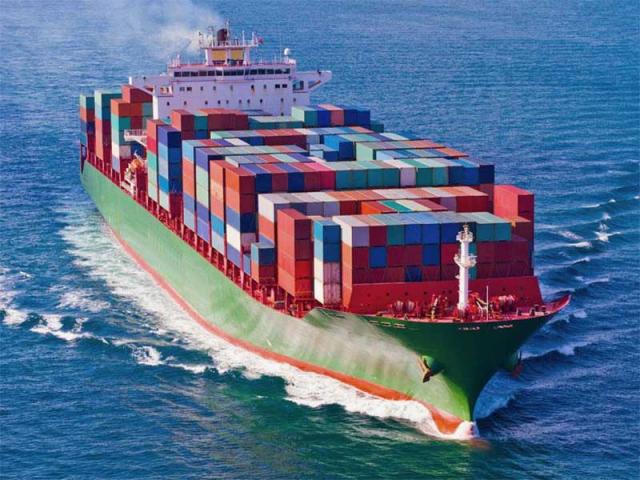
Today's container shipping differs considerably from textbook descriptions: ships are larger, sailing speeds are slower, ports of call are more concentrated, and mismatches between capacity supply and demand are more frequent. These changes ultimately feed through to booking difficulty, schedule choices, and logistics costs. This article reviews several major current trends in container shipping and their impact on shippers.
1. The Trend Toward Larger Ships Continues
Ultra-large container ships currently in operation have per-ship capacities reaching the 24,000 TEU level and are mainly deployed on trunk routes such as Asia-Europe. The larger the ship, the lower the construction cost and fuel consumption per slot, but this presupposes support from a stable cargo base and that ports along the route have the corresponding berth depth and quay crane handling capability.
2. Slow Steaming: From Pursuing High Speed to Controlling Fuel Consumption
In the early development of container shipping, high-speed operations were used to reduce the number of ships deployed. After rising fuel costs and overcapacity, the industry turned in the opposite direction—lowering speeds and using more ships to maintain schedules, thereby spreading unit fuel consumption. Today, actual speeds on mainline services are usually below design speeds, mostly in the 16 to 22 knot range, and speed management has become a routine means for carriers to balance costs and schedules.
3. Fewer Port Calls, More Concentrated Hub Ports
Large container ships call at significantly fewer ports at both ends of a route than traditional liner services, with cargo consolidated at hub ports via feeder ships or inland collection and distribution. For shippers, this means cargo destined for non-hub ports often requires transshipment. When booking, they should confirm whether it is direct or transshipment, where the transshipment port is, and whether the estimated transit time includes transshipment waiting.
4. More Frequent Schedules and Alliance Operations
On trunk routes, departure intervals of major liner companies have generally shortened to weekly or even more frequent. To cover more routes with limited capacity, carriers cooperate through alliances and slot exchanges; on the same route, there may be more than one actual carrier, and mid-route vessel changes are not uncommon. When booking and shipping, shippers should rely on the actual carrier, vessel name, and voyage number, not just the brand of the cargo-soliciting party.
5. Capacity Supply Shows Cyclical Overcapacity
Container ships are capital-intensive and have a high proportion of fixed costs; when the market weakens, capacity cannot exit quickly, so once overcapacity appears, it often lasts a long time. When concentrated deliveries of new ships coincide with demand fluctuations, the freight-rate gap between peak and off seasons becomes more pronounced; unexpected events such as rerouting and port congestion can also significantly change effective capacity in the short term.
6. Digitalization and End-to-End Visibility
Tools such as electronic bills of lading, online booking, and container tracking have become widespread, making in-transit cargo status easier to check than in the past. However, the systems of different carriers and ports are not fully integrated; information across carriers and ports still requires manual coordination, and exceptions still require human follow-up.
Data note: The statements in this article about vessel size, speed ranges, and capacity changes are general descriptions of publicly available industry information. Specific data should be based on carrier announcements and statistics from authoritative shipping institutions.
Further Reading
- Advantages of Container Shipping: Standardization, intermodal transport, and cost trade-offs
- Terminal Operating Process: The full process of gate-in, storage, loading, discharge, and container pickup
- Encyclopedia of Container Types: Parameter comparison of 8 common container types
- What Types of Container Cargo Are There?
- Container Knowledge Center: Dimensions and specifications, container type selection, loading standards, and transport costs
FAQs
Are larger ships good or bad for shippers?
The impact cuts both ways. Lower per-container transport costs give freight rates room to fall, but large ships concentrating at a few hub ports also add extra feeder or inland transport costs for cargo to non-hub ports. The final freight rate paid still depends on supply and demand on that route and how tight peak-season space is.
Is it advisable to sign long-term space contracts during overcapacity?
It depends on the situation. When capacity is loose and freight rates are falling, long-term contracts help stabilize costs; if rates are expected to continue declining, long-term contract prices may be higher than the spot market. Most companies use a combination of “long-term contracts for base volume plus spot for incremental volume,” and the exact ratio should be assessed together with a freight forwarder based on your own cargo volume pattern.
To check container availability, sailing schedules and loading options for a specific route, submit an enquiry online and the Bofeng Logistics team will assess it against your actual cargo.
This article was prepared by the Bofeng Logistics team and reviewed in October 2026. Industry practices and data change over time; refer to carrier booking confirmations and current authority regulations for specifics.
Related Logistics Services
Bofeng Logistics offers the following related services, feel free to inquire: