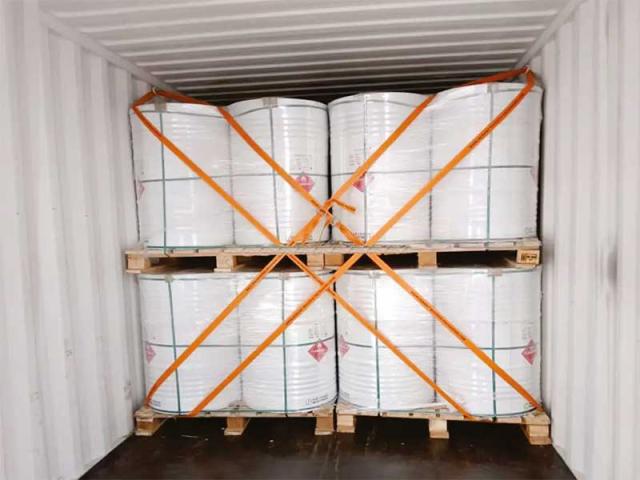
Loading Methods for Typical Cargo in Container Shipping
Typical cargo in container shipping refers to representative bulk cargo among containerized goods. Different packaging forms have their specific loading methods. This article takes boxed cargo (wooden cases) and carton cargo as examples to introduce the loading methods for typical cargo in container shipping.
1. Loading of Boxed Cargo
When loading ordinary wooden boxes, framed wooden boxes, or wire-bound crates, if there are no special requirements and the outer packaging is intact, they can be stacked from bottom to top. Smaller wooden boxes can be loaded into enclosed containers; larger wooden boxes should be loaded into open-top containers due to limitations of the loading work surface. Except for cargo with special loading requirements or wooden boxes with fragile packaging, there is generally no need to insert padding between cargo items.
Taking wooden box cargo as an example, the following points should be noted during loading:
- Interlocking stacking: Heavier wooden boxes can use the interlocking stacking method, placing the upper wooden boxes on the gap between two lower boxes, using the upper weight to restrict the movement of the lower boxes, but the top layer must be firmly secured.
- Securing at the door: After loading is completed, if there is still a large gap at the container door, wooden boards and strips should be used to brace the wooden boxes as a whole, to prevent impact on the door during transport.
- Support on all sides: For wooden box cargo that is heavy and small in size, if there are gaps on all sides after loading, it must be supported and fixed from all sides.
- Center of gravity control: For wooden boxes with a high center of gravity, in addition to fixing the bottom, wooden strips should also be used to wedge open gaps at the top.
2. Loading of Carton Cargo
Carton cargo is a relatively common packaging form in container cargo, generally used for packaging relatively delicate goods. Carton cargo sizes vary, so the loading method should be adjusted accordingly:
- Small cartons with uniform specifications can be stacked without gaps, achieving high container space utilization and requiring no securing; this is an economical and ideal loading form.
- When loading large cartons of the same size, gaps often appear inside the container. Transverse gaps of about 10 cm generally do not need securing; they can be artificially dispersed during actual loading. Larger gaps must be secured according to the situation.
- When mixing cartons of different sizes, size variations can be used to stack them together to eliminate gaps.
- If it is judged that there will be large gaps before loading, first fill the container floor, then stack upward.
Specific requirements for loading carton cargo:
- The loading order should be from the inside of the container outward, or from both sides toward the middle.
- Loading gaps smaller than 300 mm can be held by the weight of the upper layers pressing against each other without special treatment, but the top layer must be filled to eliminate gaps.
- To prevent the lower cartons from deforming under pressure, padding should be placed in the middle layers. Corrugated paperboard is the best padding material; it is light, inexpensive, has high friction, and provides a good anti-slip effect.
When loading small carton cargo, to prevent collapse, an interlocking stacking method can be used. Most of the pressure on corrugated paperboard boxes is supported by the edges of the box, so the corners of the boxes should be aligned when stacking. When stacking, use a brick-wall style or interlocking pattern to increase the mutual pull between the goods. Corrugated paperboard boxes have greater strength when the load is applied to the entire surface, so loading should be done correctly to distribute the load over the entire surface.
Extended reading: Baled Cargo Loading for strapped bundled cargo; Drum and Barrel Loading for drummed liquids and powders; Bulk Cargo Loading covering grain and powder bulk cargo.
Typical Cargo Loading FAQ
Q: How should wooden crates be loaded to prevent movement during transport?
A: Heavier wooden crates can be loaded in an interlocking (staggered seam) manner, using the weight of the upper layer to restrict the movement of the lower crates, but the top layer must be securely fastened. After loading, gaps at the container door must be braced with planks and battens, and surrounding gaps should be supported and fixed. For crates with a high center of gravity, use battens to brace the gaps at the top.
Q: What should be noted when loading cartons into a container?
A: Small cartons of uniform specifications can be stacked without gaps. When mixing different sizes, match large and small cartons to eliminate gaps. Gaps smaller than 300mm can be compressed by the weight of the upper layer, and the top layer can be filled to eliminate gaps. Place corrugated cardboard padding between the middle layers of lower cartons to prevent deformation under pressure. Small cartons can be stacked in a crisscross pattern.
Bofeng Logistics specializes in providing one-stop logistics services including domestic container sea freight, international sea freight (FCL/LCL), Hong Kong and Macau logistics dedicated lines, as well as trailer transport, customs clearance, and warehousing. Contact: 130-7567-8958 (Manager Huang). Call now for an exclusive quote!
Disclaimer: This article was compiled by the Bofeng Logistics team and verified as of August 2026. Cargo loading practices may change with the International Maritime Dangerous Goods Code (IMDG Code), carrier policies and industry standards; always refer to the carrier's current requirements for your container loading.
Related Logistics Services
Bofeng Logistics offers the following related services, feel free to inquire: