Hong Kong is a free port, and most goods can be imported without a license. However, Hong Kong has import control requirements for specific categories such as food, pharmaceuticals, cosmetics, and animals and plants. Import controls follow a negative list principle—goods not on the control list can be freely imported, while controlled goods require an import license. Hong Kong's import control system is designed to protect public health and food safety. Understanding import control requirements helps ensure smooth customs clearance for goods and avoids delays due to incomplete documentation.
1. Classification and Requirements for Controlled Goods
| Goods Category | Regulatory Body | Import Requirements |
|---|---|---|
| Meat and Poultry | Food and Environmental Hygiene Department | Import license, certificate of origin, health certificate |
| Pharmaceuticals and Medicinal Products | Department of Health | Import license (for prescription drugs) |
| Animals, Plants, and Endangered Species | Agriculture, Fisheries and Conservation Department | License or CITES certificate |
| Cosmetics | Customs and Excise Department | Compliance with Cosmetic Regulations |
| Radio Equipment | Communications Authority | Type approval certificate |
| Tobacco and Alcohol | Customs and Excise Department | Dutiable goods require tax payment |
2. Food Import Requirements
Food imports into Hong Kong are regulated by the Food and Environmental Hygiene Department (FEHD). Before importing meat and poultry, an import license must be applied for from the FEHD. For frozen food, certificates of origin and health certificates are required. The processing time for food import licenses is approximately 5-10 working days, and early application is advised.
Labeling requirements for imported food include: product name in both Chinese and English, ingredient list, production date and expiry date, manufacturer information, and net content. Hong Kong's food standards refer to the Codex Alimentarius Commission (Codex) guidelines and differ from Mainland Chinese standards to some extent. Food manufacturers exporting to Hong Kong need to pay special attention to label compliance.
Common categories of imported food include frozen meat, prepared foods, condiments, beverages, and health products. Import requirements vary slightly by food category. It is advisable to confirm specific documentation requirements with a logistics provider before shipment. In addition to meeting label requirements, imported food must not have too short a remaining shelf life; generally, at least six months of shelf life must remain upon import.
3. Pharmaceutical Import Requirements
Pharmaceutical imports are regulated by the Department of Health (DH). Prescription drug imports require an import license, which must be applied for by a Hong Kong registered doctor or a licensed importer. Importing proprietary Chinese medicines requires prior registration under the Chinese Medicine Registration Scheme. Compliance requirements for pharmaceutical imports are stringent, and the declaration process is more rigorous than that for food imports.
The processing time for a pharmaceutical import license is typically 10-15 working days. Enterprises with import needs are advised to submit applications at least one month in advance. Required documents for importing pharmaceuticals include the drug registration certificate, the manufacturer's GMP certificate, and the product inspection report.
Import requirements for health supplements and health foods fall between those for pharmaceuticals and ordinary food. Some functional health supplements may need to meet requirements from both the FEHD and the DH. Enterprises planning to import health supplements are recommended to consult a professional logistics provider for specific compliance requirements before shipment. The ingredients and health claims of supplements must comply with Hong Kong regulations, and some ingredients permitted in Mainland China may be restricted in Hong Kong.
Related reading
- China-Hong Kong Customs Clearance Process Guide
- Macau Customs Clearance and Import Control
- Hong Kong Re-export Trade Operations: Procedures and Documentation
- Hong Kong Logistics Line Services
4. Import Direction / China-Hong Kong Logistics
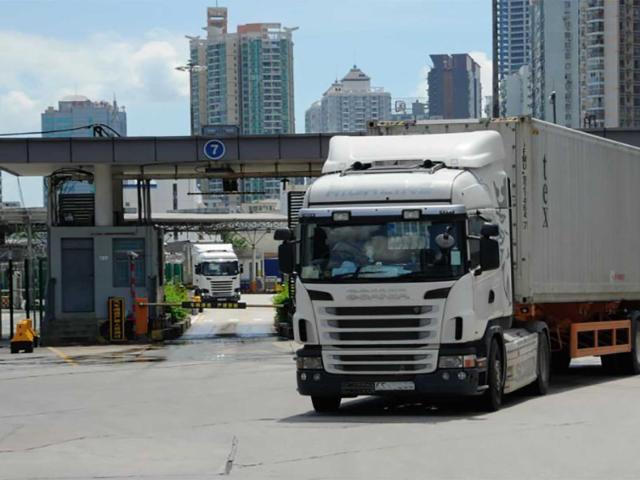
When importing goods from Hong Kong to Mainland China via cross-border trucking, you must prepare Mainland China import customs declaration documents in addition to meeting Hong Kong's export control requirements. The procedure for the import direction is as follows: after collecting goods in Hong Kong, the cross-border truck enters Mainland China via a port and declares the import to Mainland Customs. Imported goods need an import contract, invoice, packing list, as well as special documents such as CCC (3C) certification or food hygiene licenses. Provide the import contract, invoice, packing list, and special documents (CCC certification, food hygiene license, etc.) for imported goods.
It is advisable to confirm compliance requirements on both the Hong Kong side and Mainland side before shipment to ensure complete documentation for both parties. When importing goods from Hong Kong to Mainland China, you can entrust a logistics provider to handle customs clearance on your behalf; the consignor only needs to provide the goods information and relevant documents. The entire process from picking up goods in Hong Kong to delivery in Mainland China takes approximately 2-3 days. Goods arrive in Shenzhen via cross-border trucks through Shenzhen Bay or Huanggang Port before being distributed throughout Mainland China.
After years of development, Hong Kong's import control system is highly standardized, with transparent operational procedures. By understanding the control requirements in advance and preparing all necessary documents, importers can successfully complete Hong Kong import customs clearance. For assistance with import compliance, you can consult a professional logistics provider for advice and agency services.
Data as of: July 2026
Need Hong Kong import compliance consultation? Contact us.
Import Compliance Consultation: 13075678958 | info@zhbfwl.com
Related Logistics Services
Bofeng Logistics offers the following related services, feel free to inquire: