Shipping to Hong Kong: Shared Truck or Dedicated Truck? This is the most common choice in China-Hong Kong logistics. Both modes have suitable cargo volume ranges and delivery time characteristics. Choose correctly and you save money and time; choose incorrectly and you both spend more and delay shipments. This article compares the two from three perspectives: cost structure, operational process, and applicable scenarios, helping you make the right choice within a minute.
1. Detailed Explanation of Shared Truck (LCL) Transport
Shared truck (Less-than-Truckload transport) means cargo from multiple customers is combined on one China-Hong Kong truck, with fees shared based on actual cargo volume. Fixed daily departures are scheduled. Major cities in the Pearl River Delta arrange door-to-door pickup, cargo is consolidated at a Shenzhen warehouse for sorting and loading, and then cleared through Shenzhen Bay or Huanggang Port to Hong Kong. Shared truck is suitable for regular daily shipments of normal cargo volumes and is the most frequently used mode in China-Hong Kong logistics, accounting for over 60% of shipments.
Applicable Conditions: Small batch goods with volume less than 5 CBM or weight less than 3 tons. Regular cargo such as electronic components, hardware accessories, clothing and textiles, daily necessities, and samples is first choice for shared truck.
Billing Rules: Charges are based on the higher value between weight (yuan/kg) and volume (yuan/CBM), consistent with the billing logic for LCL sea freight. Light, bulky goods are billed by volume, heavy goods by weight; the higher freight cost between the two methods is applied.
Transit Time: Shared truck generally arrives in Hong Kong within 2-3 business days. In major PRD cities, pickup in the morning, consolidation at warehouse for sorting and loading in the afternoon, clearance in the next morning, and delivery in Hong Kong completed by the next afternoon at the earliest. Goods from outside Guangdong province must first be sent to a transit warehouse, adding 1-2 days to the transit time.
Packaging Requirements: Since shared truck cargo is transported alongside goods from other customers, packaging must be sufficiently sturdy. Cardboard boxes should be sealed securely with an "H" tape pattern. Pallet wrap must be applied with at least 3 layers for fixation. Fragile items should have fragile labels and upward arrows marked on the outer box. Shared truck involves more handling steps than dedicated truck—after collection, cargo undergoes unloading, sorting, and loading—so additional packaging reinforcement is required.
Please Note: Shared truck is not suitable for high-value goods (premium electronics, luxury items, etc.), oversized items (single piece exceeding 2 meters in length or 500 kg in weight), bulk cargo (needs bagging or crating), and mechanical equipment requiring special lashing and fixation.
2. Detailed Explanation of Dedicated Truck (FTL) Transport
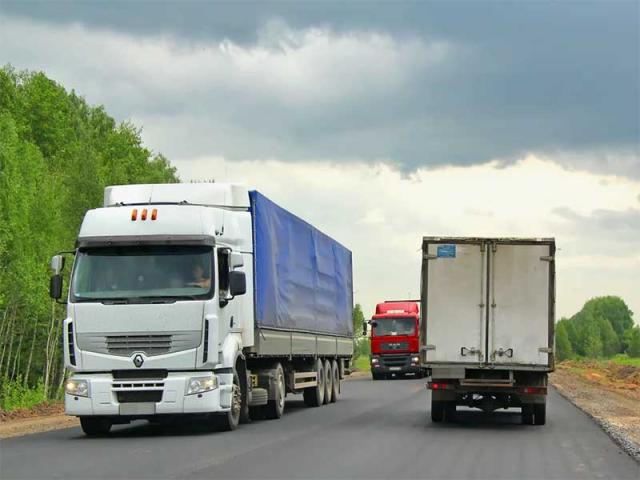
Dedicated truck means one China-Hong Kong truck carries cargo from only one customer, traveling directly from the factory to Hong Kong without transshipment or consolidation. It is billed at a fixed price per truck type, regardless of how much or little is loaded. Dedicated truck loads and arrives in Hong Kong on the same day, offering the fastest transit time in China-Hong Kong logistics.
Applicable Conditions: Large batch goods with volume greater than 5 CBM or weight greater than 3 tons; urgent shipments requiring extremely high timeliness (meeting ship schedules, production line emergencies); high-value cargo needing fully enclosed transport; large equipment and machinery requiring lashing and fixation.
Vehicle Options: Various truck types are available for China-Hong Kong dedicated truck service, from 3-ton trucks (approx. 8 CBM), 5-ton trucks (approx. 12 CBM), 8-ton trucks (approx. 18 CBM), to 20-foot containers (approx. 28 CBM), 40-foot containers (approx. 56 CBM), as well as special types like flatbed trucks and refrigerated trucks. See the China-Hong Kong Vehicle Encyclopedia for specific dimensions of each type.
Billing Rules: Dedicated truck uses a fixed price per truck type. The fee covers the entire transport segment from the mainland factory to the Hong Kong warehouse, including mainland pickup, port clearance, and Hong Kong delivery. The cost is the same whether loaded fully or partially, making it suitable for cargo volumes that nearly fill a truck type.
Transit Time: Dedicated truck arrives in Hong Kong the same day. The entire process from factory loading to Hong Kong warehouse can be controlled within 8-12 hours, ideal for goods needing to meet ship schedules or production line deadlines.
Advantages: Direct delivery with fewer handling steps (once for loading, once for unloading) and no transshipment. It offers not only fast transit but also significantly lower risk of cargo damage compared to shared truck. Dedicated truck uses fully enclosed transport, suitable for high-value cargo.
3. Core Differences Comparison
| Comparison Dimension | Shared Truck (LCL) | Dedicated Truck (FTL) |
|---|---|---|
| Applicable Cargo Volume | Less than 5 CBM or 3 tons | Greater than 5 CBM or 3 tons |
| Billing Method | Based on higher of weight/volume | Fixed price per truck type |
| Billing Flexibility | Pay more for more, pay less for less | Pay full truck price even if partially loaded |
| Transit Time | 2-3 business days to Hong Kong | Same day arrival in Hong Kong |
| Transshipment Required | Needs transshipment & sorting at Shenzhen warehouse | Direct from factory, no transshipment |
| Handling Frequency | 3 times (load→unload→load CN-HK truck→unload) | 2 times (load→unload) |
| Packaging Requirements | Higher (must withstand multiple handling) | Lower (direct, less transshipment) |
| Cargo Damage Risk | Cargo compression; moderate risk | Exclusive use of truck; low risk |
| Suitable Goods | Electronic components, clothing, daily necessities, samples | Furniture, machinery, bulk goods, high-value goods |
4. Three-Dimensional Decision Framework
Choosing between shared truck and dedicated truck depends on three factors:
Dimension 1: Cargo Volume. Volume is the primary criterion. For small batches under 1 CBM, shared truck is the only economical option. For 1-5 CBM, shared truck remains economical, especially if cargo shape allows optimal use of vehicle space. For volumes over 5 CBM, dedicated truck is more cost-effective—shared truck bills based on actual volume, and when volume nears a truck's capacity, shared truck costs may not be lower than the dedicated truck flat rate.
Dimension 2: Transit Time. Non-urgent goods can use shared truck (arriving in 2-3 days) which fully meets the need. For goods needing to meet ship schedules, production line emergencies, or urgent orders, choose dedicated truck (same day arrival). There is an often-overlooked factor for transit time: shared truck requires waiting for the customer's cargo to arrive at the Shenzhen warehouse before loading for customs clearance. Therefore, dispatch time affects whether the goods can make the same day's shared truck departure. It is recommended that shared truck customers arrange pickup in the morning to ensure the afternoon consolidation and evening clearance.
Dimension 3: Cargo Value. High-value goods (premium electronics, luxury items, precision instruments, etc.) are recommended for dedicated truck. Direct delivery, fully enclosed, reduces the risk of damage and loss during intermediate steps. Regular goods (electronic components, clothing textiles, hardware accessories, etc.) can use shared truck. The risk of damage for regular goods is acceptable under the shared truck mode, and the cost is economical.
Comprehensive 3D Judgment: When weighing all three dimensions, prioritize cargo volume—if volume exceeds the starting point for dedicated truck, choose dedicated truck first. If volume is below the dedicated truck starting point, then prioritize cargo value secondarily—high value choose dedicated truck; regular choose shared truck. Transit time is the third priority—use dedicated truck for urgent goods if necessary; for non-urgent goods, save money with shared truck.
5. Considerations for the Import Direction
The logic for choosing between shared truck and dedicated truck is broadly the same for the import direction (Hong Kong → Mainland) and export direction (Mainland → Hong Kong). However, the import direction has an additional factor: the inspection rate is higher for imports than for exports. Dedicated truck carries goods for only one customer, so if inspected, it only affects that customer's goods; the container can be unsealed, inspected, and then released. Shared truck carries goods from multiple customers in one vehicle. If one customer's goods are selected for inspection, the whole shipment may need to wait, affecting other customers.
Therefore, when importing goods from Hong Kong to mainland China, high-value or time-sensitive goods are recommended for dedicated truck to reduce the overall transit time risk caused by inspections. Regular goods can use shared truck for cost savings.
6. Common Misconceptions
Misconception 1: Small volume always means shared truck. Not necessarily. If the cargo has a small volume but is heavy (e.g., hardware accessories), shared truck billing takes the higher of weight and volume, so costs can be high. If there is no suitable shared truck going in the same direction or timeliness cannot tolerate delays, consider a small dedicated truck for direct delivery.
Misconception 2: Dedicated truck is always more expensive than shared truck. Not necessarily. When the cargo volume is close to filling a truck's capacity (e.g., 4-5 CBM), shared truck billing based on actual volume can be close to or equal to the dedicated truck flat rate. In this case, dedicated truck may offer better value—shared truck costs can even be higher, and transit time is slower than dedicated truck.
Misconception 3: The cost difference between shared truck and dedicated truck is huge. For small to medium volume goods, the cost difference between shared truck and dedicated truck is not significant. The core difference lies in transit time and service level—the extra money spent on dedicated truck buys you same-day arrival and zero-transshipment assurance, while the money saved by using shared truck provides a transit window of 2-3 days with less urgency. Choice should be based on actual needs, not simply comparing prices.
7. Bo Feng Logistics Shared Truck and Dedicated Truck Services
Bo Feng Logistics offers both shared truck (LCL) and dedicated truck (FTL) transport services for China-Hong Kong routes. Shared truck departs on fixed daily schedules, suitable for small batch regular shipments. Dedicated truck is arranged as needed with same-day arrival in Hong Kong. We provide door-to-door pickup services in major cities in Guangdong Province; goods from other regions are transshipped via the Zhuhai warehouse.
Shared Truck Service: Departures daily, with door-to-door pickup in PRD cities. Billing based on higher of weight or volume; arrival in Hong Kong within 2-3 days. Suitable for regular goods like electronic components, hardware accessories, clothing and textiles, and daily necessities.
Dedicated Truck Service: Arranged on demand, direct from factory, same-day arrival in Hong Kong. Fixed price per truck type; options range from 3-ton trucks to 40-foot containers. Suitable for batch shipments, urgent goods, and high-value cargo.
For selection advice or a specific plan, just provide cargo information (volume, weight, cargo type, and destination). We can reply with a plan and quotation within 30 minutes.
Data as of: July 2026
Unsure whether to choose shared or dedicated truck? Contact us for a free assessment.
Inquiry: 13075678958 | info@zhbfwl.com
Related Logistics Services
Bofeng Logistics offers the following related services, feel free to inquire: