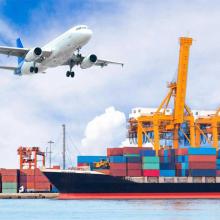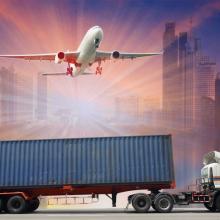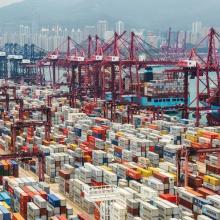
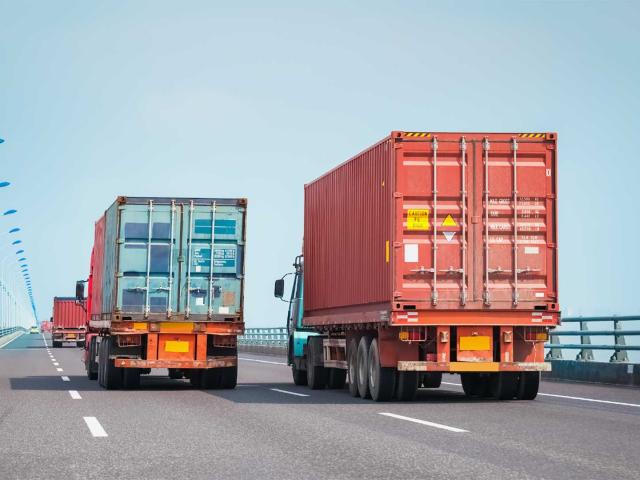
The operational process of Hong Kong re-export trade involves the procedures of bill switching, warehousing, and secondary dispatch of goods after they arrive in Hong Kong from Mainland China. The core value of re-export trade is to leverage Hong Kong's free port policy to reduce tariff costs and utilize Hong Kong's international route network to ship goods worldwide. For foreign trade enterprises in the Pearl River Delta region, the re-export model via Hong Kong has become a supply chain solution integrating tax optimization, logistics distribution, and global delivery.
The efficient operation of Hong Kong re-export trade relies heavily on mature cross-border logistics support between Mainland China and Hong Kong. The process of transporting goods from Mainland China to Hong Kong via cross-border trucks and then dispatching them globally through Hong Kong's international logistics network involves multiple stages and switches in document types. Understanding the operational process of re-export trade helps enterprises efficiently utilize Hong Kong's advantages for re-exports.
1. Standard Re-export Process
Step 1: Shipment from Mainland China to Hong Kong. Goods are loaded from Mainland Chinese factories and transported via cross-border trucks through Shenzhen ports to Hong Kong warehouses. Groupage shipments take 2-3 days to arrive, while full truckloads arrive the same day. The timeliness requirement for cross-border transportation in re-export trade is higher than in general trade because goods need to connect with predetermined vessel or flight schedules. It is recommended to arrange shipment 2-3 days in advance to ensure sufficient time for arrival and storage.
Step 2: Temporary Storage and Processing in Hong Kong Warehouses. Upon arrival in Hong Kong, goods are stored temporarily in Hong Kong warehouses. Hong Kong's free port policy means no tariff costs are incurred during storage, allowing re-export traders to flexibly control the dispatch pace.
Step 3: Bill Switching and Secondary Dispatch. Goods in the Hong Kong warehouse are dispatched according to overseas customer orders. The bill of lading processing for re-export trade differs from general trade: transport documents are used for the Mainland-to-Hong Kong leg, and sea or airway bills are used for the Hong Kong-to-overseas leg. The bills for the two legs are independent of each other, and the cargo owner must manage two separate sets of documents.
Step 4: Document Archiving. Maintaining a complete chain of re-export trade documents, including Mainland export customs declarations, Mainland-Hong Kong transport documents, Hong Kong warehouse inbound records, and overseas outbound bills of lading, facilitates subsequent tax declarations and trade compliance audits. A complete document chain is the guarantee for compliant re-export trade operations.
2. Re-export Trade vs. Direct Export
| Comparison Dimension | Via Hong Kong Re-export | Direct Export from Mainland |
|---|---|---|
| Tariff Cost | Mainland→HK zero tariff; HK→Overseas zero tariff | Mainland export tax refund (for certain goods) |
| Route Coverage | Approx. 600 ports, globally leading liner density | Major routes have wide coverage, minor ports require transshipment |
| Inventory Flexibility | Can be stored temporarily in HK warehouse, dispatched in batches per order | Need to pre-stock goods at the dock, lower flexibility |
| Suitable Cargo Volume | Suitable for small to medium batches, flexible with LCL | Suitable for large batches, direct FCL shipping |
The core advantage of re-export trade lies in inventory flexibility. Factories can transport goods to Hong Kong warehouses in batches without loading a full container for export at once. For enterprises with unstable orders or uncertain delivery times from customers, this model is more flexible than direct export.
Re-export trade and direct export each have their own applicable scenarios. Re-export via Hong Kong is suitable for small to medium batch goods and orders requiring flexible dispatch, while direct export suits large batch, full container cargo. Enterprises should comprehensively consider factors such as cargo volume, timeliness requirements, and destination when choosing between re-export and direct export.
3. Key Points for CEPA Tariff Preference Operation
CEPA zero tariff requires substantial processing in Hong Kong or possessing Hong Kong origin qualification. Goods merely transshipped through Hong Kong without processing cannot enjoy the CEPA zero tariff - this is a common misconception. Qualified enterprises can apply for a CEPA Certificate of Origin from the Hong Kong Trade and Industry Department, submitting production process descriptions and cost accounting documents. CEPA zero tariff covers over 1,800 products, including industries such as electronics, apparel, chemicals, and food. Eligible enterprises can enjoy zero tariffs on entering the Mainland market through the CEPA Certificate of Origin, significantly reducing import tariff costs.
4. Document Requirements for Re-export Trade
Re-export trade requires managing documents for both the Mainland and Hong Kong legs simultaneously: Mainland export customs declaration, Mainland-Hong Kong transport invoice, Hong Kong warehouse inbound record, and overseas outbound bill of lading. The documents for both legs must completely correspond to prove the re-export path of the goods. Inbound and outbound records for Hong Kong warehouses should be clear and complete for customs inspection.
Typical industries for re-export trade include electronic products exported by air from Hong Kong to Europe and America (transit time 3-5 days), garment and textile products using the CEPA channel to reduce tariffs, and chemical products transshipped via Hong Kong through dense Southeast Asian routes. The operational process of re-export trade is basically the same across different industries, but each has its unique characteristics in terms of documentation and compliance requirements.
5. Broad Fortune Logistics Re-export Services
Broad Fortune Logistics provides one-stop services including Mainland-to-Hong Kong cross-border transport and Hong Kong warehousing and distribution. Goods are picked up from Mainland factories, transported via cross-border trucks to Hong Kong warehouses, and then arranged for secondary dispatch globally based on re-export orders. Door-to-door service within Guangdong Province; external areas transship via Zhuhai warehouse. The compliant operation of Hong Kong re-export trade involves three aspects: free port policy, CEPA rules of origin, and cross-border logistics between Mainland China and Hong Kong. Once enterprises grasp the basic rules, they can fully leverage Hong Kong's re-export advantages to reduce trade costs and improve supply chain efficiency.
Data As Of: July 2026
Need Hong Kong re-export operation services? Contact us.
Re-export Trade Consultation: 13075678958 | info@zhbfwl.com
Related Logistics Services
Bofeng Logistics offers the following related services, feel free to inquire: