Fees and Quotations
Q1: How is China-Hong Kong logistics charged? For consolidated shipments, charges are based on weight (RMB/kg) or volume (RMB/CBM), whichever is greater. For full truckload (FTL), it's a fixed price per vehicle type. ALL-IN inclusive fees cover transportation, customs clearance, and delivery with no hidden costs. The charges for China-Hong Kong logistics are transparent and standardized; enterprises only need to provide cargo information to receive an accurate quote and plan. For other questions, feel free to contact Bofeng Logistics for consultation. Specific charges need to be confirmed upon inquiry based on cargo details.
Q2: Why are consolidated shipments charged by the greater of weight and volume? The capacity of China-Hong Kong trucks is limited by both load weight and space. For example, cotton has large volume but light weight, so space may fill up first, while steel has small volume but heavy weight, so the weight limit may be reached first. Charging by the greater of the two is the fairest method: whoever occupies more capacity pays more.
Q3: Which is more economical, FTL or consolidated shipping? For shipments under 5 CBM, consolidated shipping is more economical; for over 5 CBM, FTL is better. Larger shipments reduce the per-kilogram freight cost. For high-value or time-sensitive goods, FTL direct shipment is recommended to reduce transit risk.
Transit Time and Process
Q4: How long does it take from Shenzhen to Hong Kong? Express: 4-8 hours; FTL: same day; consolidated: 1-2 days. Travel from Nanshan to Shenzhen Bay takes 20 minutes, and from Longgang to Huanggang takes 40 minutes; the route time affects overall transit. See details in the comparison of ports from Shenzhen to Hong Kong.
Q5: How long does it take from other regions to Hong Kong? Shipments are first sent to Zhuhai or Shenzhen warehouses. After arriving at the warehouse, transit to Hong Kong via the Hong Kong-Zhuhai-Macao Bridge or Shenzhen ports takes about 1 day. It takes about 3-5 days from East China to Shenzhen warehouse, about 2 days from Central China, and about 3 days from Southwest China. See details in the guide for transit to Macau and Hong Kong via Zhuhai warehouse.
Q6: Do holidays affect transit time? Yes, due to holidays in both Mainland China and Hong Kong. For long holidays like National Day and Chinese New Year, it is recommended to arrange shipment 2-3 days in advance to avoid the peaks before and after holidays.
Q7: What is the order cut-off time? For consolidated shipments, there are fixed daily departure batches: pickup in the morning, consolidation in the afternoon, customs clearance in the evening, and delivery the next morning. FTL shipments are arranged on demand, with advance booking of half a day required. It is recommended to complete pickup in the morning to ensure arrival at the same-day customs clearance batch.
Cargo and Service Scope
Q8: What types of cargo can be shipped? General cargo is all acceptable. Large items and cold chain cargo require advance confirmation of the plan.
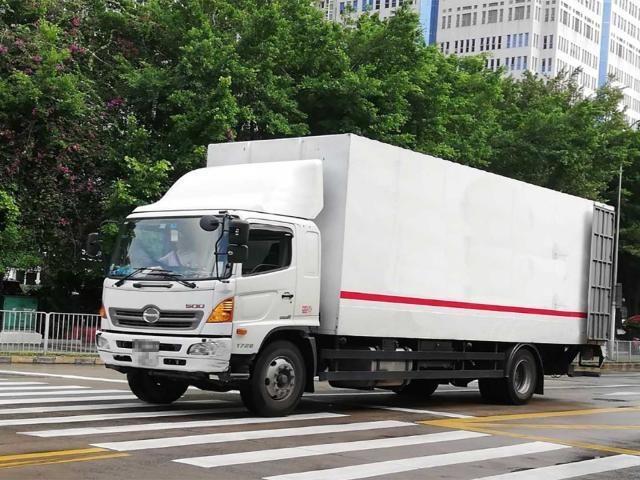
Q9: Are there size restrictions for cargo? China-Hong Kong truck dimensions vary: a 3-ton truck is approximately 4.2×2.0×1.8 meters, and a 5-ton truck is approximately 5.2×2.1×2.0 meters. For oversized cargo, a flatbed truck is needed. See the China-Hong Kong Truck Encyclopedia for details.
Q10: Can deliveries be made throughout Hong Kong? Yes, deliveries can be made across the entire Hong Kong territory, including Hong Kong Island, Kowloon, the New Territories, and certain outlying islands. Deliveries across Macau are also possible.
Operations and Qualifications
Q11: Can you handle both import and export? Both export (Mainland China → Hong Kong) and import (Hong Kong → Mainland China) operations are possible. The import direction requires customs clearance documents, and the inspection rate is higher than for exports.
Q12: Can I ship to Hong Kong without export qualifications? Yes. Bofeng Logistics acts as an agent for export customs clearance, enabling enterprises to ship to Hong Kong via China-Hong Kong logistics without needing their own import/export license.
Q13: Can the merchandise be shipped to both Macau and Hong Kong together? Yes. Goods on the west bank of the Pearl River can be transferred via the Zhuhai warehouse to cover both Hong Kong and Macau destinations. The same batch of cargo can be sorted and dispatched from the Zhuhai warehouse to both locations.
Q14: What are the packaging requirements for consolidated shipments? Consolidated cargo shares transport with other clients' goods, so packaging must be sturdy. Boxes should be sealed tightly with packing tape, and pallets need stretch wrap for fixation. Fragile items should be marked with a fragile label and an upward arrow on the outer box.
Q15: What information needs to be provided for China-Hong Kong logistics? Before shipping, you need to provide: cargo name, total weight (kg), total volume (CBM), number of pieces, packaging type, and sender/receiver addresses. The more accurate the information, the more precise the logistics provider's recommendation.
Q16: Can you handle customs declaration on our behalf? Yes. We offer a one-stop service for customs clearance, covering both export and import processes. Enterprises do not need their own import/export license.
Q17: What documents are needed for importing from Hong Kong to Mainland China? You need to provide an import contract, invoice, packing list, and special documents such as CCC certification or a food hygiene permit. The inspection rate is higher than for exports, so it is recommended to allocate 1-2 business days as a buffer.
Q18: What are the requirements for cold chain cargo transportation? A refrigerated truck must be used for full-temperature control, either refrigeration at 0-8°C or freezing at -18°C. Pre-cooling is key—both the cargo and the refrigerated truck need to be pre-cooled before loading. Temperature control during peak lineup times at ports in summer is the biggest challenge.
Q19: What items cannot be shipped? Prohibited goods, explosives, and controlled chemicals cannot be shipped. General cargo includes electronic components, clothing, hardware accessories, daily necessities, etc., and can all be transported. Cold chain and oversized cargo require advance confirmation of the plan.
Q20: What factors affect the transit time of China-Hong Kong logistics? Key factors include port choice (Shenzhen Bay is the fastest at about 20-40 minutes), pickup time (congestion during daytime peaks), inspection status (general cargo is released electronically; inspection takes 1-2 days), and holidays (adjustments for Mainland China and Hong Kong holidays). It is recommended to allocate 1-2 business days as a buffer.
Q21: What truck models are available for FTL transport? Available options include 3-ton, 5-ton, 8-ton, 10-ton, 12-ton trucks, as well as 20GP and 40GP container trucks. A 3-ton truck offers about 15 CBM and is suitable for small batches and urgent goods, while a 5-ton truck provides about 25 CBM and is the most common model for daily use. See vehicle parameters in the China-Hong Kong Truck Encyclopedia.
Q22: Can you elaborate on the billing method for China-Hong Kong logistics? Consolidated shipments are billed by the greater of weight or volume, FTL shipments have a fixed price per vehicle type, express is billed per shipment (including customs clearance and delivery fees), and cold chain includes an additional refrigeration unit charge. ALL-IN inclusive fees cover transportation, customs clearance, and delivery with no hidden costs.
Contact Information
Q23: How can I get in touch? Phone: 13075678958, Email: info@zhbfwl.com. Plans and quotes are provided within 30 minutes of contact.
Data as of: July 2026
Have other questions? Feel free to contact us anytime.
Contact: 13075678958 | info@zhbfwl.com
Related Logistics Services
Bofeng Logistics offers the following related services, feel free to inquire: