
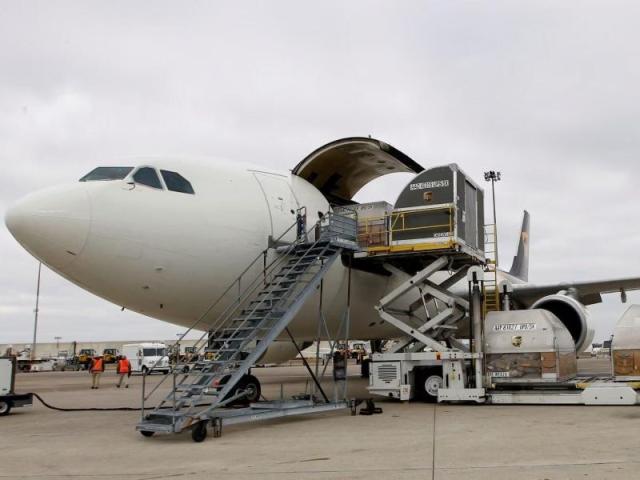
I. Basic Process of Air Freight Booking
Air freight booking refers to reserving cargo space on a specific flight with an airline or freight forwarder. Compared to sea freight, air freight booking has a shorter window and less flexibility, requiring more precise time management.
Standard Booking Process
① Inquiry → ② Submit booking request → ③ Booking confirmation →
④ Prepare cargo and documents → ⑤ Deliver cargo to warehouse → ⑥ Shipment
Step-by-Step Description
| Step | Operation | Time Reference |
|---|---|---|
| ① Inquiry | Check rates and space availability with forwarder/airline | 7-14 days before shipment |
| ② Submit booking request | Provide product name, weight/volume, destination, preferred flight | 3-5 days before departure |
| ③ Booking confirmation | Forwarder/airline confirms space, provides booking number and cutoff times | 1-24 hours after submission |
| ④ Prepare cargo and documents | Complete packaging and customs documentation before cargo cutoff | 1-2 days before cargo cutoff |
| ⑤ Deliver cargo to warehouse | Cargo arrives at airport cargo terminal | Before cargo cutoff time |
| ⑥ Shipment | Cargo loaded and flight departs | According to flight schedule |
II. Key Information for Booking
The following information is required when submitting a booking request:
| Information Item | Requirement | Description |
|---|---|---|
| Shipper Information | Full name + address + contact person + phone | Must match customs declaration |
| Consignee Information | Full name + address + contact person + phone | For destination contact |
| Cargo Description | Chinese and English product name | Must match customs declaration |
| Number of Pieces | Total number of packages | — |
| Gross Weight | kg | Actual weight |
| Total Volume | CBM or Length×Width×Height | Used for volumetric weight calculation |
| Destination Airport | Three-letter code | e.g., LAX, FRA |
| Preferred Flight Date | Date | Multiple dates can be selected |
| Special Requirements | Dangerous goods/temperature control/valuables | Affects space allocation |
| Transport Terms | Airport-to-airport / door-to-door | — |
III. Time Management: Cargo Cutoff, Document Cutoff, and Customs Cutoff
Air freight time management is much stricter than sea freight—missing the cargo cutoff means missing the flight.
3.1 Three Key Cutoff Times
| Time Point | English | Description |
|---|---|---|
| Cargo Cutoff | Last Acceptance Time / Cut-off Time | Latest time for cargo to arrive at the terminal |
| Document Cutoff | Latest Time for AWB Completion | Latest time to submit AWB and customs info |
| Customs Cutoff | Customs Cut-off Time | Latest time for customs clearance |
3.2 Timeline Diagram
Departure Time T
│
T-8h ─── Document Cutoff (AWB submission deadline)
│
T-6h ─── Cargo Cutoff (cargo warehouse deadline)
│
T-4h ─── Customs Cutoff (customs clearance deadline)
│
T-3h ─── ULD build-up completed, loading begins
│
T-0h ─── Departure
3.3 Reference Cargo Cutoff Times for Major Airports
| Airport | International Flight Cargo Cutoff | Notes |
|---|---|---|
| Guangzhou Baiyun (CAN) | 5-6 hours before departure | China Southern flights have stricter cutoff times |
| Shenzhen Baoan (SZX) | 4-6 hours before departure | E-commerce cargo has dedicated processing lanes |
| Hong Kong (HKG) | 6-8 hours before departure | Cross-border transport requires additional buffer time |
| Shanghai Pudong (PVG) | 5-6 hours before departure | Largest air cargo port in China |
The above are general references. The exact cargo cutoff time is subject to the booking confirmation, as it varies by airline/destination. It is recommended to confirm the precise cutoff time with your forwarder when booking.
3.4 Time Management Tips
| Tip | Description |
|---|---|
| Deliver cargo early | Delivering 1 day in advance is safer than rushing at the cutoff |
| Allow buffer time | Ensure sufficient transit time from factory to airport (especially for long-distance trucking) |
| Check holiday impacts | Local holidays / destination holidays may affect cutoff times |
| Prepare documents in advance | Document cutoff is usually before cargo cutoff; don't leave documentation until the last minute |
IV. Booking Channel Selection
4.1 Three Main Channels
| Channel | Suitable For | Advantages | Disadvantages |
|---|---|---|---|
| Direct with Airline | High-volume monthly shippers | Lowest rates, most stable space, high priority | High minimum volume requirements |
| First-tier Freight Forwarder | Small to medium volume shippers | Full route coverage, multiple airline options, flexible service | Slightly higher rates than direct |
| Online Booking Platform | Sporadic, small shipments | Easy rate comparison, convenient operation | Less competitive for large volumes |
4.2 How to Choose a Forwarder for Booking
| Evaluation Dimension | Points to Consider |
|---|---|
| Airline Relationships | Which airlines the forwarder has direct contracts with, space guarantee capability |
| Route Coverage | Whether it covers all your required destinations |
| Price Transparency | Whether detailed quotes are provided, any hidden fees |
| Operational Capability | Whether full services like ULD build-up, customs clearance, and delivery are offered |
| Information System | Whether an online tracking system is available |
| Contingency Plans | Backup options in case of flight cancellation/delay |
4.3 Booking Characteristics in the Pearl River Delta
| Airport | Route Features | Booking Suggestions |
|---|---|---|
| Guangzhou (CAN) | Dense direct flights to Europe/America, China Southern hub | Most reliable for China Southern direct routes |
| Shenzhen (SZX) | Strong Southeast Asia routes, many e-commerce special lines | SF Airlines / China Postal Airlines e-commerce routes have advantages |
| Hong Kong (HKG) | Most comprehensive global network, strong transshipment capability | Suitable for unconventional destinations / large volumes |
| Macau (MFM) | Unique routes to Portuguese-speaking countries | Confirm space availability in advance for Macau departures |
V. Booking Modifications and Cancellations
| Operation | Time Requirement | Fee | Notes |
|---|---|---|---|
| Change flight | Before cargo cutoff | Free or small change fee | Notify forwarder as early as possible |
| Increase cargo volume | Before cargo cutoff | Additional freight charged by added weight | Confirm remaining space on flight |
| Decrease cargo volume | Before cargo cutoff | Usually free | May incur ULD break-down fee if already built |
| Cancel booking | Before cargo cutoff | Free | Frequent cancellations may affect credit |
| Cancel after cargo cutoff | After cargo cutoff | May incur handling fees | Cargo already in warehouse, requires compensation for operational costs |
Important reminder: Canceling bookings during peak season may affect future space allocation. It is recommended to book only when you have a confirmed plan.
VI. Practical Booking Differences at Pearl River Delta Airports
| Scenario | CAN | SZX | HKG |
|---|---|---|---|
| To major European cities | China Southern CZ direct to FRA/AMS/LHR, ample capacity | Fewer direct flights than CAN; if direct to Europe is needed, use CAN | Cathay Pacific CX high frequency, most options |
| To US West Coast | CZ direct to LAX, stable | PO/SZX direct to LAX, e-commerce cargo priority | CX densest routes, also FedEx/UPS hubs |
| To Southeast Asia | High flight frequency | SZX dense Southeast Asia routes, good transit time | Highest flight frequency, but requires cross-border transport |
| To Africa/Middle East | CAN has CZ direct flights to Middle East/Africa | Requires transit via Hong Kong or Guangzhou | HKG offers the most comprehensive transit options |
| Urgent cargo | China Southern belly + freighter ample capacity | SZX e-commerce cargo has fast lanes | HKG widest global network |
Need air freight booking services? Bofeng Logistics covers four major air cargo ports: Guangzhou, Shenzhen, Hong Kong, and Macau. We have long-term partnerships with multiple airlines and first-tier forwarders, offering competitive rates and stable space guarantees.
📞 Hotline: 130-7567-8958 | ✉️ Email: info@zhbfwl.com
Related Logistics Services
Bofeng Logistics offers the following related services, feel free to inquire: