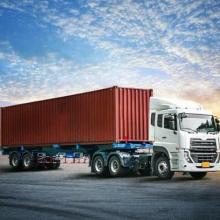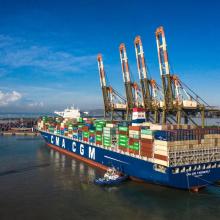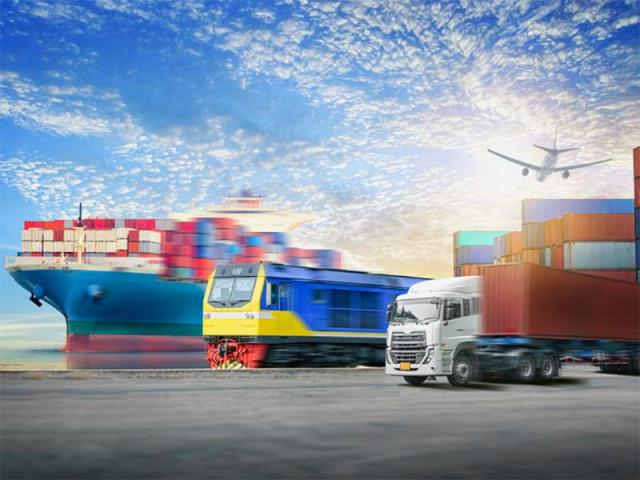
Port logistics is an integrated logistics service that uses ports as nodes to link transport, warehousing, loading and unloading, agency, packaging, distribution, and information processing. Because they sit at the interface between maritime and inland transport, ports are both transshipment hubs for goods and centers of regional logistics organization. This article explains the concept, main characteristics, and influencing factors of port logistics. For port distribution, see Overview of China's Ports: Distribution of Major Seaports and Throughput Rankings; for terminal facilities and operations, see Terminals and Terminal Classification, Terminal Operation Process: The Complete Process of Port Entry, Storage, Loading, Unloading, and Container Pickup.
I. What Is Port Logistics?
Port logistics takes the port as an irreplaceable node and service platform in the modern logistics process, organically integrating links such as transportation, warehousing, loading, unloading and handling, agency, packaging and processing, distribution, and information processing to form a complete service chain, providing cargo owners with multifunctional, integrated comprehensive logistics services.
In terms of business, port logistics not only handles the loading, unloading, and transshipment of container cargo, but also handles the transportation and transshipment of bulk carrier cargo; at the same time, leveraging the port's geographical location, it extends services to the inland hinterland. Connecting maritime trunk line transport at one end and railway, highway, and other collection and distribution systems at the other, it is a bridging link in the international logistics chain.
II. Main Characteristics of Port Logistics
1. Occupying a Central Position in the International Logistics Chain
Traditional ports only handled transshipment and product distribution functions. With the development of international multimodal transport and the increasing complexity of integrated transport chains, ports, as nodes in the global integrated transport network, have continuously expanded their functions inland with the port as the center, becoming integrated logistics centers in continuous transport chains; at the same time, they also function as business centers, providing customers with transportation, commercial, and financial services such as agency, insurance, and banking, and becoming hubs for the convergence of commodity flows, capital flows, technology flows, and information flows.
2. Reflects the Overall Level of a Country's Logistics Development
By virtue of their geographical advantages and relatively complete hardware facilities, ports bring together a large number of cargo owners, shipping enterprises, agency companies, and retailers. Compared with hinterland logistics, port logistics practitioners are more likely to be the first to come into contact with advanced technologies and management concepts, and these practices will in turn spread through the logistics chain to the landward hinterland. Therefore, the development level of a country's port logistics largely reflects the overall level of the country's logistics development.
3. Influenced by National Policies and the International Environment
In addition to logistics services in the general sense, port logistics services also include special services such as customs inspection, maritime rescue, and maritime arbitration. National policies largely determine the development space for port logistics, and the economy of the region where a port is located is also closely related to neighboring countries—factors such as the economic development levels, opening-up policies, and foreign policies of neighboring countries all affect the scale of port logistics.
4. Reliance on the Collection and Distribution System and the Hinterland Economy
On the one hand, port logistics requires a well-developed collection and distribution system. To provide fast, reliable, and flexible logistics services, a port must be able to efficiently connect its seaward and landward hinterlands; in response to insufficient railway and highway collection and distribution capacity, it is necessary to effectively link the port’s collection and distribution road network with the urban transportation network, and expand cooperation with liner companies and other ports by increasing ports of call and opening new routes. On the other hand, the development of port logistics is constrained by its own location and hinterland economy: the development level, scale, and population density of the hinterland economy directly affect port throughput, and the hinterland’s transportation system is also an important influencing factor.
5. Facilitating Value-Added Services
Ports have outstanding locational advantages: in addition to basic services such as cargo transshipment, loading and unloading, and warehousing, they can also provide value-added services such as express transport, real-time tracking and inquiry, distribution processing, sorting and distribution, information processing and analysis, as well as supply chain solutions and corporate logistics model design. In addition, ports can leverage information and communications and EDI networks to provide market and decision-making information, and provide supporting services such as trade negotiations and seafarer services, strengthening port-city integration.
6. Facing More Direct Competition
With the development of international trade, competition in shipping has become increasingly fierce. The trend toward larger, faster, and containerized ships has emerged, and ports are competing to develop logistics centers, making competition among port logistics increasingly intense. Such competition comes not only from nearby ports but also from overseas ports with regional strategic positions.
7. Possesses Collection-Distribution Effects and Integration Effects
In terms of collection-distribution effects: As a node in the international transportation system, a port generates stevedoring companies, shipping companies, and land transport companies through the loading, unloading, and transshipment of international cargo; ship calls generate ship fuel supply, ship repair, and marine insurance; between cargo owners and shipping companies, intermediary companies such as non-vessel operating common carriers, freight forwarders, and customs brokers have also formed; with the development of modern logistics, logistics parks and logistics centers featuring value-added logistics operations have formed around ports. From international experience, developed comprehensive ports often drive the cities that depend on them to become regional and international economic centers.
In terms of integration effects: Global economic integration has prompted port logistics to develop toward internationalization, large-scale operations, and systematization. Integration within the port logistics industry, as well as all-round cooperation with land and air logistics, is advancing, and the service functions of port logistics are accordingly expanding in the direction of integration.
Data note: The above is general industry knowledge about port logistics. The functional positioning, collection and distribution conditions, and operational arrangements of different ports vary greatly; the actual operating conditions of each port shall prevail.
📖 Further reading: Major seaports in China—Learn about the distribution and characteristics of major domestic ports; Docks and dock classification—The classification methods and facility configurations of docks.
Need to ship from a domestic port? Bofeng Logistics provides one-stop services including domestic container shipping, international shipping (FCL/LCL), Hong Kong-Macao logistics dedicated lines, and trucking, customs declaration, warehousing, etc. We can arrange a plan for you based on the port of departure and sailing schedule. Submit an inquiry online, or call 13075678958 for consultation.
Contact: 13075678958 | info@zhbfwl.com
Port Logistics FAQs (FAQ)
Q: What is the difference between port logistics and general logistics?
A: Port logistics uses ports as nodes. In addition to conventional transportation, warehousing, and distribution, it also includes cargo loading and unloading, transshipment, and storage at ports, as well as import- and export-related processes such as customs declaration and inspection. Its service targets are mainly import and export cargo, and it is usually connected with ocean shipping and multimodal transport.
Q: Why is it said that the level of port logistics can reflect a country's level of logistics development?
A: Ports bring together cargo owners, shipping companies, agency companies, and other entities, and are among the first links to come into contact with advanced technologies and management methods. These practices spread through the logistics chain to the inland hinterland. Therefore, the maturity of port logistics is often regarded as one of the indicators of a country's logistics development level.
Disclaimer: This article was compiled by the Bofeng Logistics team, and its content was verified in 2026-09. Port facilities and operating arrangements vary by port area and shipping company. Please refer to actual operations and booking confirmations.
Related Logistics Services
Bofeng Logistics offers the following related services, feel free to inquire: