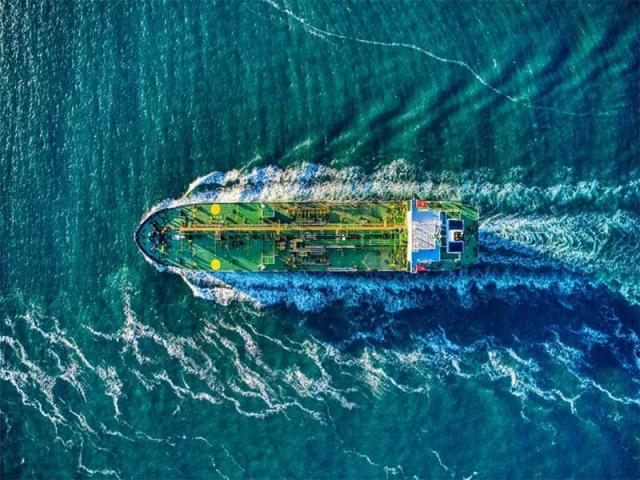
Oil shipping routes connect the world's major oil-producing and oil-consuming regions, including transoceanic international routes as well as short-haul routes within regions or countries.
Oil shipping routes are a special type of international maritime transport. For an overview of the global shipping route layout, see Major International Shipping Routes and World Major Shipping Route Maps and Route Types; for container cargo route selection, see What is a transshipment port? Introduction to major global transshipment ports.
Global Crude Oil Transportation Pattern
Crude oil production areas are concentrated in the Middle East Gulf, North Africa, West Africa, the North Sea, Siberia–Central Asia, China and its surrounding areas, the Malay region, the South American Caribbean, and North America. Ranked by seaborne export volume: Middle East Gulf, North Africa, West Africa, the Caribbean, the Near East, and Southeast Asia; importing countries are concentrated in Northwest Europe, the United States, and Japan, ranked by seaborne import volume: Northwest Europe, North America, Japan and South Korea, the Mediterranean, and South America. This forms the world's four major crude oil shipping routes.
The World's Four Major Oil Shipping Routes
1. Persian Gulf–Western Europe, North America Route
It is the main oil supply route for the oil-consuming regions of Western Europe and North America, with an annual volume that once reached 600 million tons. Supertankers are usually used for transportation; due to water depth restrictions, after departing from the Persian Gulf, they pass through the Mozambique Channel and sail around the Cape of Good Hope.
2. Persian Gulf–Japan Route
It is a major oil supply route for Japan, with an annual volume of over 100 million tons. When VLCC-type tankers are used, they detour through the Lombok Strait and the Makassar Strait; tankers of up to 200,000 tons can reach Japan via the Strait of Malacca, making the voyage shorter.
3. Persian Gulf–Western Europe Route
It mainly supplies oil to Western Europe (some is also shipped to North America), passing through the Suez Canal, the Mediterranean Sea, and the Strait of Gibraltar to reach Western Europe and North America, without going around the Cape of Good Hope. Tankers of up to 150,000 tons are used.
4. Mexico–Japan Route
It is another major oil supply route for Japan: one branch crosses the Pacific via the Panama Canal to reach Japan, where tankers are usually below 60,000 tons due to canal dimension restrictions; the other runs from Mexico's west coast across the North Pacific to Japan.
Other Short-Haul Oil Shipping Routes
West Africa—North America and South America routes; North Africa—Western Europe routes; Black Sea—Mediterranean routes; Persian Gulf—Australia and New Zealand routes; Alaska—U.S. East Coast routes; Gulf of Mexico—Caribbean routes; Southeast Asia, China—Japan routes, etc.
Bofeng Logistics professionally provides one-stop logistics services including domestic container shipping, international shipping (FCL/LCL), Hong Kong and Macau logistics dedicated lines, as well as trailer, customs clearance, and warehousing services. Contact phone: 130-7567-8958 (Manager Huang). Call now to get an exclusive quote!
Frequently Asked Questions (FAQ) on Maritime Oil Shipping Routes
Q: Why do crude oil shipments often take large vessels on a detour instead of passing through the Suez Canal?
A: Very Large Crude Carriers (VLCC) have large drafts and deadweight tonnage, while the Suez Canal has limited transit capacity. Depending on the vessel type, they may need to route around the Cape of Good Hope or pass through the Lombok Strait. Whether a vessel can transit the canal depends on its tonnage and the canal's navigational conditions.
Q: What is the difference between oil shipping and ordinary container shipping?
A: Oil shipping uses dedicated tankers and primarily carries bulk liquid cargo. The routes and vessel types are constrained by production areas, consumption areas, and port conditions. Container shipping carries general cargo/packaged goods and has denser port calls and schedules, with different freight rate and booking models.
Disclaimer: This article was compiled and written by the Bofeng Logistics team, and its content was verified in August 2026. Route and port information may change due to shipping company schedule adjustments, market conditions, and policy changes. Please refer to the confirmed information at the time of booking.
Related Logistics Services
Bofeng Logistics offers the following related services, feel free to inquire: