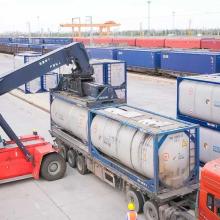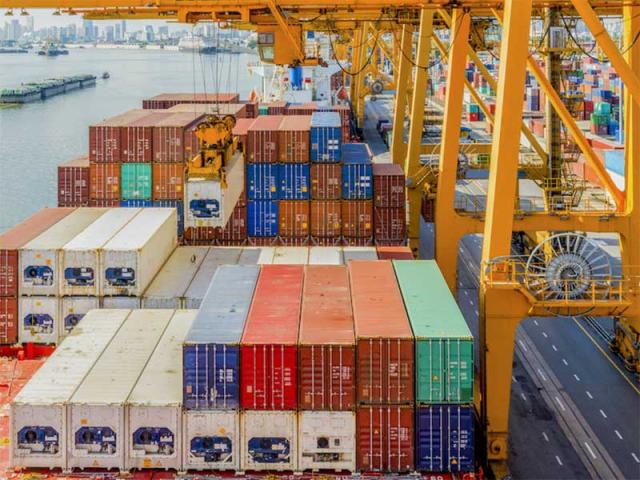
Reefer containers are specialized containers equipped with built-in refrigeration units, capable of stably maintaining the internal temperature at any set point between -30°C and +30°C.
I. Reefer Container Technical Specifications
| Parameter | 20ft Reefer | 40ft Reefer | 40ft High-Cube Reefer |
| External Dimensions | 6,058×2,438×2,591mm | 12,192×2,438×2,591mm | 12,192×2,438×2,896mm |
| Internal Dimensions | 5,456×2,294×2,273mm | 11,590×2,294×2,500mm | 11,590×2,294×2,550mm |
| Internal Volume | 28.5 CBM | 67.9 CBM | 67.9 CBM (effective space) |
| Maximum Payload | 25,000 kg | 29,500 kg | 29,500 kg |
| Tare Weight | 3,100 kg | 4,200 kg | 4,500 kg |
| Temperature Range | -30°C to +30°C | -30°C to +30°C | -30°C to +30°C |
| Refrigeration Mode | Electric (440V/60Hz) | Electric | Electric |
Data Sources: Maersk/MSC reefer container specification tables + ISO 1496-2 Refrigerated Container Standard.
II. Ideal Transport Temperature Reference Table for Different Cargo Types
| Cargo Type | Recommended Temperature | Relative Humidity | Ventilation Requirement | Special Notes |
| Frozen meat | -18°C | 85–95% | Low | Temperature fluctuation ≤ ±2°C |
| Seafood/fish | -18°C to -25°C | 90–95% | Low | Lower temperature = longer shelf life |
| Ice cream | -25°C to -30°C | — | Low | Must maintain full cold chain |
| Dairy products | 2°C to 4°C | 85–95% | Low | Most temperature-sensitive |
| Fresh fruit (tropical) | 10°C to 13°C | 85–90% | Medium | Requires fresh air exchange (bananas/mangoes, etc.) |
| Fresh fruit (temperate) | 0°C to 2°C | 90–95% | Medium | Apples/pears/grapes, etc. |
| Fresh vegetables | 0°C to 4°C | 95–100% | Medium-High | Leafy vegetables require higher ventilation |
| Flowers/plants | 2°C to 5°C | 90–95% | Medium | Avoid ethylene gas exposure |
| Pharmaceuticals (2–8°C) | 2°C to 8°C | 35–50% | Low | Must use dual probes + data logging |
| Chocolate | 15°C to 18°C | 50–60% | Low | Melts if temperature is too high |
| Wine | 12°C to 14°C | 60–70% | Low | Temperature stability is most important |
| Frozen french fries | -18°C | — | Low | Avoid repeated freeze-thaw cycles |
| Honey | 10°C to 15°C | — | Low | Crystallization does not affect quality |
III. PTI Inspection – A Mandatory Step Before Loading
PTI (Pre-Trip Inspection) is a functional inspection of the refrigeration system that must be performed before loading a reefer container. A reefer container that has not passed PTI cannot be used for refrigerated cargo transport.
PTI Inspection Items
| Inspection Item | Inspection Content | Pass Criteria |
| Refrigeration unit exterior | Check for physical damage and oil leaks | Exterior intact |
| Refrigerant pressure | Measure compressor suction and discharge pressures | Within normal range |
| Temperature sensors | Calibrate supply/return air temperature probes | Accuracy ±0.3°C |
| Defrost function | Test the automatic defrost cycle | Complete defrost |
| Ventilation/air exchange | Test fresh air damper (if equipped) | Damper operates normally |
| Data logger | Confirm data logger functionality | Full journey data can be recorded |
| Power plug | Inspect cables and plugs for damage | No damage |
| Container airtightness | Test airtightness with doors closed | Proper seal integrity |
PTI Inspection Timing: To be completed 24–48 hours before loading; takes approximately 1–2 hours.
PTI Fee: Approximately ¥500–1,000 per inspection (emergency PTI may incur additional charges).
IV. Complete Reefer Container Loading Operation Process
4.1 Pre-Loading Preparation
| Step | Action | Timing |
| ① | Booking – Confirm reefer availability and plug type matches the region | T-7 days |
| ② | PTI pre-inspection – Complete full refrigeration system check | T-2 days |
| ③ | Precool cargo – Cargo must be precooled to transport temperature | T-1 day |
| ④ | Precool container – Run empty container to set temperature | ≥2 hours before loading |
4.2 Key Requirements During Loading
| Requirement | Standard | Consequences of Violation |
| Airflow channels | Maintain ≥10 cm clearance around all cargo | ❌ Cold air cannot circulate → uneven temperature control |
| Refrigeration unit air outlet | Keep ≥30 cm clear in front of outlet | ❌ Return air short circuit → reduced cooling efficiency |
| Floor T-slots | Must remain unobstructed (cold air circulates from bottom) | ❌ Blocked floor → higher temperatures at lower layers |
| Loading time | Close doors and start cooling immediately after loading | ❌ Doors left open too long → temperature fluctuation |
| Temperature recorder | Use a calibrated third-party data logger recommended | — |
| Stacking limit | No more than 2 layers high (for even air distribution) | ❌ Stacking too high restricts airflow |
4.3 Post-Loading Confirmation
□ Container doors are closed and refrigeration unit is running
□ Set temperature has been confirmed (consistent with PTI inspection setting)
□ Temperature recorder has been activated
□ Ventilation settings have been confirmed (according to cargo type)
□ Power plug is connected and locked
□ Container number and CSC plate have been photographed
□ Loading photos have been taken and saved
V. Full-Journey Temperature Monitoring
| Monitoring Method | Accuracy | Advantages | Disadvantages |
| Carrier remote monitoring | ±1°C | Real-time visibility | Cannot access third-party data |
| Third-party data logger | ±0.3°C | Independent data, legal evidence | Requires device retrieval |
| Real-time IoT solution | ±0.5°C | Real-time alert notifications | Higher cost |
Recommended Practice: Carrier remote monitoring (for daily visibility) + Third-party data logger (for legal evidence).
VI. Common Reefer Container Issues
| Problem | Cause | Consequence | Prevention |
| Excessive temperature fluctuation | Frequent door opening / refrigeration fault | Cargo quality deterioration | PTI inspection + minimize door openings |
| Air outlet blockage | Cargo stacked too close | Uneven cold air distribution | Maintain ≥30 cm clearance at air outlet |
| Incomplete defrosting | Evaporator icing up | Reduced cooling efficiency | Regularly inspect defrost cycles |
| Power interruption | Terminal power changeover / vessel switchover | Internal temperature rises | Confirm backup power plan |
| Data logger failure | Dead battery / incorrect settings | No temperature data available | Check logger status before loading |
Data Note: Temperature reference table is based on Maersk/MSC reefer operation manuals and industry-standard cold-chain transport data. Data as of July 2026.
📖 Further Reading: International Shipping Operations Manual, Article 09: Special Cargo Shipping – Key operational points and precautions for reefer container transport.
Have refrigerated cargo to ship? Bofeng Logistics provides one-stop services for reefer container booking, PTI pre-inspection, and full-journey temperature monitoring.
Reefer Logistics Consultation: info@zhbfwl.com
Related Logistics Services
Bofeng Logistics offers the following related services, feel free to inquire: