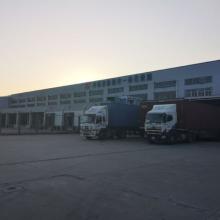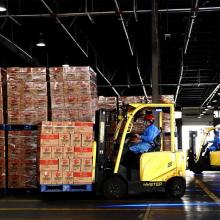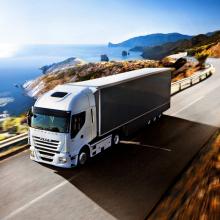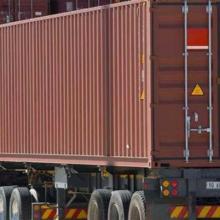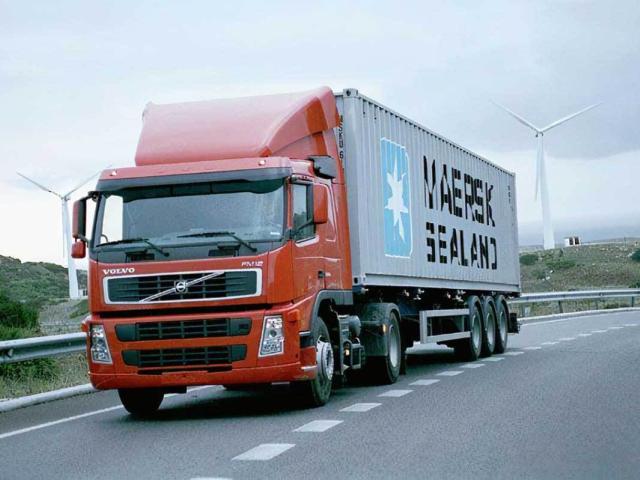
Container trucks are the "last mile" connecting ports and factories in the logistics chain. Whether for international or domestic shipping, containers rely on trucking to move from the port to the shipper's factory (for loading) and from the consignee's factory to the port (for unloading). For foreign trade and domestic trading companies, the efficiency and cost of trucking services directly impact the overall logistics experience.
1. What is a Container Truck?
A container truck is a vehicle specifically designed for transporting containers. It consists of two parts: the tractor (the pulling unit) and the chassis (the trailer). The tractor provides power, and the chassis carries the container. There's an old saying in the industry: "A container truck is the feet of a container." Without them, containers would be stuck in the terminal yard.
Two Scenarios for Truck Transport
| Scenario | Description | Typical Route |
|---|---|---|
| Door Haulage | Container is hauled from port/yard to factory for loading, then returned to the port loaded. | Port → Factory → Port |
| Terminal Haulage | Import container is hauled from the port to the consignee's factory/warehouse for unloading. | Port → Consignee's Warehouse |
| Customs Transit Haulage | Export container is hauled from the factory to the customs supervision area for clearance. | Factory → Customs Area → Port |
| Container Relocation | Empty containers are moved between different yards. | Yard A → Yard B |
Two Business Types
- Export Haulage: Haul empty container to factory for loading → Return loaded container to port (export business).
- Import Haulage: Pick up loaded container from port → Haul to factory/warehouse for unloading → Return empty container to port (import business).
2. The Role of Haulage in the Logistics Chain
Haulage services are typically combined with other logistics services and rarely exist independently:
Export Scenario:
  Factory Prepares Goods → Schedule Truck → Pickup Empty Container to Factory → Load Container → Return Loaded Container to Port → Ship Loading

Import Scenario:
  Vessel Arrives, Unloads Container → Truck Picks Up Loaded Container → Haul to Factory for Unloading → Return Empty Container → Complete
Trucking is a critical connection in "door-to-door" services. For exports, the truck links the factory and the port; for imports, it links the port and the consignee. If the trucking link fails (e.g., delay, breakdown, wrong container picked up), the entire logistics chain is affected.
3. Types of Trucking Companies
| Type | Features | Best Suited For |
|---|---|---|
| Freight Forwarder's Fleet | Embedded in the forwarder's system, stable service, flexible scheduling. | Long-term partners seeking stable service. |
| Professional Trucking Company | Large fleet, wide coverage, competitive pricing. | Factories/Traders with high shipping volumes. |
| Independent Operators | Flexible pricing, but variable service quality. | One-off ad-hoc needs, emergency situations. |
It is recommended to prioritize qualified professional trucking companies or the affiliated fleets of your freight forwarder for guaranteed service. Especially during peak seasons, larger fleets are more likely to have trucks available.
4. Nationwide Haulage Network for Major Ports
The coverage of trucking services primarily revolves around port cities. Major container ports across China have well-established trucking networks:
| Region | Core Ports | Trucking Service Coverage Area |
|---|---|---|
| Southern China | Shenzhen (Yantian/Shekou/Chiwan), Guangzhou (Nansha), Zhuhai | Entire Pearl River Delta (PRD), Extended PRD (Hunan/Jiangxi/Guangxi) |
| Eastern China | Shanghai, Ningbo-Zhoushan, Taicang | Entire Yangtze River Delta (YRD), parts of Anhui/Jiangxi |
| Northern China | Qingdao, Tianjin, Dalian | Parts of Shandong/Hebei/Liaoning/Inner Mongolia |
Bofeng Logistics has partnered haulage resources covering the three major ports of Southern China (Shenzhen/Guangzhou/Zhuhai), capable of providing door-to-door haulage services across the entire PRD and Extended PRD region.
5. Notes on Trucking Services
- Booking in Advance is a Must: Schedule 1-2 days in advance; during peak seasons (e.g., before Chinese New Year), book 3-5 days ahead.
- Confirm Loading Conditions: Check if the factory has a loading dock or if it's accessible for container trucks. Factories without a dock require a truck with a hydraulic liftgate.
- Weight Restrictions: Trucks have load limits. Overweight containers cannot travel on highways. The gross weight limit for a 20GP is typically ~21 tonnes (incl. tare). For 40GP/HC, it's ~26 tonnes.
- CY Closing Time: Each vessel has a Container Yard Closing (CY Closing) deadline. Late containers will be rejected by the terminal and must wait for the next available vessel.
- Seal Management: The seal number must be recorded on the Bill of Lading and Customs Declaration documents after loading. The number must match exactly with the documents.
💡 Need Trucking Services? Bofeng Logistics offers trucking services from the three major ports (Shenzhen/Guangzhou/Zhuhai) to the entire Pearl River Delta region, and can coordinate container loading operations for a one-stop service.
📞 Trucking Service Hotline: 13075678958 | info@zhbfwl.com
Related Logistics Services
Bofeng Logistics offers the following related services, feel free to inquire: