China Container Shipping: Choosing Between FCL and LCL
Container shipping is the primary mode of transport for China's import and export trade. For cargo owners, the first key decision is whether to choose Full Container Load (FCL) or Less than Container Load (LCL). This choice directly impacts shipping costs, transit time, and operational complexity. This guide provides a comprehensive comparison of these two shipping methods from multiple dimensions to help you make the best decision.
1. Detailed Explanation of FCL Shipping
1.1 What is FCL?
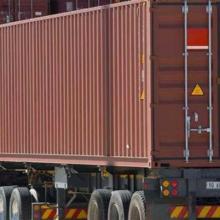
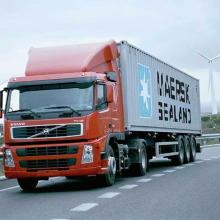
FCL (Full Container Load) refers to shipping a full container, where the cargo of a single shipper fills one or more containers without sharing space with others. FCL is the most common container shipping method in international trade, especially suitable for large volumes of cargo.
1.2 Standard Container Specifications for FCL
- 20GP (20-foot General Purpose): Internal dimensions approx. 5.9×2.35×2.39m, effective volume approx. 28 cubic meters, load capacity approx. 28 tons. Suitable for heavy cargo.
- 40GP (40-foot General Purpose): Internal dimensions approx. 12.03×2.35×2.39m, effective volume approx. 58 cubic meters, load capacity approx. 26 tons. Suitable for light, bulky cargo.
- 40HQ (40-foot High Cube): 30 cm higher than 40GP, internal dimensions approx. 12.03×2.35×2.69m, effective volume approx. 68 cubic meters. The most commonly used specification.
- Special Containers: Open Top, Flat Rack, Reefer, and Flatrack containers, suitable for special cargo.
1.3 Operation Process for FCL
The FCL shipping process: Booking → Truck to factory for loading → Loaded container returned to port → Customs clearance → Container loaded onto vessel → Sea freight → Discharge at destination port → Customs clearance → Truck to consignee warehouse. Full closed-loop management, cargo is not mixed with other shippers' goods.
1.4 Advantages and Disadvantages of FCL
Advantages: Cargo security and privacy, shorter transit time (no consolidation/deconsolidation), simple operation, suitable for large volumes.
Disadvantages: Not cost-effective if the container is not full, freight rates highly affected by market fluctuations.
2. Detailed Explanation of LCL Shipping
2.1 What is LCL?
LCL (Less than Container Load) refers to consolidated shipping, where cargo from multiple shippers is merged into a single container. Freight forwarders gather small batches of cargo from different shippers, consolidate them into one container for shipping, and then deconsolidate at the destination port.
2.2 Operation Process for LCL
The LCL process: Shippers deliver cargo to CFS (Container Freight Station) warehouse → Warehouse consolidates cargo from various shippers → Container loaded → Customs clearance → Sea freight → Destination port → Deconsolidation → Various consignees collect goods.
2.3 Charging Standards for LCL
LCL is billed based on volume (cubic meters/CBM) or weight (tons), whichever is greater. The minimum chargeable unit is typically 1 CBM or 1000 kg. Common cargo density reference: 1 CBM ≈ 300-500 kg (for general cargo).
2.4 Advantages and Disadvantages of LCL
Advantages: Low cost for small volumes, suitable for samples or trial orders, high flexibility.
Disadvantages: Slightly longer transit time (requires consolidation/deconsolidation), slightly higher risk of damage, more complex operation.
3. FCL vs LCL Comprehensive Comparison
| Comparison Dimension | FCL | LCL |
|---|---|---|
| Suitable Cargo Volume | ≥15 CBM | 15 CBM |
| Cost Per Shipment | Fixed (whether full or not) | Billed by volume/weight |
| Unit Cost | Lowest when full | Cost-effective for small volumes |
| Transit Time | Fast (direct sailing) | Slightly slower (cargo consolidation needed) |
| Cargo Security | High (sealed sole container) | Moderate (mixed with other cargo) |
| Operational Complexity | Simple | More complex |
| Suitable Scenarios | Stable, batch shipments | Samples, trial orders, small volumes |
4. Selection Decision Guide
Recommend choosing FCL when: Cargo volume exceeds 15 cubic meters, high-value cargo requiring security, regular batch shipment needs, high demand for transit time, special cargo types (dangerous goods, valuables, etc.).
Recommend choosing LCL when: Cargo volume is less than 15 cubic meters, samples or trial orders, low shipment frequency, small batch multiple item cargo.
In practice, many import/export companies use a combined strategy: FCL for stable, bulk shipments and LCL for urgent small orders or samples, balancing cost and transit time.
5. Overview of China's Container Shipping Market
China is the core market for global container shipping. The ports of Shanghai, Ningbo, Shenzhen, Guangzhou, and Qingdao rank among the global top ten. The China Containerized Freight Index (CCFI) is a key indicator reflecting market freight rate levels. From 2024-2026, driven by global economic recovery and supply chain adjustments, container freight rates show a fluctuating upward trend.
When choosing a freight forwarder, consider its partnerships with shipping lines (MSC, MAERSK, CMA CGM, COSCO, etc.), network coverage, and whether it holds NVOCC qualifications. Bofeng Logistics has long-term contract rates with multiple mainstream shipping lines and can offer competitive FCL and LCL shipping solutions covering major global routes.
6. Conclusion
There is no absolute better or worse between FCL and LCL; the key is to match your cargo volume and needs. FCL pursues efficiency and safety, while LCL offers flexibility and cost advantages for small volumes. Understanding their characteristics and applicable conditions can make your international logistics more efficient and economical.
Related Bofeng Logistics Services
Need logistics services? Contact us for professional solutions and quotes:
Related Logistics Services
Bofeng Logistics offers the following related services, feel free to inquire: