Hong Kong: Asia's Most Important International Logistics Hub
As one of the world's busiest ports and air cargo hubs, Hong Kong has long been a leading international logistics center. With its free port policy, robust infrastructure, efficient customs system, and international business environment, Hong Kong serves as a crucial gateway connecting Mainland China to the global market. This article provides a comprehensive analysis of Hong Kong's logistics advantages, service system, and operational practices.
1. Core Advantages of Hong Kong Logistics
1.1 Free Port Policy
Hong Kong is a globally recognized free port, where the vast majority of goods entering and leaving do so without tariffs, and customs clearance is highly efficient. For transshipment goods, Hong Kong Customs offers simplified procedures, allowing cargo to be transshipped directly at the terminal without complex customs declarations. This advantage makes Hong Kong the preferred location for international trade transshipment.
1.2 World-Class Port Facilities
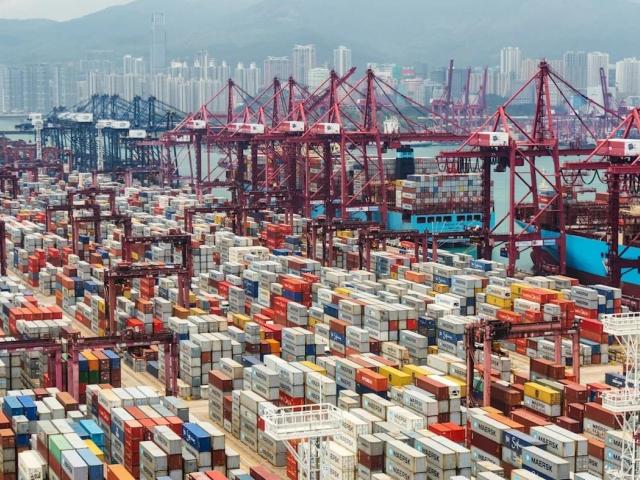
Facilities like Hongkong International Terminals (HIT) and Modern Terminals Limited (MTL) handle over 20 million TEUs annually. Hong Kong's port has deep-water berths capable of accommodating the world's largest container ships (24,000+ TEUs) and connects to over 600 ports globally.
1.3 International Airport Cargo Capacity
Hong Kong International Airport (HKG) has been the world's busiest cargo airport for many consecutive years, with an annual cargo throughput exceeding 5 million tons. The airport features comprehensive cold chain logistics, dangerous goods handling, and high-value cargo security facilities.
1.4 Financial and Legal Environment
Hong Kong has an independent legal system, a free foreign exchange policy, and mature international trade financial services. Supporting services such as letters of credit, cross-border payments, and trade finance are well-developed, providing a favorable business environment for international trade.
2. Types of Hong Kong Logistics Services
2.1 International Transshipment Logistics
The core logistics function of Hong Kong is as an international transshipment hub. Goods are shipped from Mainland China or other Asian countries to Hong Kong, where they are reloaded at the port or airport for onward dispatch to destinations worldwide. The typical dwell time for transshipment cargo in Hong Kong is 1-7 days.
2.2 Hong Kong Warehousing and Distribution
Hong Kong boasts numerous modern warehousing facilities, including general warehouses, temperature-controlled warehouses, and bonded warehouses. Many international brands set up regional distribution centers in Hong Kong, leveraging its free port status and geographical location to serve the Asian market.
2.3 Hong Kong Cross-Border Land Transport
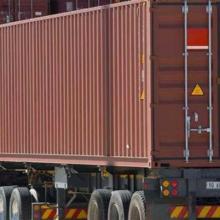
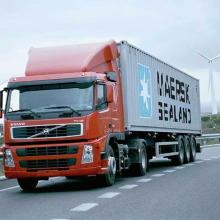
Cross-border land transport between Hong Kong and Mainland China is an important logistics corridor. Through checkpoints such as Shenzhen Bay, Huanggang, Wenjindu, and Shatoujiao, goods move between Hong Kong and Mainland China via cross-border trucks. This is the most convenient transport mode for the Pearl River Delta region and Hong Kong.
2.4 Hong Kong Ocean Freight Services
Hong Kong port offers comprehensive ocean freight services, including container transport (FCL/LCL), bulk cargo shipping, and roll-on/roll-off transport. Major routes cover key global trading regions, including Southeast Asia, the Middle East, Europe, North America, and Africa.
3. Hong Kong vs. Mainland China Logistics Comparison
| Comparison Dimension | Hong Kong | Mainland China |
|---|---|---|
| Tariff Policy | Free port, basically zero tariffs | Import/export tariffs applicable (VAT + customs duties) |
| Customs Efficiency | Very high (electronic clearance) | Relatively high, but inspection rate higher than Hong Kong |
| Foreign Exchange Control | None | Foreign exchange controls in place |
| Logistics Cost | Relatively high (high labor/warehousing costs) | Relatively low |
| International Routes | Dense and frequent | Route-dense at major ports, fewer inland |
| Suitable Cargo | High-value, time-sensitive, transshipment cargo | High-volume, cost-sensitive cargo |
4. Transshipment Logistics Process via Hong Kong
The standard process for goods transshipped via Hong Kong: Factory dispatch in Mainland China → Cross-border land transport to a Hong Kong warehouse or terminal → Cargo consolidation/stuffing at the Hong Kong warehouse → Processing of transshipment documents → Loading onto vessel/aircraft → Shipping to destination port. The entire process typically takes 5-15 days, depending on the destination.
5. Key Considerations for Selecting a Hong Kong Forwarder
When choosing a Hong Kong freight forwarder, it is recommended to consider: whether they own their own warehousing and operations teams in Hong Kong; contract rates and advantages with shipping lines and airlines; vehicle resources and clearance capabilities for cross-border land transport; provision of end-to-end tracking and IT system integration; and emergency response capability for handling contingencies.
6. Conclusion
As an international logistics hub, Hong Kong plays an irreplaceable role in connecting China with the world. Whether for transshipment, warehousing, or cross-border transport, the efficiency and international orientation of Hong Kong's logistics system provide strong support for global trade. Bofeng Logistics offers dedicated Hong Kong line services, covering Hong Kong import/export, transshipment, warehousing, and distribution. For inquiries, please contact us.
Related Bofeng Logistics Services
Need logistics services? Contact us for professional solutions and quotes:
Related Logistics Services
Bofeng Logistics offers the following related services, feel free to inquire: