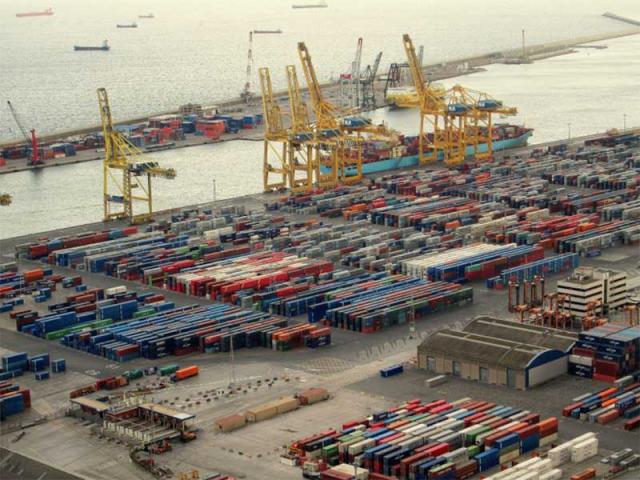
"Transshipment port", "What is a transshipment port?", "What does transshipment port mean?" A "transshipment port", sometimes also called a "transshipment point", refers to a third port along the route where cargo, en route from the port of departure to the port of destination, stops. Here, the means of transport docks for operations such as loading/unloading cargo and replenishment, and the cargo is transferred to another means of transport to continue its journey to the final destination. This can be a direct transshipment arranged by the shipping company or a transfer by the shipper for reasons such as tax exemption, involving switching the bill of lading. The status of a "transshipment port": it is typically a main port. Therefore, vessels calling at transshipment ports are usually large ships from major international maritime routes and feeder vessels operating between ports within a region.
Port of Discharge / Place of Delivery = Transshipment Port / Port of Destination?
When referring strictly to sea freight, the port of discharge is indeed the "transshipment port", and the place of delivery is the port of destination. When booking cargo space, generally only the place of delivery needs to be specified; whether transshipment is needed or which transshipment port to use is decided by the shipping company. For multimodal transport, the port of discharge refers to the port of destination, and the place of delivery refers to the final destination. Since different ports of discharge result in different transshipment fees, the port of discharge must be specified when booking space.
The Clever Uses of a Transshipment Port
One: Tax exemption. This refers to segmented transshipment. If the "transshipment port" is designated as a free trade port, it can achieve tariff reduction or exemption. For example, Hong Kong is a free trade port. If goods are transshipped through Hong Kong, unless they are subject to special national regulations, they can essentially achieve export tax exemption, and may even receive tax rebates or subsidies.
Two: Cargo holding. This refers to transshipment by the shipping company. In international trade, various factors may prevent cargo from moving forward midway, requiring the cargo to be held. The shipper can apply to the shipping company for storage at the "transshipment port" before arrival. After the trade issues are resolved, the cargo can be shipped to the destination port. This is often easier to arrange compared to direct shipping routes, though the costs can be substantial.
Transshipment Port Codes
A vessel calls at multiple ports. Therefore, the port entry codes registered by the shipping company at the same terminal will also serve as subsequent transshipment port codes. There are many such codes. If the shipper fills in a random code and it does not match, the container will be denied entry into the port. Even if it matches, but is not the actual "transshipment port", the container might be offloaded at the wrong port, even if it made it onto the ship. If the code is corrected before the vessel is berthed, the container might still be unloaded at the wrong port. The cost of re-transshipment is very high, and substantial fines may also apply.
Transshipment Port Transit Clauses
In the international transportation of goods, due to geographical, political, or economic reasons, cargo may need to be transshipped at certain ports or other locations. This requires specifying the transshipment port when booking space. However, this ultimately depends on whether the shipping company accepts that port for transshipment. If accepted, the clause stipulating the transshipment port is usually clear. It is typically annotated after the port of destination, connected by "VIA" or by "W/T (with transshipment at…) as per the following example clauses:
Port of Loading: Shanghai, China VIA Hong Kong
Port of Destination: London, UK W/T Hong Kong
In practice, we must not treat the "transshipment port" as the port of destination, to avoid transportation errors and unnecessary losses. The transshipment port is only a temporary port for transferring cargo; it is not the final destination of the goods.
Related Services
Bofeng Logistics offers the following services. Contact us for a quote:
Related Logistics Services
Bofeng Logistics offers the following related services, feel free to inquire: