1. Why is fumigation required for wood packaging in import and export?
In international trade, countries implement mandatory quarantine systems for certain imported goods in order to protect their own forest resources. Wood packaging fumigation is a compulsory measure taken to prevent harmful pests from damaging the forest resources of the importing country. Therefore, exported goods containing wood packaging must undergo pest treatment on the wood packaging materials before shipment. Fumigation is one method of such pest treatment.
2. What types of goods require fumigation?
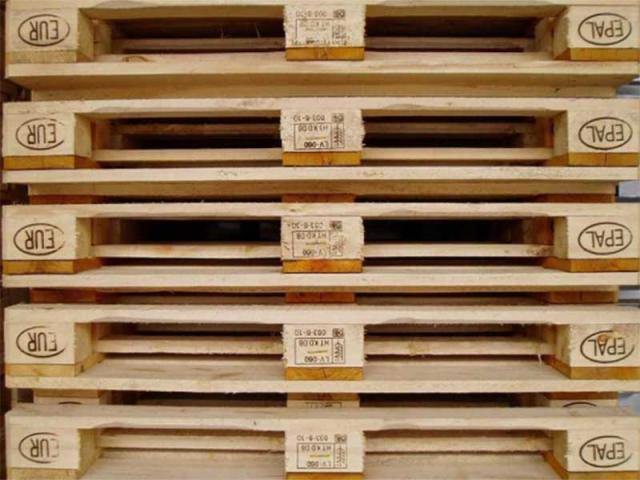
This generally refers to materials used for packaging, cushioning, supporting, or reinforcing goods, such as wooden boxes, wooden crates, wooden pallets, dunnage, barrels, wooden blocks, sleepers, wooden lining boards, wooden reels, and wooden wedges. The wood must not contain bark or insect holes. Logs require fumigation and must be marked with the IPPC logo.
3. What are the methods of fumigation?
Fumigation methods include chemical treatment and heat treatment. Chemical treatment typically uses methyl bromide or ethylene oxide.
4. Which countries require mandatory fumigation?
According to the Announcement No. 4 of 2005 from the General Administration of Quality Supervision, Inspection and Quarantine of the People's Republic of China, starting from March 1, 2005, goods containing wood packaging exported to the European Union, Canada, the United States, Australia, and other countries must have wood packaging marked with the IPPC logo. Relevant business personnel are requested to promptly notify the shipper to arrange this before the goods are shipped. Note: The 27 member states of the EU are: Belgium, Denmark, Germany, France, Ireland, Italy, Luxembourg, the Netherlands, Greece, Portugal, Spain, Austria, Finland, Hungary, Malta, Poland, Sweden, Estonia, Latvia, Lithuania, Slovenia, the Czech Republic, Slovakia, Cyprus, Romania, Bulgaria, and Croatia; the former member state, the United Kingdom, has left the EU. Southeast Asia, the Middle East, India-Pakistan routes, and Africa do not generally require wood fumigation, but wood packaging must be processed wood and must not contain bark. Goods destined for Europe, the Americas, and Australia require fumigation. For shipments to the United States and Canada, an official fumigation certificate (i.e., a formal certificate issued by the inspection authority) is mandatory.
5. What is the IPPC logo? (International Plant Protection Convention, abbreviated IPPC)
Wood packaging must be stamped with the dedicated IPPC logo. The IPPC logo must be affixed in a conspicuous location on the wood packaging, on at least two opposite sides. The logo must be clear, legible, permanent, and non-removable; colors such as red or orange should be avoided.
6. Sample of the IPPC logo
This refers to the International Standards for Phytosanitary Measures for Wood Packaging. The IPPC logo is used to identify wood packaging that complies with IPPC standards, indicating that the packaging has been treated according to the IPPC phytosanitary standards.
7. All imported wood packaging requires the IPPC logo
When importing or exporting goods, it is essential to confirm whether the wood packaging has undergone strict pest treatment and whether the IPPC logo has been correctly applied.
Common issues with non-standard application of the IPPC logo on wood packaging include the following:
1. Wood packaging without an IPPC logo;
2. Wood packaging with an IPPC logo that is unclear;
3. Sticking paper bearing the IPPC logo onto the surface of the wood packaging;
4. Since plywood and other engineered wood panels are not considered wood packaging, when both wood packaging and engineered panels are present, applying the IPPC logo to the panels rather than to the actual wood packaging;
5. Nailing small pieces of plywood bearing the IPPC logo onto the wood packaging;
6. Reused wood packaging not re-treated and without a newly applied logo.
Related Services
Bofeng Logistics offers the following services. Contact us for a quote:
Related Logistics Services
Bofeng Logistics offers the following related services, feel free to inquire: