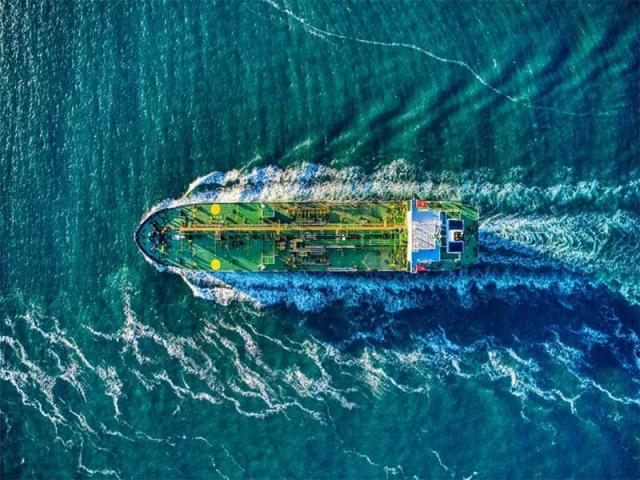
The maritime oil transport routes connect the world's major oil-producing and oil-consuming regions. There are intercontinental international routes as well as shorter regional or national oil transport routes. Due to the relatively concentrated locations of crude oil production and consumption, the basic flow of maritime crude oil transport consists of only four major international crude oil routes. However, varying departure ports and destination ports create thousands of specific maritime crude oil transport routes. The production and consumption areas of refined oil products are highly dispersed, resulting in numerous maritime refined oil routes, making it impossible to estimate their exact number. The volume of offshore oil transport plays a very important role in the total volume of foreign trade maritime shipping. The following introduces the world's major offshore oil transport main routes, as well as the possible routes for China's crude oil imports and the main domestic oil transport routes, with a focus on the latter two types of maritime oil routes.
As is well known, the world's major crude oil production areas are basically concentrated in the Middle East Gulf region, North Africa, West Africa, the North Sea, Siberia-Central Asia, China and surrounding areas, Malaysia, the South American Caribbean region, and North America. Regarding the maritime export volumes of crude oil from various regions, the ranking from largest to smallest is: Middle East Gulf, North Africa, West Africa, the Caribbean, the Near East, and Southeast Asia. The countries and regions requiring crude oil imports are mainly concentrated in Northwestern Europe, the United States, and Japan. In terms of the maritime import volumes of crude oil from various regions, the ranking from largest to smallest is: Northwestern Europe, North America, Japan and South Korea, the Mediterranean, and South America. Therefore, the world's four main oil transport routes are:
(1) Persian Gulf to Western Europe/North America route: This is the main supply route for the oil-consuming regions of Western Europe and North America. The highest annual shipping volume once reached 600 million tons. This route typically uses supertankers, and due to depth limitations, supertankers starting from the Persian Gulf pass through the Mozambique Channel and then round the Cape of Good Hope.
(2) Persian Gulf to Japan route: This is Japan's main supply route, with an annual shipping volume exceeding 100 million tons. When using VL-CC type tankers, it requires sailing via the Lombok Strait and the Makassar Strait. If using tankers under 200,000 tons, they can pass through the Malacca Strait to reach Japan, which is a shorter voyage than the former.
(3) Persian Gulf to Western Europe route: This is mainly a supply route for Western Europe, with some crude oil also going to North America. The main difference from the aforementioned Persian Gulf to Western Europe/North America route is that it passes through the Suez Canal and the Mediterranean Sea, crossing the Strait of Gibraltar to reach Western Europe and North America, without rounding the Cape of Good Hope. It uses tankers under 150,000 tons.
(4) Mexico to Japan route: This is another main supply route for Japan. One is through the Panama Canal, crossing the Pacific Ocean to reach Japan, with the tanker size limited by the Panama Canal lock constraints, usually under 60,000 tons. The other is from the west coast of Mexico, sailing along the North Pacific to reach Japan.
In addition, there are the following shorter distance maritime oil routes: West Africa to North/South America route; North Africa to Western Europe route; Black Sea to Mediterranean route; Persian Gulf to Australia/New Zealand route; Alaska to U.S. East Coast route; Gulf of Mexico to Caribbean route; Southeast Asia/China to Japan route, among others.
Bofeng Logistics professionally provides one-stop logistics services including domestic container shipping, international shipping (FCL/LCL), Hong Kong & Macau logistics dedicated lines, as well as trucking, customs declaration, and warehousing. Contact: 130-7567-8958 (Manager Huang). Call now to get an exclusive quotation!
Related Logistics Services
Bofeng Logistics offers the following related services, feel free to inquire: