
Zhanjiang Shi
Guangdong Sheng
China
Zhanjiang Port
1. Port Overview
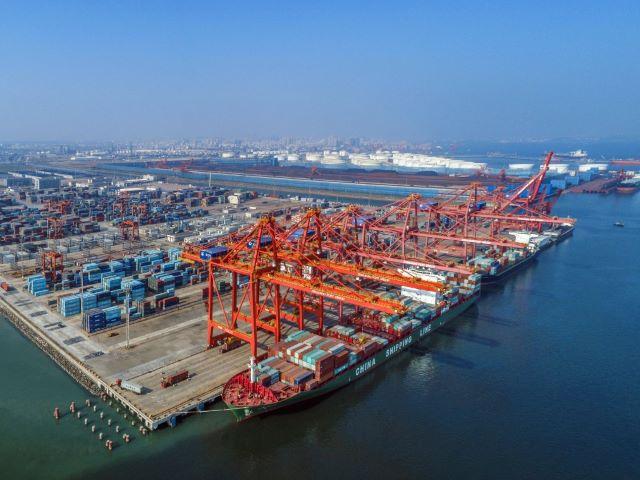
Zhanjiang Port is located on the northeast side of the Leizhou Peninsula in southwestern Guangdong Province, bordering the South China Sea. It is the leading port of the southwestern coastal port cluster and one of the main corridors for cargo import and export in central and western China and South China. In the national coastal port layout plan of the transport authorities, Zhanjiang Port is listed as the principal port of the southwestern coastal port cluster, serving the southwestern hinterland including Guangdong, Guangxi, Guizhou, Yunnan, Sichuan, and Chongqing.
The most prominent feature of Zhanjiang Port is its deep water. It is the first deep-water port along the coasts of South China and the Southwest capable of handling 400,000-tonne vessels, and the port's main navigation channel reaches the 300,000-tonne class. This capability directly determines the port's functional form: large bulk carriers fully loaded with iron ore and crude oil can berth directly, and after berthing, their cargo is delivered directly to port-adjacent industries via enclosed belt conveyor corridors or pipelines, forming a "large-in, large-out" operating model.
Statistics under the Ministry of Transport's port statistical scope show that in 2025 Zhanjiang Port handled 1.5765 million TEU of container throughput, down about 4.5% year on year (1.6504 million TEU in 2024, up about 4.4% year on year); cargo throughput was 265 million tonnes, of which foreign trade cargo was 99.42 million tonnes. It is necessary to distinguish the statistical scope: Zhanjiang Port Group reported 2025 container throughput of 1.223 million TEU, down about 7.3% year on year. The group scope and the whole-port scope differ by about 350,000 TEU, with the difference mainly coming from operating areas not included in the group's operating scope—the largest of which is the Xuwen Port Area, which handled 96.67 million tonnes of cargo throughput in 2024, accounting for 35.2% of the city total. Therefore, when citing Zhanjiang Port data, it must be specified which statistical scope is used, and the two figures should not be mixed.
Port-adjacent industries are a characteristic that distinguishes Zhanjiang Port from most southwestern ports. The Donghai Island Port Area serves enterprises such as Baosteel Zhanjiang Iron and Steel, Sinopec Zhongke Refining & Chemical, and the BASF (Guangdong) Integrated Base (fully operational in March 2025). According to public information, port throughput serving port-adjacent industries is about 45 million tonnes, accounting for more than 20% of the whole port. The port's cargo flows have thus been set: iron ore, crude oil, and naphtha enter the port, while steel, chemical products, and paper products leave the port.
2. Port Scale and Facilities
Zhanjiang Port has a total of 12 planned port areas. The main operating port areas include Xiashan, Tiaoshun Island, Baoman, Donghai Island, and Xuwen, with the division of functions as follows:
- Baoman Port Area: the core port area for container operations. Phase I has two dedicated 50,000-tonne-class container berths (Nos. 1 and 2), a wharf length of 678 m, a berth water depth of about 14 m that has been dredged to 17 m; the marine structures are designed for 150,000-tonne-class container ships and can berth 12,500 TEU container ships
- Donghai Island Port Area: supporting wharves serving port-based industries such as Baosteel Zhanjiang Iron and Steel, Zhongke Refining and Chemical, and BASF; iron ore and crude oil are mainly handled here
- Xiashan Port Area: bulk cargo and crude oil operations
- Tiaoshun Island Port Area: bulk and breakbulk cargo
- Xuwen Port Area: passenger and freight transport toward the Qiongzhou Strait, ranking among the leading port areas by volume
Expanding container capacity has been a key focus of Baoman Port Area in recent years. The Phase I expansion project builds two dedicated 50,000-tonne-class container berths, with marine structures designed for berthing 150,000-tonne-class vessels and a designed annual handling capacity of 1.42 million TEU; after full completion, together with Phase I, it will form an annual container handling capacity of about 3 million TEU, and the total wharf length after expansion will be about 1,324 m. It should be noted that “3 million TEU” is handling capacity, not actual throughput, and should not be conflated with throughput figures; the “1.9 million TEU” circulating online was a target for the 13th Five-Year Plan period, not an actual completed volume.
The navigation channel is a core asset of Zhanjiang Port. The main channel of the entire port is built to 300,000-tonne-class standards, with a total length of about 64.1 km and a bottom width of 340 m; the outer channel bottom elevation is about -23.6 m, and the inner channel about -23.0 m. The project was implemented under the name “Zhanjiang Port 300,000-tonne-class Navigation Channel Improvement and Expansion Project” and began trial operation on July 12, 2021. Before the improvement and expansion, the old channel had a total length of about 54.9 km, a bottom width of 310 m, and a bottom elevation of about -21.6 to -21.9 m—some earlier sources still cite this set of old data; when verifying, current channel parameters should prevail. 300,000-tonne-class vessels need to navigate with the tide, and in 2025 Zhanjiang Port launched a new round of channel dredging and upgrading.
Channel depths, berth classes, and designed handling capacities may change with engineering adjustments; the current data published by the port administrative authority and terminal operator shall prevail.
3. Main Routes
3.1 Domestic Coastal Routes
Domestic container transport at Zhanjiang Port is mainly oriented toward South China, East China, and the southwestern coast. In recent years, it has continued to increase the density of routes and sea-rail intermodal train services:
| Direction | Major ports or corridors | Description |
|---|---|---|
| South China coast | Guangzhou, Huangpu, Shenzhen | Domestic trade container routes |
| East China | Shanghai, Taicang | Domestic trade container routes, handling transshipment along the Yangtze River |
| Southwestern coast | Qinzhou | Connects with Beibu Gulf ports |
| Bohai Rim | Yingkou | Routes such as Zhanjiang–Qinzhou–Taicang–Yingkou |
| Sea-rail intermodal | Inland stations in Southwest China | Sea-rail intermodal train services, covering destinations in Yunnan, Guizhou, Sichuan, and Chongqing |
According to public reports, in 2024 Zhanjiang Port added three routes, including "Zhanjiang–Qinzhou–Taicang–Yingkou," bringing the cumulative number of routes in operation to about 35; it also added four sea-rail intermodal train services, bringing the cumulative total to about 41. Sea-rail intermodal transport is a key link in Zhanjiang Port's service to the southwestern inland region. Cargo from Yunnan, Guizhou, Sichuan, and Chongqing can arrive at the port area by rail and then be loaded directly onto ships.
The table above lists the reachable directions of Zhanjiang Port's domestic routes. Reference sailing times are subject to the shipping company's current schedule. The frequency of sea-rail intermodal train services is implemented according to the railway department's train plan. Before shipping, please confirm with us the connection between the train service and the vessel schedule.
3.2 Main International Routes
Zhanjiang Port's international routes are mainly oriented toward Southeast Asia, consistent with its geographical location facing the South China Sea and adjacent to ASEAN:
| Direction | Main ports of call | Notes |
|---|---|---|
| Southeast Asia | Ho Chi Minh, Singapore, Port Klang, etc. | Main foreign trade direction; the sea route from Zhanjiang to Haiphong Port in Vietnam is about 200 nautical miles |
| Other directions | Transshipment via South China hub ports | Most ocean-going main lines are transshipped via ports such as Guangzhou and Shenzhen |
Zhanjiang Port has relatively limited direct calls on ocean-going main lines, and most ocean-going cargo needs to be transshipped via South China hub ports. For specific direct shipping and transshipment routes, please refer to the booking confirmation.
4. Hinterland and Cargo Mix
The hinterland of the Port of Zhanjiang covers Guangdong, Guangxi, Guizhou, Yunnan, Sichuan, Chongqing, and other southwestern regions. Its cargo mix is dominated by bulk cargoes from port-side industries and import-export goods from the southwestern inland:
- Imports via the Port of Zhanjiang: iron ore, crude oil, naphtha
- Exports via the Port of Zhanjiang: steel products, chemical products, paper products
On the import side, iron ore is handled by 400,000-tonne-class ore carriers berthing at the Donghai Island Port Area and sent directly to steelmakers' material yards via enclosed belt conveyor galleries; crude oil and naphtha are piped directly to refining and chemical enterprises. On the export side, steel products, chemical products, and paper products are linked to the processing and manufacturing and papermaking industries in the southwestern region.
Cargoes suitable for shipping via the Port of Zhanjiang: Bulk dry cargoes such as iron ore and crude oil are suitable for large bulk carriers and oil tankers, and direct-berthing capability is a prominent advantage of the Port of Zhanjiang compared with surrounding ports; steel products, chemical products, and paper products are suitable for full-container or breakbulk transport; for cargo from the southwestern inland that is consolidated to the port by rail, both the block train schedule and the vessel schedule need to be confirmed.
Insights from Bofeng Logistics: The Port of Zhanjiang is used quite differently from Pearl River Delta ports. Most shippers in the Pearl River Delta choose based on "which port is closer to the factory," while the advantage of the Port of Zhanjiang lies in "direct berthing by large ships"—for bulk cargo, using Zhanjiang can eliminate transshipment and lightering, making unit costs more controllable. For container shippers, what needs to be considered is route coverage: Zhanjiang's direct services to Southeast Asia are relatively well established, while routes to Europe and America are usually transshipped via South China hub ports, adding a segment of barge or feeder time. Our common practice when handling cargo from western Guangdong and the southwest is to distinguish two routes according to destination port—direct calls to Southeast Asia go via Zhanjiang, while for ocean-going destinations we compare the overall transit times of transshipping via Zhanjiang and going directly to Pearl River Delta ports before deciding.
5. Operational Notes
When operating at Zhanjiang Port, three points require particular attention. First, statistical scope: the total port throughput of Zhanjiang Port differs significantly from the Zhanjiang Port Group's figures because of different statistical scopes. When verifying data with customers or partners, the scope used should be clarified to avoid misunderstandings. Second, navigation method: the 300,000-tonne-class channel is navigable only with the tide, and the berthing of very large bulk carriers must be arranged according to tidal windows; when scheduling, time should be allowed for waiting for the tide. Since 2025, a new round of channel dredging and upgrading has been underway; during construction, navigation arrangements must comply with the current Notices to Mariners. Third, seasonal factors: Zhanjiang Port is ice-free, but lies in the typhoon-affected area along the coast of South China. July to September is typhoon season, and during typhoons the terminals may suspend operations. For cargo with tight delivery deadlines, it is recommended to avoid scheduling production during typhoon windows or to allow buffer time.
The free container usage period is usually subject to the rules of the shipping company and terminal; exceeding it will incur container detention fees. Petrochemicals must be handled at designated terminals, and when booking dangerous goods, advance declaration is required and the acceptable terminal must be confirmed.
FAQ
Q: What exactly is the container throughput of Zhanjiang Port?
Answer: It depends on the statistical scope. According to the Ministry of Transport’s all-port scope, Zhanjiang Port’s container throughput in 2025 was 1.5765 million TEU, down about 4.5% year on year; in 2024 it was 1.6504 million TEU. According to the Zhanjiang Port Group scope, it was 1.223 million TEU in 2025, down about 7.3% year on year. The difference between the two is about 350,000 TEU, mainly from operating areas not included in the group’s operating scope, among which Xuwen Port Area is the largest. When citing, the scope should be specified, and the two figures should not be mixed. In addition, the online claim of "about 1 million TEU" reflects the 2018 level and is outdated.
Q: What size ship can berth directly at Zhanjiang Port?
A: Zhanjiang Port is the first deep-water port in South China and the southwest coastal areas capable of handling 400,000-ton-class vessels. The main navigation channel of the entire port is 300,000-ton-class—approximately 64.1 km long with a bottom width of 340 m, an outer channel bottom elevation of about -23.6 m and an inner channel bottom elevation of about -23.0 m. It has been in trial operation since July 2021, and ultra-large vessels must navigate with the tide. In terms of containers, the water depth at the front of Phase I of the Baoman Port Area is about 17 m, allowing berthing of 12,500 TEU container ships.
Q: Is it convenient for goods from the southwestern inland areas to go through Zhanjiang Port?
A: Sea-rail intermodal transport is the main way Zhanjiang Port serves the southwestern hinterland. Cargo from the direction of Yunnan, Guizhou, Sichuan, and Chongqing can arrive at the port area via railway block trains and be loaded directly onto ships. According to public reports, Zhanjiang Port has cumulatively operated about 41 sea-rail intermodal train routes. In actual operations, the railway train schedule must be aligned with the vessel cut-off time; we will check the two schedules together.
6. Bofeng Logistics Services
Bofeng Logistics provides the following services at the Port of Zhanjiang:
- Full Container Load (FCL): standard container types such as 20GP, 40GP, and 40HQ; both port-to-port and door-to-door are available
- Less than Container Load (LCL): consolidation and shipping for small- and medium-sized batches of chemicals, paper products, daily necessities, and other goods
- Domestic ocean freight: domestic trade container transport to South China, East China, the southwest coast, and the Bohai Rim
- Customs declaration and warehousing: export customs declaration, import customs clearance, commodity inspection documents, and customs brokerage for bulk cargo
- Value-added services: cargo insurance, labeling and sorting, coordination of the two legs of sea-rail intermodal transport, and destination port customs clearance and delivery coordination
Service highlights: Familiar with the two port consolidation routes via western Guangdong and southwestern China, and can coordinate rail and vessel schedules for cargo consolidated to the port by rail; direct sailings to Southeast Asia and transshipment for ocean-going routes can be compared separately and the optimal arrangement selected.
📍 Welcome to contact us for real-time freight rates.
Further Reading
- Domestic Ocean Shipping Services: FCL and LCL solutions for domestic coastal container transport
- International Ocean Export Services: FCL and LCL export ocean shipping solutions
- Major Ports in Guangdong Province: Distribution and division of labor among Guangdong ports such as Shenzhen, Guangzhou, Zhuhai, and Dongguan
- Guide to Major Ports in China: Comparison of positioning and route characteristics of major domestic container ports
Related ports: Qinzhou Port | Fangchenggang Port | Nansha Port
Prepared by the Bofeng Logistics team; content reviewed in September 2026. Port throughput and facility data are based on official releases from port authorities and terminal operators, and figures may differ between sources. Schedules and documentation requirements are subject to booking confirmation.