Seagoing cargo ships are specialized vessels mainly used to carry cargo, with most of their cargo space used for stowing goods. They come in many ship types and vary greatly in size, with displacements ranging from hundreds of tons to hundreds of thousands of tons. By purpose, common types include dry bulk carriers, liquid cargo carriers (crude oil tankers, product oil tankers, liquid chemical tankers, and liquefied gas carriers), general cargo ships, container ships, refrigerated ships, barge carriers, and roll-on/roll-off ships. This article explains one by one the structural characteristics, suitable cargoes, and transportation scenarios of various cargo ships. For the classification of container ship types, see Container Ship Types: Ship Classification from Panamax to ULCS.
I. Dry Bulk Carriers
Also called bulk cargo ships, they are specially used to transport bulk materials such as coal, ore, grain, fertilizer, cement, and steel. At present, their number is second only to oil tankers. In terms of characteristics, the wheelhouse and engine room are arranged at the stern, and the cargo hatch is wide; the inner bottom and ship sides are connected by upward-sloping side plates to facilitate the concentration of cargo toward the center of the cargo hold; inclined top-side tanks are provided under the deck on both sides and at the hatch to restrict cargo movement; they are equipped with relatively many ballast water tanks for ballast voyages. According to the different cargoes carried, they can be further divided into ore carriers, coal carriers, grain carriers, bulk cement carriers, timber carriers, etc.
II. Liquid Cargo Ships
Ships specially designed to carry liquid cargo. Liquid cargo mainly includes oil, liquefied gas, fresh water, and chemical liquids, among which petroleum and its products have the largest transport volume. According to the cargo carried, they can be divided into crude oil tankers, product tankers, liquid chemical tankers, liquefied gas carriers, etc.
Crude Oil Tankers
Ships specially used to carry crude oil, referred to as oil tankers. Due to the huge volume of crude oil transported, oil tankers can have a deadweight of more than 500,000 tons, making them the ship type with the largest deadweight among all types of ships. Structurally, they generally have a single bottom; as environmental protection requirements increase, they are gradually evolving toward double-hull and double-bottom designs. The superstructure is located at the stern, and there are no large hatches on the deck; crude oil is loaded and unloaded by pumps and pipelines; the ship is equipped with heating facilities to heat the crude oil at low temperatures, preventing it from solidifying and affecting loading and unloading. Ultra-large crude oil tankers can have a draft of up to 25 meters and often cannot berth for loading and unloading, requiring underwater pipelines for operations.
Product Tankers
Ships specially used to carry diesel, gasoline, and other petroleum products. Their structure is similar to that of crude oil tankers, but their tonnage is smaller, and they have higher fire and explosion prevention requirements.
Liquid Chemical Tankers
Ships specially used to transport toxic, volatile liquid chemicals classified as dangerous goods, such as methanol, sulfuric acid, benzene, etc. The cargo tank areas all have double-hull structures to reduce the risk of cargo spillage when the ship is damaged; cargo tanks are separated from crew living quarters, drinking water, and the engine room by void spaces; cargo tank volume is subject to certain restrictions according to the danger level of the cargo loaded.
Liquefied Gas Carriers
Ships specially used to transport liquefied gases; the cargoes carried include liquefied petroleum gas, liquefied natural gas, ammonia water, ethylene, liquid chlorine, etc. These liquid cargoes have low boiling points and are mostly flammable and explosive dangerous goods; some are also highly toxic and strongly corrosive, so their cargo tank structures are complex and their construction costs are high. According to the storage method of liquefied gas, they are divided into three types: pressure type, cold-pressure type, and cooling type: the pressure type loads the cargo at normal temperature into spherical or cylindrical pressure-resistant liquid tanks; the cold-pressure type and cooling type require simultaneous control of the cargo's temperature and pressure, so they need liquid tank insulation and cargo cooling equipment.
III. General Cargo Ships
Also called ordinary cargo ships, general dry cargo ships, or conventional cargo ships, they are mainly used to carry breakbulk cargo in general packaging, bags, boxes, and barrels. Because breakbulk cargo is usually in small batches, general cargo ships generally have a smaller tonnage than bulk carriers and oil tankers, with a typical cargo capacity of about 10,000 to 20,000 tons. They usually have two decks and are equipped with relatively complete cargo-handling gear; their cargo holds and decks are divided into many levels, making it convenient to separate cargo. New general cargo ships are mostly multi-purpose, capable of carrying ordinary breakbulk cargo as well as bulk cargo, large cargo, refrigerated cargo, and containers.
IV. Container Ships
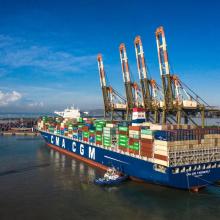
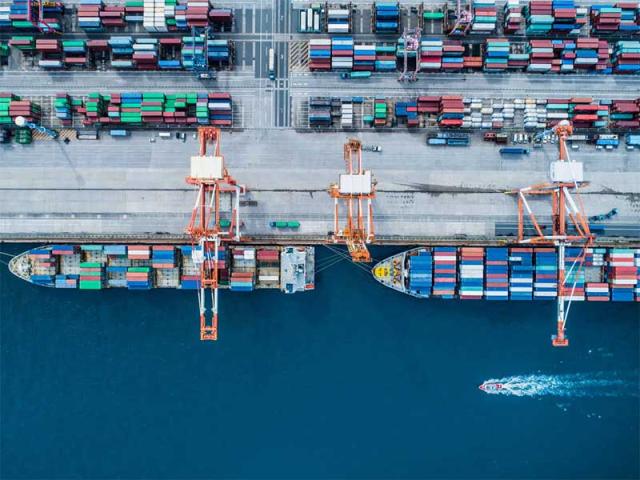
Also known as boxships, container ships, or container vessels, they are specially designed to carry containers. All or most of their cargo holds are used to stow containers, and containers can also be stacked on deck or hatch covers. Container ships have wide and long cargo hatches, and their cargo hold dimensions are standardized according to container-carrying requirements. Loading and unloading efficiency is high, which can greatly shorten port stay time; to achieve better economy, their service speed is generally higher than that of other cargo ships. For ship type classification and representative ship types, see Container Ship Types.
V. Refrigerated Ships, Barge Carriers, and Roll-on/Roll-off Ships
Refrigerated Ships
These are specially designed to carry cargo requiring refrigeration, such as fruits, vegetables, meat, and fish. They often have multiple decks, and the cargo holds are usually divided into several independent enclosed spaces; the ship is equipped with relatively high-powered refrigeration machinery, which can maintain the appropriate temperature required by each refrigerated cargo hold in relatively harsh environments.
Barge Carriers
A vessel specially designed to carry cargo barges, also known as a mother-and-child ship. Its transport method is similar to container transport, and the cargo barge can be regarded as a floating container: first, the cargo is loaded onto uniformly sized rectangular barges (daughter vessels), and then the barges are loaded onto the barge carrier (mother ship); after arriving at the destination port, the barges are unloaded onto the water and then distributed to their destinations by tugboats. Its advantages are that it requires no wharf or storage yard, has high loading and unloading efficiency, and facilitates sea-river intermodal transport; however, construction costs are relatively high and the organization of barge collection and distribution is complex, so its development is somewhat limited.
Ro-Ro Ships
A multi-purpose vessel that uses vehicles to load and unload cargo, originally also called a roll-on/roll-off ship. It uses trailers carrying large cargo such as containers and wheeled pallets loaded with goods as cargo units, which are directly driven into and out of the cargo hold by tractors or forklifts for loading and unloading. Ro-Ro ships usually have a cargo door and ramp at the stern. Vehicles can drive directly onto each deck via the ramp, cargo door, and movable ramps or lift platforms between decks; therefore, traditional cargo-handling equipment is not needed, and loading and unloading efficiency is very high.
Data Notes: The above provides a general description of the structure and uses of various types of cargo ships. Specific vessel parameters, cargo capacity, and suitable cargo vary from ship to ship. When booking, please refer to the vessel information published by the shipping company.
📖 Further Reading: Container Ship Types: Vessel Classification from Panamax to ULCS — container ship classifications and representative vessel types; What Is a Transshipment Port? Introduction to Major Global Transshipment Ports — the relationship between vessel types and route port calls.
Need to choose the right transport method by cargo type? Bofeng Logistics provides one-stop services including domestic container shipping, international ocean freight (FCL/LCL), Hong Kong-Macao logistics dedicated lines, as well as trucking, customs clearance, and warehousing. Submit an inquiry online, or call 13075678958 for consultation.
Contact Information: 13075678958 | info@zhbfwl.com
Frequently Asked Questions (FAQ) About Maritime Cargo Ship Classification
Q: How do you distinguish bulk carriers from general cargo ships?
A: Bulk carriers are used to transport bulk materials such as coal, ore, grain, and fertilizer; their cargo hatches are wide, and the internal structure facilitates cargo concentration and ballasting. General cargo ships are used for packaged, bagged, boxed, and barreled general cargo; they generally have smaller tonnage and are equipped with cargo-handling gear. New general cargo ships are mostly multi-purpose types that can also carry bulk cargo and containers.
Q: Why is the speed of container ships usually higher than that of other cargo ships?
A: Container ships have wide and long cargo hatches, and their cargo hold dimensions are standardized according to container-carrying requirements. They have high loading and unloading efficiency and short port stay times; to achieve better economics, their speed is generally higher than that of other cargo-carrying vessels.
Disclaimer: This article was compiled by the Bofeng Logistics team and verified in 2026-09. The structural parameters and suitable loading range of cargo ships vary by ship type; please refer to the vessel information published by the shipping company.
Related Logistics Services
Bofeng Logistics offers the following related services, feel free to inquire: