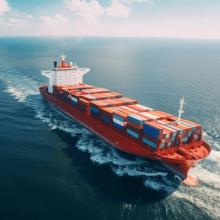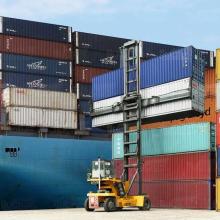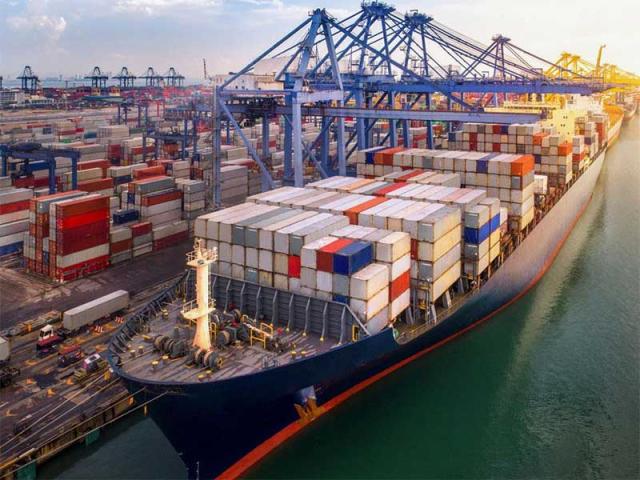
Dry containers are the mainstay of the container family, accounting for over 80% of global container shipping capacity. Their sealed, waterproof structure makes them suitable for the vast majority of ordinary goods.
Special cargo requires other container types: oversized or overweight cargo can be found in open-top/hard-top/flat-rack container solutions, temperature-controlled cargo in the refrigerated container guide, and other special containers in the introduction to special containers.
1. Core Differences Among Three Dry Cargo Containers
| Comparison | 20GP | 40GP | 40HQ |
| Internal Volume | 33.1CBM | 67.5CBM | 76.0CBM |
| Internal Height | 2,393mm | 2,393mm | 2,698mm |
| Maximum Payload | 28,200kg | 28,800kg | 28,620kg |
| Tare Weight | 2,200kg | 3,700kg | 3,900kg |
| Suitable Cargo | Heavy cargo | Light and bulky cargo | Light, bulky, large-volume cargo |
| Freight Rate Basis | 100% (Baseline) | +80%-120% | +90%-130% |
2. 20GP Dry Cargo Container – Priority Choice for Heavy Cargo
The 20GP is the smallest standard dry cargo container, suitable for cargo with small volume but heavy weight.
Suitable Cargo Types
| Cargo Type | Typical Density | 20GP Loading Capacity Reference | Remarks |
| Steel/Hardware | 1,000-3,000kg/CBM | 15-22 tons | Weight limit is reached first |
| Stone/Tiles | 1,200-2,000kg/CBM | 18-24 tons | Mind floor load-bearing capacity |
| Machinery/Equipment | 500-1,500kg/CBM | 5-20 tons | Depends on specific dimensions |
| Chemicals (drummed) | 600-1,200kg/CBM | 10-20 tons | Pay attention to compliance requirements |
| Glass/Ceramics | 400-800kg/CBM | 6-12 tons | Pay attention to shockproof packaging |
20GP Loading Rate Optimization
20GP internal dimensions: 5,898 × 2,352 × 2,393mm

Standard pallet (1200×1000mm) loading:
- Bottom: 5 rows × 2 columns = 10 pallets
- Single layer: 10 pallets
- If cargo can be stacked: 10 × 2 = 20 (using pallet stacking frames)
- Loading rate: approximately 80%-88%

Standard carton (600×400×300mm) loading:
- Per row: 9 cartons (length) × 5 cartons (width) = 45 cartons/layer
- Stacking: 7 layers
- Total cartons: 45 × 7 = 315 cartons
- Loading rate: approximately 68%-75% (room for optimization)
3. 40GP Dry Container – Standard Solution for Light Bulky Cargo
40GP is twice the length of 20GP, suitable for cargo that is large in volume but light in weight.
Suitable Cargo Types
| Cargo Type | Typical Density | 40GP Loading Capacity Reference | Remarks |
| Furniture | 150-300kg/CBM | 10-18 tons/55-60CBM | Volume limit is reached first |
| Home Appliances | 200-400kg/CBM | 12-22 tons/50-55CBM | Pay attention to shock-proof packaging |
| Daily necessities/General merchandise | 150-350kg/CBM | 10-20 tons/55-60CBM | The most typical mixed cargo |
| Paper products/Sanitary products | 100-200kg/CBM | 6-12 tons/55-60CBM | Keep dry |
| Textiles | 80-150kg/CBM | 5-9 tons/50-55CBM | Can be compressed to reduce volume |
40GP vs 40HQ: Key Decision
| Comparison Item | 40GP | 40HQ | Difference |
| Volume | 67.5CBM | 76.0CBM | +13% |
| Freight Rate | Cheaper | 10-15% more expensive | Price difference volume difference |
| Pallet Loading Capacity | 21-22 pallets | 24-26 pallets | High cube allows double-stack |
| Carton Loading Rate | 80-85% | 85-90% | Ample height |
Recommendation: In most cases, paying 10-15% more freight for an extra 13% of space is cost-effective. Unless the cargo weight is close to the weight limit, choose 40HQ.
4. 40HQ Dry Cargo Container — The Most Recommended All-Purpose Option
The 40HQ (40-foot high cube) has become the most mainstream container type in recent years, with loading flexibility greatly improved thanks to its height being 305mm more than 40GP.
Suitable Cargo Types
| Cargo Type | 40HQ Advantage | Loading Capacity Reference |
| Light and bulky high-volume goods | Fully utilizes the height advantage | 65-70 CBM |
| Palletized cargo requiring double-high stacking | Total double-stack height ≤2.6m | 24-26 pallets |
| Medium-height cargo | Can stack 1-2 more layers | 10-15% more than 40GP |
| Mixed cargo | Large height margin and flexibility | Loading plans are easier to optimize |
40HQ Loading Capacity Advantage
Comparison for the same cargo (cartons 600×400×400mm):
40GP: Per row 9×5=45 cartons/layer, can stack 5 layers (2,393÷400=5.9→5)=225 cartons
40HQ: Per row 9×5=45 cartons/layer, can stack 6 layers (2,698÷400=6.7→6)=270 cartons
40HQ loads more: 270-225=45 cartons (+20%)
V. Core Principles for Loading Dry Cargo Containers
| Principle | Description |
| Heavy cargo in 20GP, light cargo in 40HQ | Use 20GP for heavy cargo (weight utilization 90%+), use 40HQ for light bulky cargo (volume utilization 85%+) |
| Calculate weight first, then volume | Before loading, confirm that neither weight nor volume limits are exceeded |
| Reserve space for securing | Reserve 5%-10% space inside the container for padding and lashing |
| Inspect container condition | Check the CSC plate inspection validity, and check the container interior for cleanliness and dryness |
| Record loading data | Loading list (position + weight of each item) → facilitates troubleshooting after arrival at port |
6. Dry Container Restrictions and Prohibitions
| Restrictions | Standard | Consequence if Exceeded |
| Single-point load | ≤4,000kg/500×500mm | Container bottom deformation; forklift piercing the floor board |
| Concentrated load | ≤3,000kg/axle (forklift) | Localized cracking of the floor board |
| Transverse center-of-gravity offset | ≤±5% from the container centerline | Container overturns when turning |
| Maximum stacking tiers | 8 tiers (stacking test value) | Damage to the bottom container structure |
Prohibited cargo: Dry containers are not suitable for loading liquid bulk cargo, gases, live animals, or over-height/over-length cargo—these require special containers.
Data note: Loading parameters refer to the ISO 668:2020 standard and shipping company container type parameter tables.Data as of July 2026.
Not sure which dry container to choose? Send the cargo type, total weight, and total volume to Bofeng Logistics, and we will help you select the optimal container type for free.
Selection consultation: 13075678958 | info@zhbfwl.com
Common Questions (FAQ) on Dry Container Selection
Q: How to choose between 20GP, 40GP, and 40HQ?
A: For heavy cargo (high weight per unit volume), prioritize 20GP; for light, bulky cargo with large volume, prioritize 40HQ; when the cargo weight is close to the container's payload limit, choose 20GP; when pursuing volume utilization efficiency, 40HQ is usually more cost-effective.
Q: What cargo can be loaded in a dry container?
A: The vast majority of ordinary dry cargo—boxed hardware, furniture, home appliances, daily necessities, etc. Liquid bulk cargo, gases, live animals, and over-height/over-length cargo require special containers or tank containers.
Disclaimer: This article was compiled by the Bofeng Logistics team and its content was verified in August 2026. Container parameters and cost data may be adjusted due to changes in shipping companies, routes, and market conditions; please refer to the information confirmed at the time of booking.
Related Logistics Services
Bofeng Logistics offers the following related services, feel free to inquire: