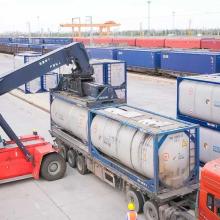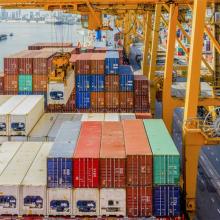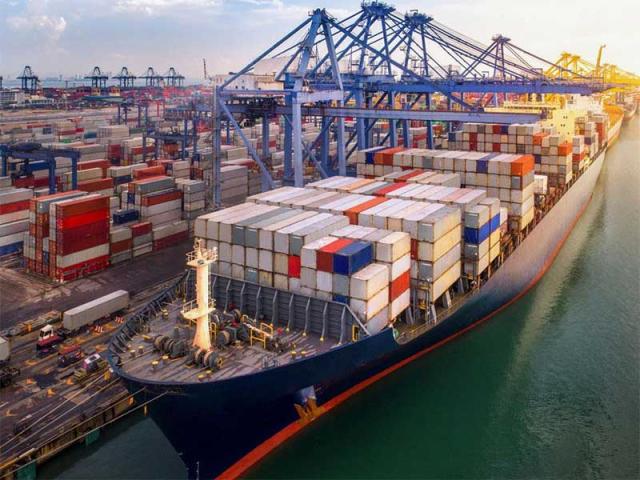
Dry containers are the workhorse of the container fleet, accounting for over 80% of global container shipping capacity. With a sealed, watertight structure, they are suitable for the vast majority of general cargo.
I. Core Differences Among the Three Dry Container Types
| Comparison | 20GP | 40GP | 40HQ |
| Internal Volume | 33.1 CBM | 67.5 CBM | 76.0 CBM |
| Internal Height | 2,393 mm | 2,393 mm | 2,698 mm |
| Maximum Payload | 28,200 kg | 28,800 kg | 28,620 kg |
| Tare Weight | 2,200 kg | 3,700 kg | 3,900 kg |
| Suitable Cargo | Heavy cargo | Light/bulky cargo | Light/bulky, large-volume cargo |
| Freight Rate Basis | 100% (baseline) | +80%–120% | +90%–130% |
II. 20GP Dry Container – The Top Choice for Heavy Cargo
The 20GP is the smallest standard dry container, ideal for cargo with small volume but heavy weight.
Suitable Cargo Types
| Cargo Type | Typical Density | 20GP Load Reference | Notes |
| Steel/hardware | 1,000–3,000 kg/CBM | 15–22 tons | Weight limit reached first |
| Stone/tiles | 1,200–2,000 kg/CBM | 18–24 tons | Pay attention to floor load capacity |
| Machinery/equipment | 500–1,500 kg/CBM | 5–20 tons | Depends on specific dimensions |
| Chemicals (drummed) | 600–1,200 kg/CBM | 10–20 tons | Pay attention to regulatory requirements |
| Glass/ceramics | 400–800 kg/CBM | 6–12 tons | Pay attention to shockproof packaging |
20GP Load Rate Optimization
20GP internal dimensions: 5,898 × 2,352 × 2,393 mm

Loading standard pallets (1200 × 1000 mm):
- Bottom layer: 5 rows × 2 columns = 10 pallets
- Single layer: 10 pallets
- If cargo is stackable: 10 × 2 = 20 pcs (using pallet stacking frames)
- Load rate: approximately 80%–88%

Loading standard cartons (600 × 400 × 300 mm):
- Per row: 9 cartons (lengthwise) × 5 cartons (widthwise) = 45 cartons/layer
- Stacking: 7 layers
- Total cartons: 45 × 7 = 315 cartons
- Load rate: approximately 68%–75% (room for optimization)
III. 40GP Dry Container – The Standard Solution for Light/Bulky Cargo
The 40GP is twice as long as the 20GP and is suitable for cargo with relatively large volume but lighter weight.
Suitable Cargo Types
| Cargo Type | Typical Density | 40GP Load Reference | Notes |
| Furniture | 150–300 kg/CBM | 10–18 tons / 55–60 CBM | Volume limit reached first |
| Household appliances | 200–400 kg/CBM | 12–22 tons / 50–55 CBM | Pay attention to shockproof packaging |
| Daily necessities/general goods | 150–350 kg/CBM | 10–20 tons / 55–60 CBM | The most typical mixed cargo |
| Paper products/hygiene products | 100–200 kg/CBM | 6–12 tons / 55–60 CBM | Pay attention to moisture protection |
| Textiles | 80–150 kg/CBM | 5–9 tons / 50–55 CBM | Can be compressed to reduce volume |
40GP vs 40HQ: Key Decision Factors
| Comparison Item | 40GP | 40HQ | Difference |
| Volume | 67.5 CBM | 76.0 CBM | +13% |
| Freight Rate | Cheaper | 10–15% more | Price difference < volume difference |
| Number of Pallets Loaded | 21–22 pcs | 24–26 pcs | High cube allows double stacking |
| Carton Load Rate | 80–85% | 85–90% | More height allowance |
Recommendation: In the vast majority of cases, paying 10–15% more in freight for 13% extra space is cost-effective. Unless the cargo weight is close to the payload limit, choose the 40HQ.
IV. 40HQ Dry Container – The Most Recommended All-Purpose Option
The 40HQ (40-foot high cube) is the most mainstream container type in recent years. With 305 mm more internal height than the 40GP, it offers significantly greater loading flexibility.
Suitable Cargo Types
| Cargo Type | 40HQ Advantage | Load Reference |
| Light/bulky, large-volume cargo | Makes full use of the height advantage | 65–70 CBM |
| Palletized cargo requiring double stacking | Double stacking total height ≤ 2.6 m | 24–26 pallets |
| Medium-height cargo | Allows 1–2 additional layers | 10–15% more than 40GP |
| Mixed cargo | More height margin, flexible | Loading plans are easier to optimize |
40HQ Load Rate Advantage
Comparison with the same cargo (cartons 600 × 400 × 400 mm):
40GP: 9 × 5 = 45 cartons/layer, stackable up to 5 layers (2,393 ÷ 400 = 5.9 → 5) = 225 cartons
40HQ: 9 × 5 = 45 cartons/layer, stackable up to 6 layers (2,698 ÷ 400 = 6.7 → 6) = 270 cartons
40HQ loads: 270 – 225 = 45 additional cartons (+20%)
V. Core Principles for Loading Dry Containers
| Principle | Description |
| Heavy cargo → 20GP, light cargo → 40HQ | Use 20GP for heavy cargo (payload utilization 90%+), and 40HQ for light/bulky cargo (volume utilization 85%+) |
| Calculate weight first, then volume | Before loading, confirm that neither weight nor volume limits are exceeded |
| Reserve lashing space | Reserve 5%–10% of internal space for dunnage and lashing materials |
| Inspect container condition | Check the CSC plate for inspection validity; inspect interior for cleanliness and dryness |
| Record loading data | Loading list (position + weight of each carton) → facilitates issue tracing upon arrival at port |
VI. Dry Container Limitations and Prohibited Items
| Limitation | Standard | Consequences of Exceeding |
| Single-point load capacity | ≤4,000 kg / 500×500 mm | Floor deformation; forklift piercing through floor |
| Concentrated load | ≤3,000 kg per axle (forklift) | Local floor rupture |
| Lateral center-of-gravity offset | ≤ ±5% from the container centerline | Container tipping during turns |
| Maximum stacking layers | 8 layers (stacking test value) | Structural damage to bottom containers |
Prohibited cargo: Dry containers are not suitable for liquid bulk cargo, gases, live animals, or oversized/overheight cargo — these require specialized containers.
Data Note: Loading parameters are based on ISO 668:2020 standards and shipping line container specification tables. Data as of July 2026.
Unsure which dry container type to choose? Send your cargo type, total weight, and total volume to Bofeng Logistics, and we'll help you select the optimal container type for free.Selection Consultation: 13075678958 | info@zhbfwl.com
Related Logistics Services
Bofeng Logistics offers the following related services, feel free to inquire: