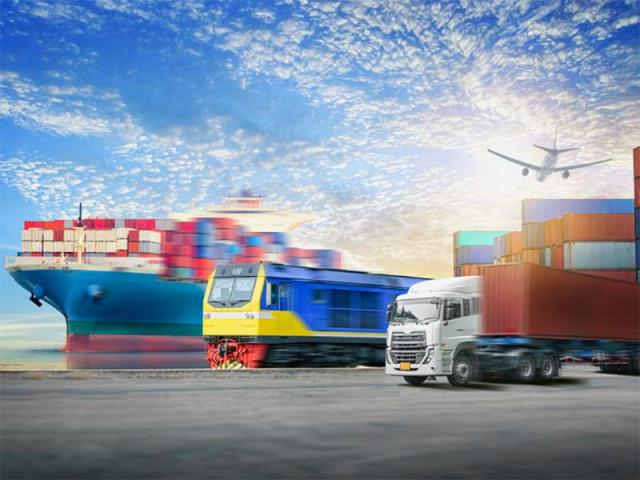
"Port Logistics" refers to ports serving as irreplaceable key nodes and service platforms in modern logistics, centered on promoting regional economic development. Its purpose is to establish freight centers, distribution centers, logistics information centers, and commodity trading centers, organically integrating logistics links such as transportation, warehousing, loading and unloading, agency services, packaging and processing, distribution, and information processing to form a complete service chain, providing users with multifunctional, integrated comprehensive logistics services. "Port Logistics" primarily offers container transportation and cargo transport and transshipment logistics for bulk carriers. Due to its unique geographical location, "Port Logistics" mainly has the following characteristics:
1. Port Logistics Holds a Central Position in the International Logistics Chain
(1) It possesses the function of a comprehensive logistics center. Traditional port activities were limited to transit and product distribution functions. With the development of international multimodal transport and the increasing complexity of the comprehensive transport chain, ports, as nodes in the global comprehensive transport network, have expanded their functions. Modern port functions are continuously extending inland from the port, becoming comprehensive logistics centers in the continuous transport chain. At the same time, ports also serve as business centers, providing clients with convenient transportation, commercial, and financial services such as agency, insurance, and banking, becoming a convergence center for commodity flow, capital flow, technology flow, information flow, and talent flow. (2) Their status and role in regional logistics organization are increasingly prominent. First, large ports, with their strong comprehensive services and influence on the regional economy, are not only an important part of the regional comprehensive transport network but also a key support for logistics development. Second, the diversification of service functions and the radiating effect of large ports make them regional logistics organization hubs, playing the role of regional logistics centers. Third, large ports are located at the junction of land transport and water transport, playing a significant role in ensuring the logistics services generated by international and domestic trade relying on the port. Fourth, they support and promote the economic development of the port city and its hinterland, providing more opportunities and strong support for development by facilitating material exchange and economic and industrial structure adjustments among various regions and cities within the hinterland. Fifth, they support and promote the construction and development of the port itself and its collection and distribution system, fostering a positive interactive development relationship between the port and its regional economy.
2. The Development of Port Logistics Reflects the Overall Level of a Country's Logistics Development
Due to its unique geographical advantages and relatively complete hardware facilities, ports have inherent advantages. Ports gather a large number of cargo owners, shipping companies, agency companies, retailers, etc., becoming a convergence center for logistics, people flow, technology flow, and capital flow. Compared with hinterland logistics, practitioners of port logistics are more likely to access the most advanced technologies and management concepts. As ports are centers of the international logistics chain, these advanced technologies and management concepts penetrate the landward hinterland through the logistics chain. Thus, the level of a country's port logistics development largely determines the level of the entire country's logistics development.
3. Port Logistics Development is Influenced by National Policies and the International Environment
In addition to general logistics services, port logistics services include special services such as customs inspection, maritime rescue, and maritime courts. National policies often largely determine the development level of port logistics. The economy of a port city is inseparably linked to neighboring countries. Factors such as the economic development level, economic system, opening-up policies, and foreign policies of neighboring countries all affect the scale of port logistics.
4. Port Logistics Development is Related to the Collection and Distribution System and Hinterland Economy
(1) Port logistics requires a well-developed collection and distribution system. To provide fast, reliable, and flexible logistics services, ports must be able to provide efficient collection and distribution systems connecting to their seaward and landward hinterlands. To address current issues of insufficient land-based railway, especially road, collection and distribution capacity, ports need to rely on the overall development layout and planning of the port city, effectively connecting the port's collection and distribution road network with the city's traffic network. When planning and designing the road network, reference should be made to the city's opinions to coordinate the port-city relationship for mutual benefit. On the maritime side, expand cooperation with liner companies and other ports, increase port calls, open new routes, and ensure smooth maritime distribution. (2) The development of port logistics is constrained by its own location and hinterland economy. The development of international logistics is not only related to the port's own location, terminal conditions, service levels, and logistics environment but also closely related to the economic strength of the port city and even the economic development of the port's hinterland. For port logistics, the development level and scale of the hinterland economy and the population density of the area directly affect the throughput of port logistics. Additionally, the transportation system in the hinterland is another important factor affecting port logistics. Currently, ports have become an indispensable and important part of the city and a new growth point.
5. Port Logistics Provides Convenience for Value-Added Services
In terms of the content of modern logistics services, ports have very prominent locational advantages. In the continuous development of modern logistics, ports can not only provide modern logistics services such as cargo transshipment, loading and unloading, and warehousing, but also offer diversified logistics value-added services. These include providing rapid transportation, real-time tracking and inquiry, logistics processing, warehousing, distribution, delivery, information processing and analysis, and even supply chain solutions, enterprise logistics model design, and other logistics value-added services. Additionally, ports can use their information and communication, as well as EDI networks, to provide users with needed market and decision-making information. Ports are also personnel service centers, providing trade negotiation conditions, talent supply, and seafarer services, as well as comfortable living and entertainment spaces, strengthening the port-city integration relationship.
6. Port Logistics Faces More Intense Direct Competition than Other Logistics Sectors
With the rapid development of international trade, shipping competition is becoming increasingly fierce. Larger, faster, and containerized vessels have become inevitable trends. Ports compete to develop logistics centers, intensifying competition among port logistics. The competition ports face comes not only from neighboring ports but also from foreign ports with strategic regional status.
7. Port Logistics Has Aggregation and Integration Effects
(1) Port logistics has an aggregation effect. As nodes in the international transport system, ports give rise to stevedoring companies, shipping companies, and land transport companies due to the loading, unloading, and transshipment of international goods. The berthing of ships leads to ship fuel supply, ship repair, and maritime insurance. Intermediary companies such as non-vessel operating common carriers, freight forwarders, and customs brokers emerge between cargo owners and shipping companies. With the formation and development of modern logistics, new enterprises centered around ports are logistics parks and centers featuring value-added logistics operations. Ports play a unique role in the opening up and development of an export-oriented economy for a region or city. Internationally, any developed comprehensive port is supported by a prosperous city, which is often a regional or international economic center. (2) Port logistics has an integration effect. The trend of global economic integration compels port logistics to develop iternationally, on a large scale, and systematically. The internal integration within the port logistics industry and full cooperation with land and air logistics are imperative. At the same time, the service functions of port logistics will highlight the characteristic of "integration," achieving further expansion. Port logistics will fully rely on port hinterland services in transportation, disassembly, packaging, quality control, inventory management, and the best logistics solutions for goods in port, sea, and other transportation processes.
Related Logistics Services
Bofeng Logistics offers the following related services, feel free to inquire: