I. Customs Clearance Procedures for Imported Goods
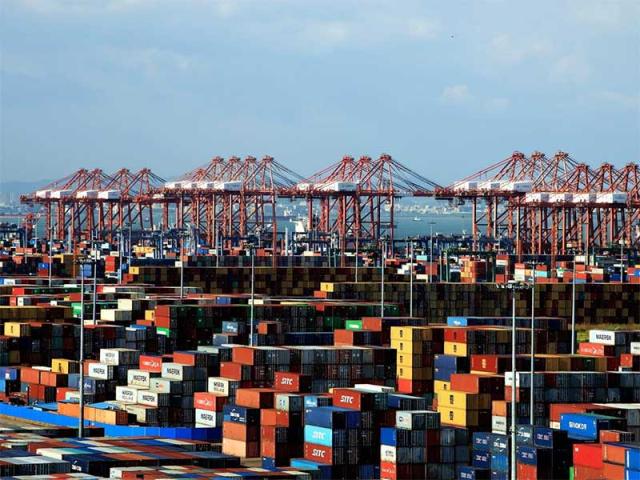
Regardless of the mode of transportation, goods arriving at Japanese ports or airports are generally unloaded and stored in customs-designated bonded areas or sheds, awaiting customs inspection, duty assessment, and release procedures. Customs imposes time limits on the storage period of goods; foreign goods stored beyond the limit will be subject to supervision fees by customs. Imported goods are usually declared to customs by registered customs brokers on behalf of importers.
When declaring, in addition to the declaration form, the importer must submit the following documents:
1. Import Declaration Form: For goods subject to import quotas, an import license must be submitted; for other goods, only the import declaration form is required. The import declaration form must specify the marks and numbers, bill of lading number, product name, quantity, and value; the place of origin, place of purchase, port of shipment; and the name, registration mark, and nationality of the carrying vessel or aircraft. Additionally, the importer must declare: A. Whether there is any special relationship between the importer and exporter, such as headquarters and branch, parent company and subsidiary, foreign supplier and exclusive dealership, etc.; B. Whether the importer must pay remuneration beyond the invoice amount to the exporter; C. Whether the importer needs to pay other fees to the exporter's agent in Japan; D. Whether the importer has an obligation to promote sales; E. Whether the price listed on the invoice includes any discounts; F. Whether, in addition to the invoice price, the importer must pay any other amounts or incur additional burdens for the imported goods.
2. Commercial Invoice: Customs does not prescribe a specific format, but it must at least bear the shipper's signature. The commercial invoice is used for customs valuation and must include: A. Marks and numbers, full product name, Brussels Tariff Nomenclature number, and quantity; B. Total and unit price of the goods; C. Detailed costs, including freight, insurance, and shipping charges; D. Gross and net weight; E. Place and date of invoice issuance; F. Destination and consignee; G. Contract terms determining the price of the goods.
3. Packing List
4. Certificate of Origin: The certificate of origin is generally certified by the local chamber of commerce or the Japanese consulate, diplomatic official, at the place of production, procurement, or shipment of the goods.
5. Bill of Lading: Three signed original bills of lading (or air waybills for air freight) are usually forwarded via the bank, plus two unsigned copies sent directly to the consignee. The specific requirements are usually detailed in the consignee's letter of credit.
6. Other Customs Valuation Documents
If the importer cannot present an invoice for some reason, or if the information on the invoice is insufficient for valuation, customs may request written contracts and other documents containing detailed freight, insurance, packaging costs, and price lists. If the imported goods are animals or plants, they must comply with the import quarantine regulations of the Ministry of Agriculture, Forestry and Fisheries and be accompanied by inspection certificates. When handling import declarations with customs, the importer or their agent must also submit three copies of the import duty declaration form. The duty payable for each batch of goods is calculated by the importer or their agent and filled in on the customs declaration form for clearance. Importers should have complete and detailed information about the goods. If in doubt, they should consult customs for guidance before filling in the form.
II. Import Quotas and Import Controls
Goods designated as non-liberalized items by the Ministry of Economy, Trade and Industry must be imported under the import quota system. This is a relatively strict quota requirement. Importers must first apply to the ministry for quota allocation. Once approved, they receive an import quota certificate. This certificate allows the importer to automatically obtain an import license upon application to an authorized bank. In fact, all import quota certificates are issued on a global quota basis, regardless of the country of origin or the currency used for payment. Imported goods must be cleared by customs and duty collected within the validity period specified.
Japan implements tariff quota measures with maximum import amounts and maximum country-specific amounts, classifying imported goods subject to tariff quotas into 132 product groups. These product groups are then divided into three categories. The first category is daily controlled. Goods in this category benefit from tariff reductions or exemptions on a first-come, first-served basis, but imports are monitored. Once the maximum country-specific quota for the beneficiary country or region is used up, imports exceeding the quota from the following day are subject to most-favored-nation (MFN) tariff rates. The second category: The import procedure for goods in this category is similar to the first, but once the maximum country-specific quota is exhausted, MFN tariffs apply from the first day of the following month. There are 125 product groups in this category. The third category is pre-allocated quotas. For goods in this category, 80% of the total import quota is allocated to traditional importers who have historically dealt with these goods, and 20% is allocated to new importers. This category includes 11 textile product groups.
III. Customs Clearance Procedures for Transit and Re-exported Goods
Japan is a signatory to the Temporary Admission Convention (ATA Convention). All goods transported from convention member states into Japan under an ATA carnet are processed accordingly. When foreign goods are re-exported from Japan, the customs declaration for export must be submitted. For goods granted duty-free treatment upon import, such as exhibition items, professional tools, private vehicles, etc., the original duty-free import certificate must be presented to customs upon export to avoid import duties. Parts temporarily admitted duty-free for assembly, if verified to match import records and remain in their original condition, may be re-exported with customs approval. With approval from the Ministry of Economy, Trade and Industry and the Ministry of Finance, and implementation of measures to prevent entry into the domestic market, raw materials can be shipped duty-free to bonded areas for processing and subsequent re-export.
Bofeng Logistics specializes in one-stop logistics services including domestic container shipping, international shipping (FCL/LCL), Hong Kong/Macau logistics dedicated lines, trucking, customs declaration, and warehousing. Phone: +86-130-7567-8958 (Manager Huang). Call now for a personalized quote!
Related Logistics Services
Bofeng Logistics offers the following related services, feel free to inquire: