
Guangzhou Shi
Guangdong Sheng
China
Huangpu Port
1. Port Overview
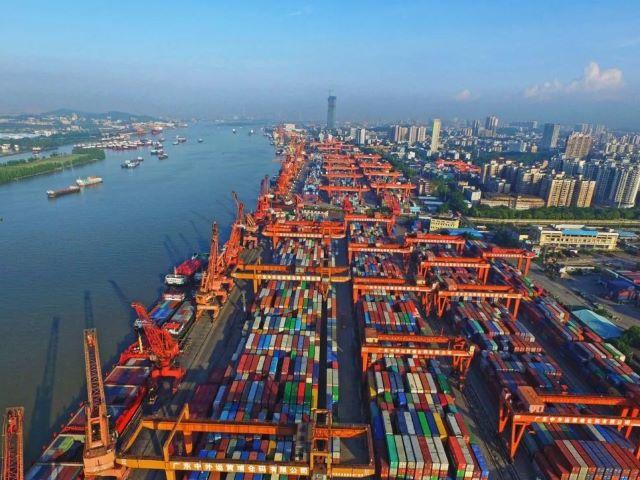
Huangpu Port is located in Huangpu District, Guangzhou, on the north bank of the Pearl River Estuary. It is the birthplace of Guangzhou Port and one of the oldest trading ports in the Pearl River Delta. The trading history of the Huangpu area can be traced back to the Sui and Tang dynasties, when the ancient Huangpu Port was already the outer port for Guangzhou's foreign trade; in modern times, Sun Yat-sen proposed in The Plan for National Reconstruction the idea of building a "Great Southern Port" in Guangzhou, and Huangpu was precisely the site for this idea.
The modern construction of Huangpu Port began in the 1930s. In 1936, the Huangpu Port Opening Supervision Office was established and formulated an outline plan for opening the port; construction officially started in 1937; and in 1938, a steel sheet-pile quay wall wharf was completed, with a water depth at the wharf front of about 9 meters. It subsequently experienced suspension of shipping and reopening; it reopened in 1950, opened a new port area in 1973, and in 1987 was incorporated into the Guangzhou Port system following adjustments to Guangzhou Port's management system.
Unlike the Nansha Port Area, Huangpu Port is located within the Pearl River Estuary and is a typical estuarine port. Its channel depth is about 8–10 meters. Limited by channel conditions, it is difficult for large ocean-going container ships to berth directly. Therefore, Huangpu Port's functional positioning leans toward domestic trade containers, Pearl River Delta barge transport, inland river feeder services, and bulk and breakbulk cargo operations such as steel, grain, and general cargo. Ocean-going export cargo is usually transshipped by barge or overland to deep-water port areas such as Nansha and Shenzhen before being loaded onto mainline vessels.
Bofeng Logistics uses Huangpu Port as an important node for domestic trade transport and barge connections in the Pearl River Delta. Domestic trade container transport along the South China coast, feeder connections at inland river terminals in the Pearl River Delta, and factory cargo pickup and customs declaration in the industrial areas of eastern Guangzhou can all be handled at Huangpu Port.
2. Port Areas and Channel
The operating areas of Huangpu Port are distributed along the Pearl River shoreline and can be roughly divided into two parts: the Old Port Area and the New Port Area. Their functions and facility characteristics include:
- Huangpu Old Port Area: Located along the river in Huangpu District, it has the longest history. It mainly handles general cargo, steel, grain, and other large-volume bulk and general cargo, as well as some domestic trade container operations. Its berth class is relatively low.
- Huangpu New Port Area: Opened in the 1970s and located in the Duntou Dongji area, its berth class and yard conditions are better than those of the Old Port Area. It handles a relatively large share of domestic trade container and general cargo operations.
- Channel conditions: Located within the Pearl River Estuary, the channel depth is about 8–10 meters. Navigability is significantly affected by tide levels. Large vessels must enter and leave with the tide, and ultra-large container ships cannot berth directly.
- Landside supporting facilities: Yards, warehouses, and freight stations are distributed around the port area, facilitating the storage and distribution of general cargo.
It is precisely because of the natural limitation of channel depth that Huangpu Port and Nansha Port Area have formed a clear division of labor within the Pearl River Delta port system: ocean-going mainline services are concentrated in Nansha, while Huangpu handles domestic trade containers, barges, and bulk and general cargo. The flow of container sources between the two is realized via barges and waterways.
Channel depth and berth class may be adjusted along with dredging projects and terminal renovations. Different sources vary in their stated depth figures; the current data published by the competent port authority shall prevail.
3. Main Routes
3.1 Domestic Coastal Routes
Huangpu Port's domestic routes mainly focus on South China coastal and north-south domestic trade container transport, with frequent schedules and flexible container types:
| Destination Port | Reference Transit Time | Route Type |
|---|---|---|
| Port of Shanghai | 3-4 days | Coastal Route |
| Port of Ningbo | 3-4 days | Coastal Route |
| Port of Xiamen | 2-3 days | Coastal Route |
| Port of Qingdao | 4-5 days | Coastal Route |
| Port of Tianjin | 6-7 days | Coastal Route |
| Port of Shenzhen | About 1 day | Pearl River Delta Route |
3.2 Pearl River Delta Barge and Inland Feeder
Huangpu Port is an important hub in the Pearl River Delta waterway network, with frequent sailings to and from surrounding inland river terminals:
| Direction | Reference Transit Time | Notes |
|---|---|---|
| Nansha Port Area | Approx. 1 day | Main corridor for transshipment to ocean-going mainline vessels |
| Western Shenzhen Port Area | Approx. 1 day | Connects with routes in the western port area |
| Dongguan and Zhongshan inland river terminals | Approx. 1–2 days | Pearl River Delta inland river consolidation |
| Foshan and Jiangmen inland river terminals | Approx. 2–3 days | Consolidation on the west bank of the Pearl River |
Reference transit times are sailing times only and do not include customs declaration at origin, terminal operations, or waiting time. Barge schedules are subject to water levels, weather, and terminal scheduling. Please confirm current arrangements with us before shipping.
4. Hinterland and Cargo Mix
The hinterland of Huangpu Port is mainly eastern Guangzhou, Dongguan, and areas along the inland waterways of the Pearl River Delta, and its cargo mix skews toward domestic trade and bulk cargo:
- Exports via Huangpu Port: domestic-trade containerized cargo, steel and metal products, building materials, mechanical and electrical products, daily consumer goods
- Imports via Huangpu Port: grain and agricultural products, steel and nonferrous metals, timber, chemical raw materials, breakbulk cargo and equipment
Cargo suitable for transport via Huangpu Port: containerized cargo for domestic trade is usually closer via Huangpu Port than via Nansha, with lower inland transport costs; bulk and breakbulk cargo such as steel and grain has well-developed storage and handling facilities at Huangpu Port; cargo from Pearl River Delta inland waterway terminals can be transshipped via Huangpu Port.
Bofeng Logistics experience sharing: The core value of Huangpu Port is "proximity." The road distance from factories in eastern Guangzhou and Dongguan to Huangpu Port is usually within a few dozen kilometers, and routing domestic-trade containers via Huangpu saves inland transport cost and time compared with Nansha. It should be noted that Huangpu Port is restricted by channel depth and cannot offer direct ocean-going calls; exports to Europe, America, and other ocean-going destinations must be transshipped by barge or road to deep-water port areas such as Nansha and Shenzhen. This "feeder" leg takes an additional 1–2 days, and production scheduling should factor in this time. Our usual practice when undertaking domestic-trade transport in the Pearl River Delta is to handle domestic-trade containers directly at Huangpu Port, while consolidating ocean-going containers at Nansha or Shenzhen, to avoid documentation and container management confusion caused by changing documents midway.
5. Operational Notes
Operations at Huangpu Port require attention to three key points. First, channel depth restrictions: large vessels must enter and exit on the tide, and sailing schedules may be adjusted due to changes in tide levels and water levels; cargo with tight delivery deadlines should allow buffer time. Second, transshipment connections: for export cargo transshipped via Huangpu Port to Nansha and Shenzhen, both barge schedules and mainline vessel schedules must be confirmed at the same time, with sufficient connection buffer between the two legs. Third, the nature of the cargo: for breakbulk and bulk cargo handled at Huangpu Port, yard and loading/unloading equipment conditions must be confirmed in advance; out-of-gauge and overweight cargo should be declared in advance.
The free container usage period at Huangpu Port is usually subject to the regulations of the shipping company and the terminal; exceeding it will incur container detention charges; dangerous goods must be declared in advance at the time of booking and an acceptable terminal must be confirmed.
FAQ
Q: Can Huangpu Port export directly to Europe and America?
Answer: Ocean-going mainline vessels usually cannot call directly at Huangpu Port. Due to channel water depth restrictions, ocean export cargo from Huangpu Port is generally first transshipped by barge or overland to deep-water port areas such as the Nansha Port Area and Shenzhen Port, and then reloaded onto mainline vessels for export. The overall transit time must include this transshipment time.
Q: For domestic trade shipping, should we route through Huangpu Port or Nansha Port?
Answer: For domestic trade cargo from eastern Guangzhou, Dongguan, and areas along the inland waterways of the Pearl River Delta, going through Huangpu Port involves shorter inland transport and lower costs; if the sailing schedule at Nansha is more suitable for the destination port, Nansha can also be used. The specific choice depends on the destination port, sailing schedule, and factory location. We can compare based on the actual situation and provide a recommendation.
Q: Can Huangpu Port handle transshipment of cargo from inland river terminals in the Pearl River Delta?
Answer: Yes. Huangpu Port is an important node in the waterway network transport of the Pearl River Delta, and it has barge schedules with inland river terminals in Dongguan, Zhongshan, Foshan, Jiangmen, and other places. When the cargo volume is relatively small, it can also be consolidated with cargo heading in the same direction for consolidated barge transport.
6. Bofeng Logistics Services
Bofeng Logistics provides the following services at Huangpu Port:
- Domestic Sea Freight: Coastal South China and north-south domestic trade container transport, with both FCL and LCL available
- Barge Feeder Service: Consolidation and transshipment connections between Huangpu Port and inland river terminals in the Pearl River Delta
- Customs Clearance Services: Export customs declaration, commodity inspection, and coordination of domestic trade cargo documents
- Trucking and Warehousing: Factory pickup in eastern Guangzhou and Dongguan, container drayage to port, warehouse storage, and distribution
- Value-Added Services: Cargo insurance, labeling and sorting, and breakbulk/general cargo loading and unloading coordination
Service Features: Domestic and international trade are arranged on separate lines; domestic trade containers are handled nearby at Huangpu, while ocean-going containers are consolidated at deep-water port areas to reduce intermediate document transfers; we are familiar with barge schedules at Pearl River Delta inland river terminals and can design connection plans for cargo originating from inland waterways.
📍 Welcome to contact us for real-time freight rates.
Further Reading
- Domestic Ocean Shipping Services: FCL and LCL solutions for domestic coastal container transport
- Major Ports in Guangdong Province: Distribution and division of roles among Guangdong ports such as Shenzhen, Guangzhou, Zhuhai, and Dongguan
- Guide to Major Chinese Ports: Comparison of the positioning and route characteristics of major domestic container ports
Related ports: Nansha Port | Shenzhen Port | Hong Kong Port
Prepared by the Bofeng Logistics team; content reviewed in September 2026. Port throughput and facility data are based on official releases from port authorities and terminal operators, and figures may differ between sources. Schedules and documentation requirements are subject to booking confirmation.