
Xiamen Shi
Fujian Sheng
China
Xiamen Port
1. Port Overview
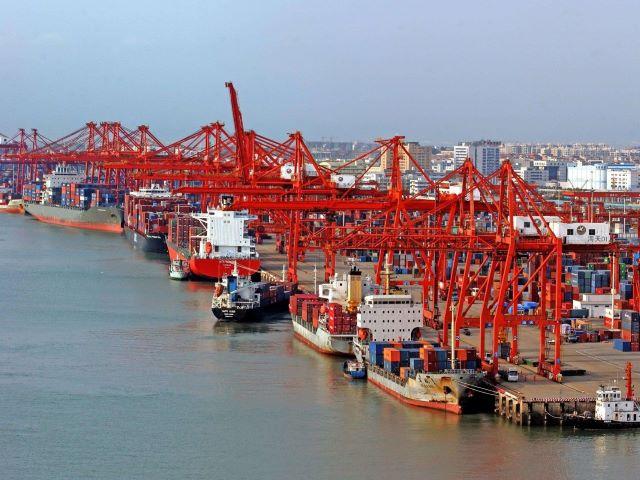
Xiamen Port is located on the southeastern coast of Fujian Province, on the west side of the Taiwan Strait. It is the largest container port in Fujian Province and one of the major container hub ports along the coast of mainland China. Xiamen Port is composed of port areas such as Dongdu, Haicang, Songyu, and Liuwudian on Xiamen Island, as well as Zhaoyin, Houshi, and other port areas toward Zhangzhou, forming a combined port pattern spanning the two cities of Xiamen and Zhangzhou.
The locational value of Xiamen Port is concentrated in three aspects. First, its position as a passage facing the Taiwan Strait makes it an important port for direct maritime links with Taiwan, with frequent sailings to and from major Taiwanese ports; second, its short-sea advantage toward Southeast Asia, with shorter voyages to base ports in Southeast Asia, makes it suitable for short-sea trade; third, backed by the manufacturing belt of southern Fujian, Quanzhou's footwear, apparel, and building materials, Nan'an's stone, Jinjiang's textiles and food, and Xiamen's electronics and machinery constitute a stable and diversified source of export cargo.
Public statistics show that in 2024, Xiamen Port's container throughput was approximately 12.25 million TEU, and cargo throughput was approximately 211 million tons, ranking among the top container ports in the world and among the top coastal ports in mainland China; among them, the Haicang Port Area handled about 70% of the port's total container volume and is the core operating area of Xiamen Port.
Bofeng Logistics takes Xiamen Port as its pivot port on the southeastern coast, undertaking customs declaration, drayage, and booking operations for export cargo in the southern Fujian region, and provides coastal transport solutions transshipped through Xiamen Port for customers in the domestic maritime shipping segment.
2. Port Scale and Facilities
Container operations at Xiamen Port are highly concentrated in the two port areas of Haicang and Songyu, and their facilities are at a leading level along the southeastern coast:
- Haicang Port Area: The core container operating area of Xiamen Port, with a planned area of more than 24 square kilometers and a shoreline length of more than 11 kilometers. Dozens of productive berths can be built, with deep-water berths accounting for the majority, and annual container throughput capacity on the order of 7.6 million TEUs
- Songyu Operating Area: Equipped with more than ten berths, among which Songyu Container Terminal has 3 150,000-ton-class deep-water berths, can receive 200,000-ton-class container ships, and has the operational capability to berth multiple large vessels simultaneously
- Dongdu Port Area: Located on Xiamen Island, it is an earlier container operating area of Xiamen Port, mainly serving near-sea routes and domestic-trade containers
- Zhaoyin and Houshi Port Areas: Located toward Zhangzhou, they handle bulk and general cargo and some container operations, and are an important part of the combined-port layout
Xiamen Port's main navigation channel has been dredged many times, and the deep-water channel conditions can meet the entry and exit needs of large container ships. Both Haicang and Songyu port areas have all-weather berthing capability for large vessels. The port areas are connected via the expressway network to hinterlands such as Quanzhou, Zhangzhou, and Longyan, with supporting container yards, bonded warehouses, and export supervised warehouses nearby.
The number of berths, channel depth, and design throughput capacity will be adjusted with expansion projects. Different sources may differ in their definitions, and the current data published by terminal operators and port administrative authorities shall prevail.
3. Main Routes
3.1 Domestic Coastal Routes
Xiamen Port is an important hub for domestic coastal container transport in domestic trade, with frequent north-south schedules:
| Destination Port | Reference Transit Time | Route Type |
|---|---|---|
| Port of Shanghai | 2-3 days | Coastal route |
| Port of Ningbo | 2-3 days | Coastal route |
| Port of Shenzhen | 1-2 days | Coastal route |
| Port of Qingdao | 3-4 days | Coastal route |
| Port of Tianjin | 5-6 days | Coastal route |
| Port of Guangzhou (Nansha) | 2-3 days | Coastal route |
3.2 Main International Routes
Xiamen Port's international routes are mainly short-sea routes, with deep-sea mainline services also covered:
| Destination Port | Reference Transit Time | Common Shipping Lines |
|---|---|---|
| Kaohsiung Port | Approx. 1-2 days | Cross-Strait direct services |
| Port of Singapore | 5-7 days | COSCO, OOCL, PIL |
| Port Klang | 6-8 days | OOCL, PIL |
| Port of Sydney | 14-17 days | COSCO, ANL |
| Port of Los Angeles | 14-17 days | EVERGREEN, ONE |
The reference transit time is the sailing time from departure at the port of origin to arrival at the destination port. It does not include customs declaration at the origin, customs clearance at the destination, or container pickup time, nor does it include waiting for transshipment. Actual transit times are affected by factors such as carrier route arrangements, weather, and port congestion. Please confirm the specific sailing schedule with us before shipment.
4. Hinterland and Cargo Mix
The hinterland of Xiamen Port is centered on the Minnan region and extends to western Fujian, eastern Guangdong, and southern Jiangxi. The cargo mix is mainly light industrial manufactured goods and building materials:
- Exports from Xiamen Port: stone and stone products, footwear and apparel, mechanical and electrical products, electronic products, ceramics and building materials, food and processed aquatic products, daily consumer goods
- Imports via Xiamen Port: stone blocks, timber, steel, chemical raw materials, mechanical and electrical equipment, grain and agricultural products
Goods suitable for shipping via Xiamen Port: stone blocks and products are heavy and are usually carried as full container load (FCL) or breakbulk cargo. When loading, pay attention to weight distribution and container floor load-bearing capacity; light industrial products such as footwear, apparel, and ceramics are suitable for FCL or LCL; time-sensitive cargo such as aquatic products can be arranged in combination with short-sea routes.
Bofeng Logistics Experience Sharing: Xiamen Port's notable characteristics are dense short-sea routes and concentrated cargo sources in southern Fujian. For trade with Southeast Asia, Taiwan, Japan, and South Korea, the voyage distance and sailing schedules from Xiamen are usually better than detouring via South China; for exports to Europe and America on deep-sea routes, although Xiamen has direct services, the choice of space and schedules is not as rich as at deep-water ports in South China, so some cargo may consider transshipment via Shenzhen or Nansha. Operational experience with stone cargo at Xiamen Port is especially important—blocks are concentrated in weight, and the declaration and stowage of overweight containers need to be calculated in advance. When loading containers, weight distribution and securing must be done to avoid rejection by the terminal due to overweight or extra charges. When we handle stone exports, we first confirm the maximum weight per container and the weight limits at the destination port, and then plan container loading accordingly.
5. Operational Notes
When operating at Xiamen Port, note the following: First, the port area covers a wide span, with Haicang, Songyu, and Dongdu located in different places; before picking up or returning containers, you must confirm the specific operating port area. Second, for heavy cargo such as stone and ceramics, calculate the weight per container to avoid overweight. Third, space on short-sea routes is relatively tight during peak season (around July–October) and around holidays; it is advisable to book in advance. Fourth, schedules on some routes to Taiwan and short-sea destinations are significantly affected by weather, so shipping plans should allow buffer time.
The free container usage period at Xiamen Port is usually 3–5 days, subject to the regulations of the shipping line and terminal; exceeding this period will incur container detention fees. Hazardous goods, reefer containers, and oversized cargo must be declared in advance at the time of booking, and the acceptable port area must be confirmed.
FAQ
Q: Are there direct ships from Xiamen Port to Europe and America for exports?
Answer: Yes, but the direct sailing schedules and space options are not as abundant as those at deep-water port areas in South China. When actually shipping, we will compare the two options of direct sailing from Xiamen and transshipment via Shenzhen or Nansha, and choose the best arrangement based on the destination port, time requirements, and overall cost.
Q: What should be noted when exporting stone through Xiamen Port?
A: Stone blocks have concentrated weight, so you must first confirm the maximum weight per container and the destination port's weight limit regulations, then plan container loading accordingly; when loading the container, ensure weight distribution and securing to avoid uneven loading; overweight containers must be declared truthfully, otherwise they may be refused loading by the terminal or incur additional charges.
Q: How long does the voyage from Xiamen Port to Southeast Asia take approximately?
A: The reference sailing time from Xiamen to Singapore is about 5-7 days, and to Port Klang about 6-8 days, excluding origin customs clearance, destination port customs clearance, and transshipment waiting. Actual transit time is affected by port rotation sequence and port congestion. Before shipment, we recommend confirming the current vessel schedule with us.
6. Bofeng Logistics Services
Bofeng Logistics provides the following services at Xiamen Port:
- Full Container Load (FCL) Services: Standard container types such as 20GP, 40GP, and 40HQ, with both port-to-port and door-to-door options available
- Less than Container Load (LCL) Services: Consolidation and shipping for small- and medium-batch cargo such as footwear and apparel, ceramics, and daily consumer goods
- Customs Declaration Services: Coordination of export customs declaration, commodity inspection, certificate of origin, and other documentation
- Trucking and Warehousing: Factory pickup in Southern Fujian, terminal drayage, export supervised warehousing, and storage and distribution
- Value-added Services: Cargo insurance, labeling and sorting, heavy cargo load planning calculations, destination customs clearance, and delivery coordination
Service Highlights: Familiar with the cargo source mix of Southern Fujian, with mature handling procedures for load planning and overweight declarations for heavy cargo such as stone and ceramics; for short-sea routes, we match sailing schedules by destination port, while for deep-sea routes we simultaneously compare direct sailings from Xiamen and transshipment via South China.
📍 Contact us for real-time freight rates.
Further Reading
- International Ocean Freight Export Services: FCL and LCL export ocean shipping solutions
- International Ocean LCL Service: Consolidation and distribution solutions for small and medium-sized cargo
- Guide to Major Chinese Ports: Comparison of the positioning and route characteristics of major domestic container ports
- Terminal Operating Procedures: Import and export operation steps and key documentation points at container terminals
Related ports: Quanzhou Port | Fuqing Port | Shenzhen Port
Prepared by the Bofeng Logistics team; content reviewed in September 2026. Port throughput and facility data are based on official releases from port authorities and terminal operators, and figures may differ between sources. Schedules and documentation requirements are subject to booking confirmation.