Hong Kong is one of the world's most important logistics hub cities. It is home to the 7th largest container port, the world's busiest cargo airport, and a mature cross-border land transport network connecting Mainland China with the global market. Every day, tens of thousands of cross-border trucks (China-HK trucks) travel between the mainland and Hong Kong through the six major ports in Shenzhen, supporting a massive cross-border trade logistics network.
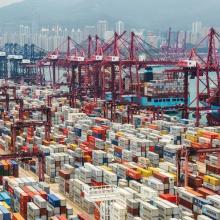
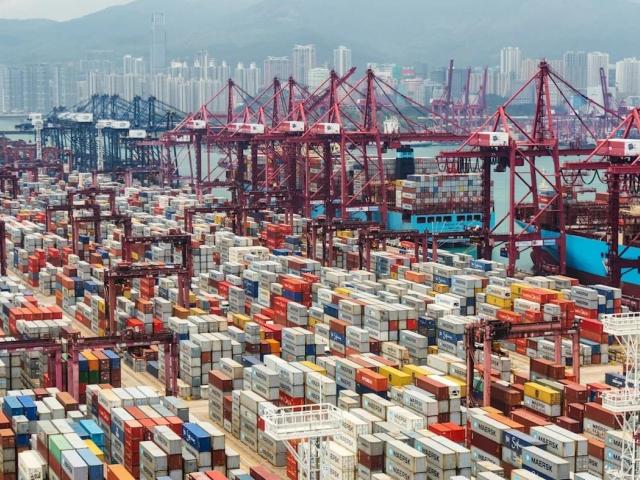
I. Hong Kong Port – The 7th Largest Container Port in the World
In 2025, the Kwai Tsing Container Terminal in Hong Kong handled approximately 12.9 million TEUs (Hong Kong Marine Department, 2025), ranking 7th globally. Meanwhile, during the same period, the Port of Shenzhen's throughput exceeded 30 million TEUs (Shenzhen Port Authority, 2025), and the Port of Guangzhou surpassed 25 million TEUs. The rapid development of mainland ports may seem to overshadow Hong Kong's port, but it precisely highlights the deep value of China-Hong Kong logistics—the fast growth of Shenzhen and Guangzhou ports has attracted more international shipping routes; these international liners call at both Hong Kong and South China ports, correspondingly increasing the demand for mainland goods to be transported to Hong Kong for transshipment via cross-border trucks.
Hong Kong Port's irreplaceable advantages are reflected in the following aspects:
Free Port Policy. Hong Kong is a free port, and no tariffs are levied on goods entering or leaving it. This policy makes Hong Kong a core hub for global re-export trade—large quantities of goods transported from the mainland to Hong Kong by cross-border trucks can be directly re-exported by sea to all parts of the world without paying any customs duties. In contrast, exports from mainland ports require a complete customs declaration and tax rebate process, where Hong Kong has obvious advantages in flexibility and timeliness.
Global Shipping Network. Hong Kong Port connects to approximately 600 ports worldwide, with particularly dense intra-Asian routes. Goods destined for Southeast Asia, South Asia, the Middle East, and other regions from Mainland China have far more sailing options via Hong Kong transshipment than from mainland ports. For cargo owners, transshipping through Hong Kong means more sailing choices and more flexible shipping schedules.
Efficient Customs Clearance System. Hong Kong Customs' electronic declaration system supports online customs filing; general cargo is usually cleared on the same day. Compared to the customs processes at mainland ports, Hong Kong provides more efficient clearance, a significant advantage for time-sensitive goods.
Financial Services System. The Hong Kong dollar is freely convertible, facilitating international trade settlement. Hong Kong's mature banking system, with well-established procedures for letters of credit, provides ample trade financing support for businesses. This is particularly important for companies engaged in re-export and international trade.
Therefore, the relationship between Hong Kong Port and mainland ports is not a "zero-sum" competition but rather a complementary collaboration—mainland ports handle high-volume direct shipping, while Hong Kong Port leverages its advantages as a free port and transshipment hub. China-Hong Kong logistics services serve as the key link connecting these two systems.
II. Hong Kong International Airport – The World's Busiest Cargo Airport
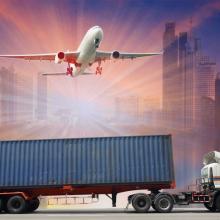
Hong Kong International Airport has been the world's busiest for cargo throughput for several consecutive years. In 2025, its air cargo volume reached 5.07 million metric tons (Airport Authority Hong Kong, 2025). The airport boasts around 50 all-cargo flight destinations, covering major global trading cities. Against the backdrop of rapid global cross-border e-commerce growth, Hong Kong Airport's cargo hub status has been further strengthened—a massive number of cross-border e-commerce parcels are transported via cross-border trucks from the Pearl River Delta to Hong Kong Airport, and then shipped onwards by international flights to Europe, America, and Southeast Asia.
The core advantage of Hong Kong Airport's cargo operations lies in its 24-hour operational capability. The night shift is the busiest period at Hong Kong Airport—goods are consolidated and built into pallets during the day, loaded onto cargo planes at night, and can arrive at major European and American cities the next morning. For high-value, time-sensitive goods—such as electronic components, pharmaceutical and health products, and precision instruments—shipping via Hong Kong Airport is the best choice globally.
Furthermore, Hong Kong Airport has the largest air cargo cold chain center in the Asia-Pacific region, with an annual processing capacity exceeding 1 million tons. Temperature-controlled goods like food, pharmaceuticals, and fresh produce can be efficiently handled through Hong Kong Airport's cold chain facilities. This represents a significant logistics advantage for companies exporting fresh produce or pharmaceuticals within the Greater Bay Area.
For China-Hong Kong logistics, the significance of Hong Kong Airport lies in: Goods can be brought from the mainland via cross-border truck to Hong Kong Airport, connecting international flights for export worldwide. Compared to shipping directly to mainland airports for export, shipping via Hong Kong Airport offers clear advantages in route options, flight frequency, and cargo payload capacity.
III. China-Hong Kong Logistics – The Land Corridor Connecting the Mainland and Hong Kong
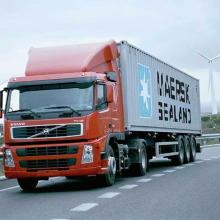
China-Hong Kong logistics refers to the land freight service of moving goods from mainland cities to Hong Kong (export direction), or bringing goods from Hong Kong back to the mainland (import direction), using cross-border vehicles with license plates for both Hong Kong and the mainland. It is the most essential logistics corridor linking the two regions.
Ports of Entry
The Six Major Shenzhen Ports are the key nodes for China-HK logistics. Their positions and strengths vary:
| Port | Characteristics | Recommended Scenarios |
|---|---|---|
| Shenzhen Bay | Co-located clearance ("one checkpoint for both sides"), crossing time ~20-40 mins | Preferred for general goods, highest efficiency |
| Huanggang | Only port open 24/7 | Night shipments, urgent goods |
| Man Kam To | Dedicated lane for live/fresh goods | Fresh produce / food items |
| Sha Tau Kok | Lower vehicular traffic volume | Avoiding rush hour congestion |
| Liantang/Heung Yuen Wai | Newly opened in 2023, daily processing capacity 17,000 vehicles | Shipments from Eastern areas (Huizhou/Heyuan) to HK |
| Hong Kong-Zhuhai-Macao Bridge | Connects Zhuhai to Hong Kong, inter-operable for three regions | West Pearl River → Hong Kong/Macau |
Choosing the correct port can significantly improve clearance efficiency. For example, time-sensitive goods cleared via Shenzhen Bay's co-located checkpoint can arrive at a Hong Kong warehouse from the factory within 4 hours; goods shipping at night can only use the Huanggang port.
Transport Modes
The transport modes for China-Hong Kong logistics, suited to different cargo volumes and time requirements, fall into four categories:
Consolidated Trucking (LCL). Suitable for small shipments under 5CBM. Goods from multiple customers are consolidated into one cross-border truck for transportation, with the cost shared proportionally. Scheduled services depart daily; scheduled pick-ups can be arranged in major Pearl River Delta cities. Delivery to Hong Kong typically takes 2-3 working days. This is the most frequently used model in China-HK logistics, well-suited for electronic components, hardware parts, garment accessories, and samples.
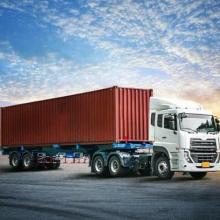
Full Truckload (FTL). Suitable for larger quantities (over 5CBM) or extremely time-urgent shipments. A single cross-border truck carries goods from only one customer, delivering them directly to Hong Kong from the factory without transfers or other cargo sharing on the same load. Same-day pickup and delivery; ideal for cargo needing to make a sailing schedule or production lines requiring urgent materials.
Express Courier Service. Suitable for samples, documents, and small parcels. It utilizes expedited channels that can deliver goods from Shenzhen to Hong Kong within 4-8 hours. The process is simple and does not require formal customs documentation (using the KJ1/KJ2 courier declaration method). Perfect for urgent cross-border e-commerce replenishment or critical samples.
Cold Chain Transportation. Suitable for food, pharmaceuticals, and biological products that require temperature control. It utilizes cross-border refrigerated trucks equipped with cooling units, ensuring consistent temperature end-to-end. The cold chain center at Hong Kong Airport integrates seamlessly with these chilled trucks, providing pharmaceutical and fresh produce exporters with a complete, controlled-temperature logistics chain.
Cargo volume, delivery timeline, and cargo type are the critical factors in choosing a transport mode—not all goods are suitable for consolidation consolidation, nor is a full truckload always necessary for urgent items. Intelligent matching is essential to achieving the optimal balance of cost and efficiency.
IV. Bofeng Logistics' Dedicated China-HK Route Services
Bofeng Logistics focuses on dedicated land transportation services between Mainland China and Hong Kong. Our fleet comprises vehicles licensed in both mainland China (plate prefix FV/Yue Z), allowing us to handle shipments in both directions: Export (Mainland → HK) and Import (HK → Mainland).
Service Area Coverage: Scheduled pickups can be arranged in Guangdong province including Shenzhen, Dongguan, Guangzhou, Foshan, Zhongshan, and Zhuhai. Goods from areas outside the province can be sent to our warehouse in Zhuhai for transit. Clearance into Hong Kong via Shenzhen Bay or Huanggang port is available; clearance into Macau would typically use the Hong Kong-Zhuhai-Macao Bridge. Goods are delivered throughout Hong Kong, and throughout Macau.
Service Models: Consolidated Trucking (LCL, ideal for goods under 5CBM; delivery usually 2-3 days); Full Truckload (FTL, ideal for freight exceeding 5CBM or urgent items; same-day delivery possible); Express Courier Service (speed, samples, documents; 4-8 hours from pickup to HK handover); and Refrigerated transport / Cold Chain (requiring controlled temperatures, typical for food/beverage, pharma/precision items).
Data Sources: Container port throughout data attributed to Hong Kong Marine Department – citing 2025 figures. Airport cargo tonnage data attributed to Airport Authority Hong Kong annual report for the 2025 calendar year. Data current as of July, 2026.
Need logistics services to HK / from HK? Get in touch including some contact information: Contact Tel / Operations Liason: (Text/Phone called out values given) 13075678958 or inquiry central email address, info@zhbfwl.com with specific.
We'll scope a logistics plan. We now in terms to conclude shared intentions – Bro.
Related Logistics Services
Bofeng Logistics offers the following related services, feel free to inquire: