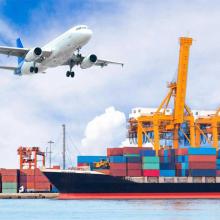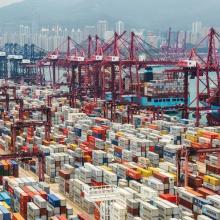
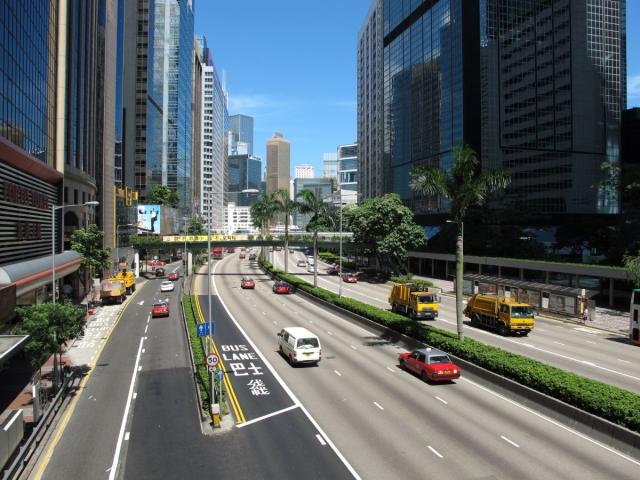
Although Hong Kong and Macau are both Special Administrative Regions of China, there are clear differences in their logistics systems. Hong Kong's logistics are centered on international transshipment trade, connecting to approximately 600 ports globally, with its airport ranking first in the world for cargo volume. Macau's logistics mainly serve the local consumer market, with hotel supplies, food ingredients, and construction materials as its three main categories. Understanding these differences helps in choosing the most suitable logistics solution based on the cargo's destination.
1. Quick Overview of Core Differences
| Comparison Dimension | Hong Kong | Macau |
|---|---|---|
| Main Entry Points | 6 land ports in Shenzhen (Shenzhen Bay/Huanggang/Wenjindu, etc.) | 3 land ports in Zhuhai (Hong Kong-Zhuhai-Macao Bridge/Gongbei/Hengqin) |
| Customs Clearance Mode | Co-location clearance at Shenzhen Bay, 20-40 minutes | One-stop clearance at Hong Kong-Zhuhai-Macao Bridge, 15-25 minutes |
| Sea Freight Terminals | Kwai Tsing Container Terminals, 7th globally, ~12.9 million TEUs | Macau Inner Harbour Terminal, mainly breakbulk and small containers |
| Airport Cargo | Global #1, 5.07 million tons/year, ~50 all-cargo flight destinations | Small airport, international cargo mainly transshipped via Hong Kong |
| Transshipment Capability | Major global transshipment hub, connecting ~600 ports | Small transshipment volume, mainly serving local consumption |
| Delivery Coverage | Hong Kong area ~1,100 sq km, same-day delivery across territory | Macau area only 33 sq km, 2-4 hour delivery across territory |
2. Differences in Entry Point Selection
Hong Kong connects to six major ports in Shenzhen, from Shenzhen Bay (fastest co-location clearance, 20-40 minutes) to Huanggang (only 24-hour port) to Wenjindu (dedicated to live/fresh goods), offering a full range of options. Shippers can choose flexibly based on cargo type and departure time. Shenzhen Bay is suitable for quick clearance of general daytime cargo; Huanggang is suitable for nighttime clearance of goods loaded after dusk; Wenjindu is suitable for frozen food and fresh produce. Shenzhen Bay Port handles over 15,000 vehicle crossings daily, making it one of the busiest land ports in the Greater Bay Area. See the detailed comparison of ports in Four Modes and Selection of China-Hong Kong Logistics.
Macau connects to three main channels in Zhuhai—the Hong Kong-Zhuhai-Macao Bridge is the fastest (15-25 minute clearance, one-stop), Hengqin Port operates 24 hours, and Gongbei Port is a traditional channel. The Hong Kong-Zhuhai-Macao Bridge handles over 10,000 vehicle crossings daily, making it the primary logistics channel from the mainland to Macau. See the channel comparison in Overview of Mainland to Macau Logistics.
In terms of timeliness, the 20-40 minutes of co-location clearance at Shenzhen Bay and the 15-25 minutes at the Hong Kong-Zhuhai-Macao Bridge are similar. However, Hong Kong offers more clearance options (6 ports), while Macau's options are relatively limited (3 ports), giving Hong Kong an advantage in flexibility. Additionally, the Liantang/Heung Yuen Wai Port opened in 2023, providing a new clearance option for the eastern Pearl River Delta region (like Huizhou and Heyuan), further enriching Hong Kong's clearance network.
3. Differences in Logistics Coverage
Hong Kong's logistics cover the globe. Kwai Tsing Terminals connect to about 600 ports, with leading global sailing frequency. The international airport is the world's top cargo hub, with routes covering major global trading cities. After cargo is trucked to Hong Kong, it can be transferred to sea or air freight for delivery to any major global market. For goods needing export to markets like Europe, America, and Southeast Asia, Hong Kong is the only choice. Hong Kong's free port policy means no tariff costs during warehousing and transshipment, a policy advantage that mainland ports cannot replace.
Macau's logistics mainly serve the local market. Macau lacks large-scale transshipment trade and has limited international routes. The Inner Harbour Terminal mainly handles breakbulk and small containers and does not function as an international shipping hub like Hong Kong. Macau's logistics are primarily import-oriented—hotel supplies, food ingredients, and construction materials are the three main import categories.
Selection Logic: If the final destination is overseas → choose the Hong Kong channel. If goods supply the Macau local market → choose the Macau channel (direct via the Hong Kong-Zhuhai-Macao Bridge). If a company's goods require both export and local Macau delivery, it can utilize both channels. Bofeng Logistics operates dedicated lines both for Shenzhen-Hong Kong and Zhuhai-Macau; goods from Guangdong can go via Shenzhen to Hong Kong or via Zhuhai to Macau. Goods from elsewhere can be transferred via Zhuhai warehouse to cover both directions flexibly and efficiently. Bofeng Logistics can recommend the optimal solution based on cargo destination and timeliness requirements.
4. Differences in Tariff Policy and Financial Services
Both Hong Kong and Macau are free trade ports, imposing no tariffs on imports or exports, and incurring no tariff costs during warehousing. Macau has no VAT or consumption tax, requiring only a small statistical fee for imports.
There is a key difference in their tax environments: Hong Kong has more mature international trade settlement and financial services, with free convertibility of the Hong Kong dollar, standardized letter of credit operations making it suitable for large trade settlements and transshipment trade operations. Macau is also a free port, but its financial system is smaller, with limited capacity for international trade settlement. For large-value trades requiring L/C settlement, the Hong Kong channel offers advantages in financial services. See Hong Kong Transshipment Trade Operations for details on Hong Kong's financial services advantages in transshipment.
5. Differences in Warehousing and Delivery
Hong Kong warehouses are concentrated in Kwai Chung, Yuen Long, and Tuen Mun, with mature facilities offering value-added services like labeling, sorting, and drop-shipping. Warehousing costs are higher but services are well-supported. See Hong Kong Warehousing and Distribution.
Macau warehouses are concentrated in the Macau Peninsula and Cotai. The warehouse area and facility support are not as developed as in Hong Kong. Warehousing costs are relatively lower, but options are limited. Macau's area is only 33 sq km, and delivery across the territory can be completed within 2-4 hours, faster than same-day delivery across Hong Kong. For short-distance delivery, Macau's logistics efficiency is an advantage.
6. Decision Summary
| Scenario | Recommended Channel | Reason |
|---|---|---|
| Large-volume global export | Hong Kong | Dense routes, frequent sailings, comprehensive international logistics network |
| Goods for the Macau local market | Macau | Direct via Hong Kong-Zhuhai-Macao Bridge in 30 mins, guaranteed timeliness |
| Cross-border e-commerce | Hong Kong | Well-supported warehousing, extensive international express and air freight networks |
| Entry into China via Macau | Macau | CEPA zero-tariff channel, advantageous for specific products |
| Urgent goods | Hong Kong or Macau, depending on destination | Both have clearance efficiency within 20-40 minutes |
| Value-added warehousing needs | Hong Kong | Well-supported warehousing, one-stop services like labeling, sorting, drop-shipping |
Data Source: Port throughput cited from the HK Marine Department 2025 statistics, airport cargo volume cited from Airport Authority Hong Kong 2025 annual report. Port traffic data referenced from publicly available information from Guangdong-Macau port management authorities. Data as of July 2026.
Need a deeper understanding of Hong Kong-Macau logistics differences? Contact us for professional advice.
Consultation: 13075678958 | info@zhbfwl.com
Related Logistics Services
Bofeng Logistics offers the following related services, feel free to inquire: