Container seals are one-time identifiers applied by relevant parties after the container door is locked. At receipt, whether the seal is intact and whether the seal number matches the documentation directly affect cargo safety and liability determination. This article clearly explains who applies the seals, what types there are, where they are applied, and how seal numbers are recorded. For overall inspection before loading, see Pre-loading Preparation and Container Inspection: SOP Checklist and Item-by-Item Confirmation Form; for the flow and handover from empty container to loaded container and then to returning the empty container, see Complete Container Flow Process: The Full Lifecycle from Empty Container Pickup to Empty Container Return.
1. Classification of Seals by the Party Applying Them
Container seals can be classified by who applies them. Seals added at different stages have different functions and starting points of liability:
- Factory seal: Applied by the exporting factory after loading the container, mainly to prevent goods from being opened and stolen during land transport from the factory to the yard or port;
- Carrier seal (shipping company seal): Applied by the shipping company, usually printed with the company's abbreviation and seal number, and is the main identification during the carrier's period of responsibility;
- Customs seal: Applied by customs for goods under customs supervision, used during customs inspection or sealed supervision;
- Temporary terminal seal: A seal temporarily applied by the terminal under specific circumstances.
2. Classification of Seals by Material and Structure
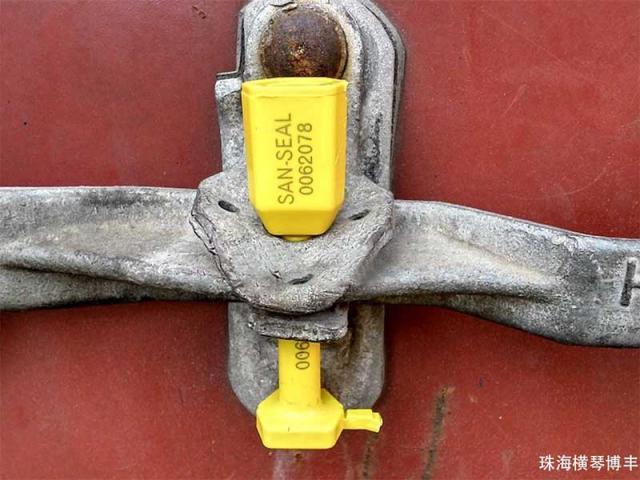
According to material and structure, common seals include: high security seals (also called bullet seals, made of one-piece metal with high strength), wire seals, plastic seals, steel seals, and padlock seals. Among them, shipping companies commonly use high security seals (bullet seals), which are relatively strong, and opening the container door usually requires heavy-duty bolt cutters to cut them off. Therefore, some people also refer to seals bearing the shipping company's name as "large seals".
3. In what situations are temporary terminal seals added?
Temporary seals generally need to be added at the terminal under the following circumstances: when the seal on the container door is accidentally damaged during unloading; or when the container is unpacked at the terminal after discharge and the consignee takes delivery in batches, after the first batch has been taken away. After adding a temporary seal, the new seal number should also be recorded and the relevant parties notified.
4. Seal Continuity in Transit and Transshipment Scenarios
When cargo requires transit or transshipment, multiple seals often coexist: for example, a feeder barge first carries the cargo to the hub port, and then it is transferred to an ocean vessel; different shipping companies' seals may be affixed before and after loading onto the barge and before loading onto the ocean vessel. During customs declaration and transit, the seal number must be declared and verified together with documents such as the manifest (M/F). If the inland transport is handled by the shipping company (e.g., Door to CY), the shipping company seal is affixed at container stuffing, and the starting point of liability is moved forward accordingly. Specific implementation shall follow the route and the shipping company's regulations.
5. Seal Placement and Container Opening Practices
The seal is usually placed on the right half of the rear door: the door clamping plate on the rear door is welded to the right door (right overlaps left). When closing, close the left door first, then the right door; when opening, reverse the order. Theoretically, the lock ears on both sides of the container door can be sealed, but actual practice is subject to the carrier's or terminal's requirements. Before opening the container, the consignee should first verify that the seal number matches the documents and that the seal is intact, then cut the seal and open the container.
Tips for identifying seals: Shipping company seals usually bear the carrier name abbreviation (such as COSCO, MSC, etc.) and a string of Arabic numeral seal numbers; after receiving the container, first check the seal number, confirm the seal has not been cut or replaced, then arrange to open the container.
Data notes: Who applied the seal, whether a supplementary seal was applied, and how the seal number is recorded may vary depending on the carrier, customs supervision, and port practices. Please refer to the booking confirmation and on-site instructions.
📖 Further reading: Pre-loading preparation and container inspection — confirm each item before loading; Causes of cargo damage accidents in container shipping — learn how to prevent transport and theft risks.
Need booking or loading support? Tell us the cargo type, container quantity, and origin/destination port. Bofeng Logistics can assist with loading, securing, and booking arrangements.
Loading consultation: 13075678958 | info@zhbfwl.com
Container Seal FAQs
Q: What should I do if I find that the seal is incorrect or the container door has no seal upon receipt?
A: First, do not rush to open the container. Take photos on site for the record (container door, seal, seal number, and container condition), and check whether the seal number matches the Seal No. on documents such as the bill of lading. If the seal is missing, has been replaced, or does not match the documents, contact the shipping company or freight forwarder immediately to explain the situation and keep evidence, then follow their instructions to handle it and avoid disputes over liability.
Q: After customs inspection cuts the seal, who re-seals the container?
A: After customs opens and inspects the container, it is usually re-sealed by customs or according to port procedures, and a new seal number is used. The relevant parties must record it in the documents and notify subsequent stages to use the New Seal No., ensuring the seal number remains consistent throughout cargo flow and customs declaration.
Disclaimer: This article was compiled and written by the Bofeng Logistics team, with content verified in September 2026. The party applying the seal and the requirements for seal number recording may vary depending on the carrier, customs supervision, and port practices. Please refer to the booking and on-site instructions.
Related Logistics Services
Bofeng Logistics offers the following related services, feel free to inquire: