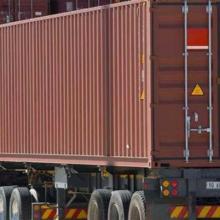
A container may seem like just an "iron box," but its structure has undergone rigorous design and testing — it must withstand the pressure of stacking 12 containers high, resist the impact of force 12 winds and waves at sea, and maintain sealing integrity within a temperature range of -40°C to +70°C.
I. Overall Structure of a Container
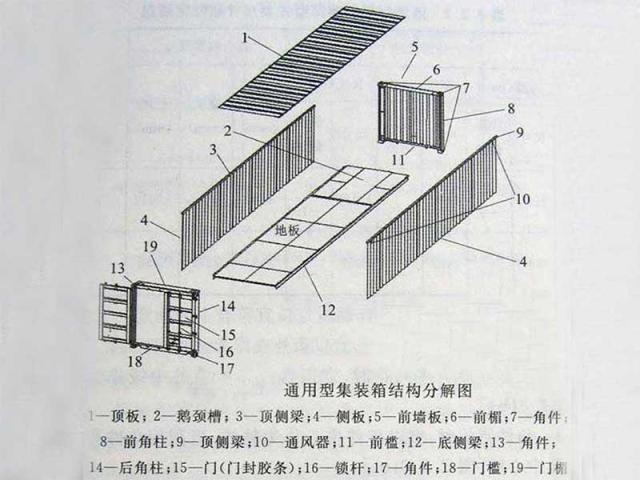
The structure of a standard dry container can be divided into the following main parts:
                    ┌──────────────────────┐
                    │       Roof Sheet     │ ← Corrugated steel sheet, bears rain/snow and stacking pressure
                    │  ┌────────────────┐   │
      ┌─────────────┤  │   Interior     │   │
      │  Left Side  │  │                │   │
      │  Wall       │  │                │   │
      │ (Corrugated)│  │                │   │
      │             │  │                │   │
      │             │  │                │   │
      │             │  └────────────────┘   │
      │             │       Flooring        │
      └─────────────┴──────────────────────┘
     Corner ← ─ ─ ─ ─ ─ ─ ─ ─ ─ ─ ─ ─ ─ → Corner
     Casting                                Casting
                                         Container Door
II. Detailed Explanation of Each Component
2.1 Corner Casting
Corner castings are the most critical structural components of a container — they are the sole load-bearing points for lifting, stacking, and securing.
The Three Key Holes of Corner Castings:
- Top hole: Hook connection point, used for lifting
- Side hole: Twist-lock connection point, used for securing to vessel/trailer
- Bottom hole: Locating pin hole for stacking
Standard Basis: The dimensions and strength of corner castings must comply with ISO 1161 standard, with dimensional tolerances for each hole position ≤1mm.
2.2 Container Door
The container door is one of the weakest parts of the container and the component most prone to problems.
Door Opening Angle Standards:
- Left door: Opens ≥270°
- Right door: Opens ≥270°
- Both doors opening simultaneously: ≥180°
2.3 Flooring
The flooring bears the entire weight of the cargo and is the component requiring the most attention during container loading.
Flooring Load Capacity Standards:
- Single wheel load: ≥2,730kg (spacing ≤500mm)
- Double wheel load: ≥5,460kg (spacing ≤1,000mm)
- Concentrated load: ≥4,000kg (500mm×500mm area)
Container Loading Tip: When loading with a forklift, forklift wheels must travel along the direction of the flooring longitudinal beams. Avoid driving transversely across the flooring — transverse load capacity is only 30% of longitudinal capacity.
2.4 Side Walls and Roof Sheet
Side walls and roof sheet adopt a corrugated steel plate design. The corrugated structure increases strength while reducing weight.
2.5 Bottom Rails and Top Rails
III. Comparison of Three Container Body Materials
Mainstream Choice: Approximately 85% of dry containers worldwide use steel construction due to low manufacturing cost, easy maintenance, and high recycling value. Aluminum containers are primarily used for reefer containers (good heat dissipation, corrosion resistance). GRP containers are mainly used in chemical and specialized scenarios.
IV. Container Service Life and Decommissioning
Data Note: The above structural parameters reference ISO 668:2020, ISO 1161 standards, and container body specification sheets from various shipping lines.
Data as of July 2026.
Found a structural problem with the container during loading? Take photos, record details, and immediately contact Bofeng Logistics to coordinate a container swap. 20 years of experience helps you avoid structural risks during transportation.
Structural Issue Consultation: info@zhbfwl.com
Related Logistics Services
Bofeng Logistics offers the following related services, feel free to inquire: