
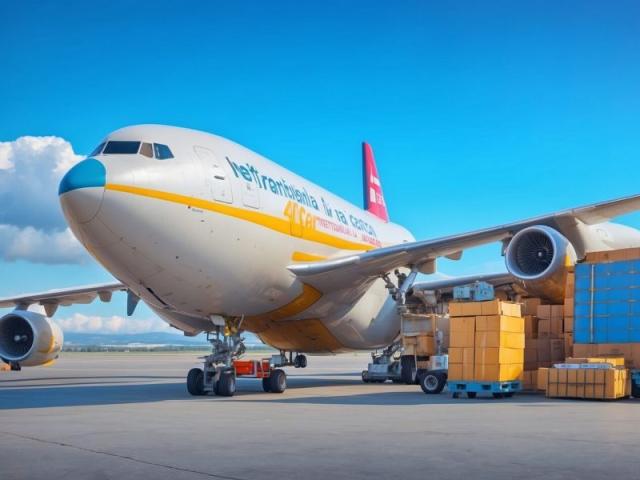
Cargo has already run into problems, or the delivery deadline is already looming, and only then do people think of using air freight—this is the real starting point for many urgent shipments. But "expedite" is not a switch that, once pressed, guarantees on-time arrival. It is a set of actions that can be broken down and arranged: choosing the right plan, controlling the key milestones, and leaving a margin in advance for uncontrollable factors.
This article follows the order of "assess first, then choose a plan, and finally look at execution" to sort through the handling logic for urgent air freight shipments. Air freight is mainly based on arrival at the port (arrival at the destination airport); the delivery stage must be confirmed separately according to the destination.
I. First, determine: what qualifies as an urgent shipment
Not all goods that "need to arrive sooner" are worth handling as urgent shipments. The criterion for an urgent shipment is whether the cost of delay is clearly higher than the cost of expediting. There are three common scenarios:
- Production shutdown and equipment emergency repair — production line spare parts, molds, and inspection equipment are out of supply, and line-down losses are counted by the hour. Such goods are usually small in volume and high in value, and are most sensitive to flight connections.
- Launch and trade show milestones — new product debut samples, exhibition setup materials, and the first batch of distribution; the timing is fixed by the market or organizer, and cannot be made up if missed.
- Contract milestones and breach-of-contract risk — the customer has already placed an order or agreed on a delivery date; delay may trigger liquidated damages, order cancellation, or affect future cooperation.
Conversely, if the goods are only "not wanting to wait" and the delivery date itself still has buffer, regular air freight or sea freight is usually more suitable, leaving budget for batches that truly need compressed time. When judging, ask yourself: What will be lost if it arrives a week late? If you cannot answer, it most likely does not need expediting.
II. Expedited Service Is Not a Product: How to Choose Among the Three Options
Urgent air shipments generally have three tiers of implementation, with significant differences in transit time, minimum shipment volume, and controllability:
| Option | Typical transit time range | Minimum shipment volume | Suitable scenarios | Controllability |
|---|---|---|---|---|
| Expedited general cargo air freight | Approx. 3–7 days to destination airport (depending on route) | From tens of kilograms | Cargo with a certain volume that requires formal customs declaration | Medium, depending on flights and cargo space |
| Direct commercial express | Approx. 2–5 days | Single pieces, small batches | Small shipments such as samples, spare parts, and documents | Relatively high, but limited by cargo value and category |
| Blocked space / charter | Arranged according to contractual flights | Full pallets, full hold | Large-volume urgent transport with fixed windows | High, but capacity must be locked in advance |
The difference among the three tiers is not simply that "faster is more expensive"; rather, it is a difference in controllability: express keeps operational steps in the hands of one provider, so the chain is short; general cargo air freight requires coordination among booking, customs declaration, cargo terminal, and destination airport, and a blockage at any step will affect overall transit time; blocked space and charter trade capacity and cost for certainty.
For the specific differences among the three transport modes, see The Three Air Transport Modes: Belly Hold, Full Freighter, Charter, and Express; if you are hesitating between small-batch urgent shipments and commercial express, compare The Difference Between Air Express and General Air Cargo.
III. Transit Time Is Made Up of Six Segments
To move an urgent shipment from the factory to the destination airport, transit time can be broken down into six segments:
- Booking confirmation — obtaining space and a flight number; this segment establishes the prerequisite for all subsequent arrangements.
- Document cutoff — the deadline set by the airline or cargo terminal for document and cargo handover; if missed, you can only wait for the next flight.
- Cargo terminal handover and pallet build-up — cargo warehousing, weighing, security screening, and pallet assembly; queuing time during peak season will be noticeably longer.
- Flight operation — whether direct or transfer, and whether there are stopovers, directly determines in-transit time.
- Arrival and customs clearance — destination customs inspection and document review; these are uncontrollable factors at the arrival end.
- Pickup and delivery — the destination agent releases the cargo and arranges pickup or delivery; this must be confirmed in advance.
Among these, segments 1, 2, and 3 can be proactively compressed by the shipper and freight forwarder; segment 4 is affected by flight schedules and capacity; segments 5 and 6 depend on conditions at the destination airport.The value of an urgent shipment solution lies mainly in doing the first three segments well, not in promising that the last three will definitely go smoothly.
IV. Four Key Operational Points for Urgent Shipments
4.1 Advance Space Allocation
For urgent shipments, do not wait until the cargo is ready to inquire about space. Once it is confirmed that the cargo can be shipped, lock in the flight and space immediately, and apply for backup flights at the same time if necessary. When space is tight during peak season, "reserve space first, confirm weight later" is often more feasible than "look for space after the cargo is ready."
4.2 Documentation in Advance
Invoices, packing lists, customs declaration documents, and any required certification documents should be fully prepared before the cargo leaves the factory. If there are questions about HS code classification, declaration elements, or brand and model information, verify them with the customs broker in advance. Incomplete documentation is one of the most common bottlenecks for urgent shipments, and it often only comes to light after the cargo has already arrived at the cargo terminal.
4.3 Priority Handover at the Cargo Terminal
After confirming the cut-off time, work backward: factory loading, inland transport to the cargo terminal, warehousing and security screening, and palletization—leave a buffer for each step. At hub airports such as Shenzhen, Guangzhou, and Hong Kong, cargo terminal queue times vary considerably during peak season. When choosing a port, you can make a comprehensive judgment based on flight schedules; see Comparison of the Four Major Air Freight Ports in the Pearl River Delta for reference.
4.4 Coordination with the Destination Agent
The aircraft taking off does not mean the task is over. Before arrival, confirm the destination agent, customs clearance documents, and pickup arrangements; for cargo that requires delivery, confirm the delivery scope and appointment requirements in advance (delivery can be inquired separately). The connection at the destination often determines the gap between "arrived at destination" and "received in hand."
The complete export operational process can be found in Full Export Air Freight Operation Process: From Booking to Takeoff; for details on booking channels and time management, see Air Freight Booking and Operational Specifications; for choosing direct flights, transshipments, and consolidated pallets, see Types of Air Freight Routes and Selection.
V. What Makes Up the Cost of Expedited Shipping
Air freight charges are based on the chargeable weight, which is the greater of the actual weight and the volumetric weight. For how volumetric weight is calculated, see Air Freight Charging Methods: Volumetric Weight Explained, or use the Air Freight Volumetric Weight Calculator directly for an estimate.
Expedited shipment costs are usually composed of several parts added together:
- Base freight rate—priced by chargeable weight and route;
- Space premium—during peak season or for last-minute bookings, the space price on the same route may be higher than normal;
- Handling and surcharges—fuel surcharge, security screening fee, handling fee, etc., charged according to the carrier's current standards;
- Destination port charges—customs clearance, warehousing, pickup, etc., executed according to the destination agent's quotation.
Specific amounts fluctuate with route, cargo type, and time period; this article does not list specific quotations. For the cost structure and the meaning of each surcharge, see Overview of Air Freight Cost Structure.
VI. Which Goods Are Not Suitable for Expedited Handling
Some goods are not "unable to be shipped by air"; rather, their time cannot be compressed, and arranging them as urgent shipments is more likely to lead to errors:
- Dangerous goods — identification, declaration, and packaging must be completed in accordance with DGR rules; the cycle cannot be skipped. For dangerous goods transport requirements, see Complete Guide to Dangerous Goods Air Transport (DGR).
- Oversized and overweight goods — special loading plans and carrier approval are required, and flights and aircraft types are limited.
- Goods requiring statutory inspection or certification — such as certain mechanical and electrical products and food-contact materials; the inspection period is not determined by the logistics process.
- Goods with incomplete documents or qualifications — if certificates of origin or certification documents are missing, complete the documents first before booking cargo space.
If these four categories of goods are needed urgently, the correct approach is to assess the timeline in advance, rather than compressing the declaration and inspection procedures.
VII. Five-Question Self-Check Before Shipping
Before deciding to use an expedited service, you can quickly self-check with five questions:
- What specific losses will a late arrival cause? Are the losses clearly higher than the expedited fee?
- Is the cargo ready for shipment, and is the documentation complete?
- Are there available cargo spaces on the target route for the current period, and what is the latest cutoff time?
- Who will coordinate customs clearance and delivery at the destination port, and is advance booking required?
- If the flight is delayed or cargo space is adjusted, what is the backup plan?
Only when all five questions have clear answers is the expedited plan executable. For actual cases, see: Expedited air export of electronic components to the United States, Emergency spare parts air freight to the Middle East, JIT air freight of auto parts to Japan, and Western Guangdong to Hong Kong Airport flights via the Hong Kong-Zhuhai-Macao Bridge.
For common routes departing from the Pearl River Delta, see the Overview of International Air Freight Logistics Dedicated Lines, for example the Pearl River Delta–United States International Air Freight Dedicated Line.
Timeframe Note: The timeframes in this article are for reference only. Actual transit time is affected by flight schedules, cargo space availability, weather, customs inspection, and destination port operations, and is subject to booking confirmation and carrier arrangements. Air freight service is mainly arrival at the destination airport; for delivery needs, please inquire separately for confirmation.
If you need to evaluate an expedited air freight plan for specific cargo, you are welcome to contact Bofeng Logistics: Phone / WhatsApp 130-7567-8958, Email info@zhbfwl.com.
Related Logistics Services
Bofeng Logistics offers the following related services, feel free to inquire: